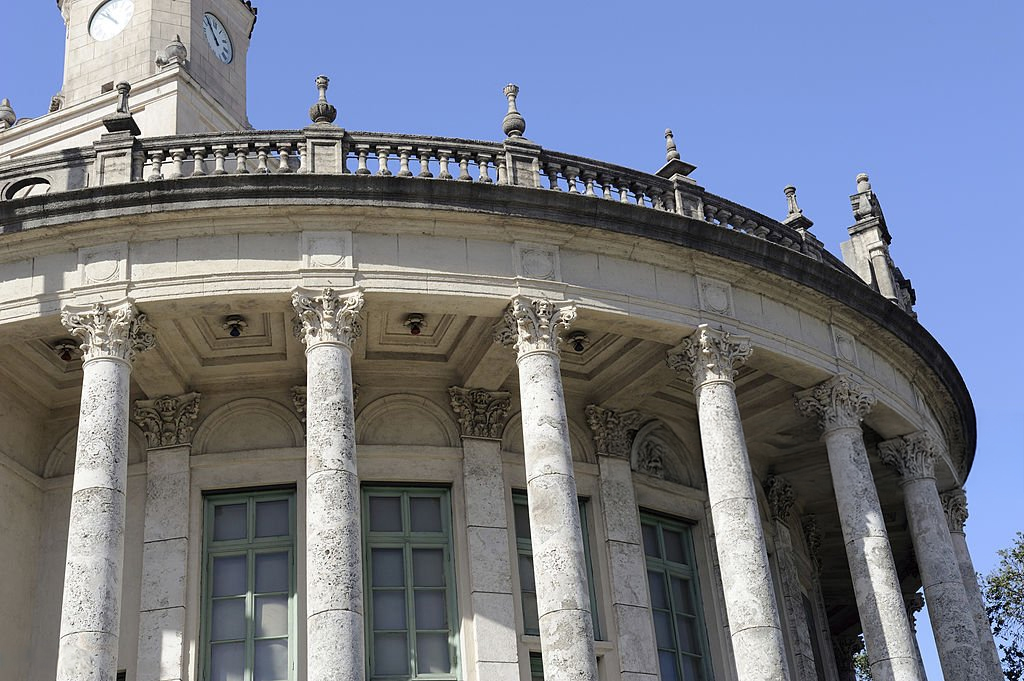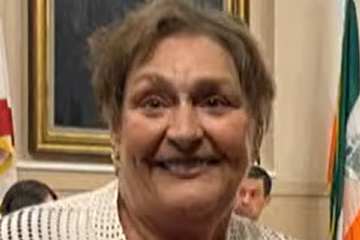
Ellen Uguccioni helped rescue the Biltmore Hotel from years of abandonment, established historic preservation as a central responsibility of Coral Gables government and inspired generations of architects and preservationists to see history in the buildings around them.
The City Commission honored her Tuesday with a resolution of condolences and personal recollections of a woman whose determination helped shape the City Beautiful.
Uguccioni, the first director of the city’s historic preservation department and a columnist for the Coral Gables Gazette, died Sept. 27 in Mystic, Connecticut, at age 75.
The tribute brought together former colleagues, preservation advocates and friends who remembered not only her accomplishments but also her formidable personality, humor and devotion to the places she believed deserved to survive.
The Biltmore took 12 months to restore, driven by a tax deadline
Perhaps no building better illustrates Uguccioni’s influence than the Biltmore Hotel.
After serving as a military hospital, the landmark stood abandoned for years. By the time restoration began in 1985, it had fallen into serious disrepair.
Tom Prescott, president and chief executive of Seaway Hotels Corp., which manages the Biltmore, read a letter from former Mayor Dorothy Thomson recalling the conditions Uguccioni encountered.
“Among the inhabitants still living there were foxes, rodents, and pigeons when renovations began in 1985,” Thomson wrote.
Uguccioni was entrusted with helping oversee the hotel’s rehabilitation, an undertaking that required coordinating restoration work, navigating regulations and meeting an ambitious completion deadline.
Thomson credited Uguccioni’s Marine Corps training with providing the discipline and leadership the project demanded.
“Because of Ellen’s dogged pursuit for perfection of the renovation, we continue to enjoy the magnificence of this building into the next century of its existence,” she wrote.
The city hoped to complete the restoration in a year, a deadline Thomson said echoed the 10 months it took to construct the original hotel in 1926.
But the timetable was driven by more than civic ambition.
During Tuesday’s ceremony, Vice Mayor Rhonda Anderson played a video of Uguccioni seated near a Biltmore fireplace, describing the practical challenges of the restoration.
Fire-safety requirements had forced changes to the original lounge, including a new wall and ceiling sprinklers. The work also had to be completed quickly to preserve a federal investment tax credit that was scheduled to decline from 25 percent to 20 percent.
The project was completed in approximately 12 months.
Prescott recalled seeing Uguccioni in Washington in the mid-1990s, working alongside his father to advocate for the Biltmore’s designation as a National Historic Landmark.
She built the city’s preservation department
Uguccioni’s contribution was not confined to a single landmark.
She helped develop Coral Gables’ municipal historic preservation program and became the first director of its historic preservation department, a position she held from 1985 to 2001, according to the Historic Preservation Association of Coral Gables.
During her tenure, she helped craft the city’s cottage ordinance and represented Coral Gables on historic preservation matters during the Biltmore’s rehabilitation. Her work helped establish a stronger institutional foundation for protecting the city’s architectural heritage.
The commission resolution described her as “a pioneering preservationist whose vision, determination, and lifelong advocacy helped protect the architectural and historic character of Coral Gables.”
She was a founder of the Historic Preservation Association of Coral Gables, a past president of The Villagers and a lecturer at the University of Miami School of Architecture.
Her influence extended statewide. She served 12 years on the Florida Historical Preservation Commission and received the Florida Trust for Historic Preservation’s lifetime achievement award. The organization also named her a trustee emerita.
A retired Marine Corps lieutenant colonel, Uguccioni combined military discipline with scholarship and an enthusiasm for teaching.
She co-authored six books, including The Biltmore Hotel: An Enduring Legacy, published in 2002 with Samuel D. LaRue Jr., and Coral Gables: Miami Riviera: An Architectural Guide. She also wrote a history of the Florida Governor’s Mansion.
Uguccioni also wrote for the Gazette. Her columns recounted how the Douglas Entrance was saved from demolition, made the case for restoring City Hall and began a history of the Biltmore.
A trolley tour nobody wanted to end
For those who knew Uguccioni personally, her influence was as much about the people she inspired as the buildings she protected.
A former University of Miami architecture student recalled meeting her 33 years earlier and discovering a passion for preservation that never faded.
“She awakened in me this passion that hasn’t died,” the former student told commissioners.
Uguccioni taught students to see more than the basic outlines of a building. Architecture, the speaker recalled, was a collection of details, historical choices and cultural meaning.
The former student described one of Uguccioni’s final public activities in Coral Gables: a trolley tour of the city’s architectural landmarks roughly three years ago.
The tour was supposed to last two hours.
About 30 participants boarded, with Anderson among them. Uguccioni guided the group across the city, sharing stories about buildings, neighborhoods and architectural details.
By the time the trolley reached Fairchild Tropical Botanic Garden, the scheduled two hours had elapsed.
“Nobody wanted to leave,” the former student recalled.
The passengers continued for another hour.
Anderson later explained that the tour included 22 stops and that Fairchild was only the 15th.
The former student, who attended Uguccioni’s funeral in Connecticut, remembered her as a mentor with an infectious personality.
“She had a crazy laugh, a wicked sense of humor,” the speaker said. “There’s a hole in my heart.”
Karelia Martinez Carbonell, president of the Historic Preservation Association of Coral Gables, recalled how Uguccioni recruited her to the organization.
The two met at an event at the Chinese Village, where Uguccioni took her hand and asked what she did.
“You have to join HPACG. We need people like you,” Uguccioni told her, according to Martinez Carbonell.
Martinez Carbonell credited Uguccioni with contributing to preservation projects involving Miami Marine Stadium and the Coconut Grove Playhouse.
Her influence continues across Coral Gables
Coral Gables Historical Resources and Cultural Arts Director Anna Pernas recalled that Uguccioni contacted her shortly after she joined the city and invited her to visit before moving to Connecticut.
“She was a powerhouse then,” Pernas said, adding that the department owed its existence to Uguccioni’s pioneering work.
Anderson reflected on the larger meaning of preserving the city’s landmarks.
“Our historic buildings are not just simply structures,” she said. “They hold our stories, reflect our identity and connect one generation of residents to the next.”
Uguccioni’s preservation work continued after she moved to Mystic. According to the Historic Preservation Association of Coral Gables, she served on the New London Landmarks board of directors, continuing to advocate for historic buildings in her adopted community.
She was also an accomplished classical pianist. Her obituary noted that she had once considered a career as a concert performer before pursuing other interests.
She was buried with full military honors Oct. 9 at the veterans cemetery in Middletown, Connecticut.
In lieu of flowers, her family requested donations to the Arlene Dorinda Stockwell Colby Troubadour Fund, which Uguccioni established in honor of her mother to provide live music for cancer patients undergoing treatment.
The commission’s resolution concluded that Coral Gables would remain enriched by her vision and dedication.
And the Biltmore restoration provided one final moment of humor during Tuesday’s tribute.
After the video of Uguccioni explaining how the hotel had been restored in 12 months, a speaker suggested that the crews now working on City Hall should take note of the timetable.
The remark drew laughter — and offered a reminder that the preservation work Uguccioni championed continues today.

Author: Coral Gables Gazette News Staff
Originally established in 1996 and relaunched as a digital publication in February 2025, the Coral Gables Gazette is an independent local news organization dedicated to factual, objective and accountable community journalism. Our newsroom reports on the people, policies, institutions and events shaping Coral Gables, Florida, providing residents with timely, informative coverage of the issues affecting their community. Our reporting includes City Hall, local government, municipal elections, public spending, real estate development, business, education, arts and culture, and neighborhood affairs throughout the City Beautiful. We follow City Commission decisions, examine public records and report on the businesses, organizations and individuals contributing to Coral Gables. We believe informed residents are essential to a healthy, engaged community. Stories published under the Coral Gables Gazette News Staff byline are prepared or compiled by the publication's editorial team. We strive for accuracy, fairness, transparency and clear distinctions between news reporting, opinion and advertising. Readers are encouraged to submit news tips, corrections, editorial inquiries and story suggestions through our Contact page and learn more about our standards through our Editorial Policy.