

The University of Miami’s College of Engineering traces its origins to a single building, a handful of courses, and a vision that predated even its formal founding. That vision—of experimentation, service, and innovation—has endured for more than a century.
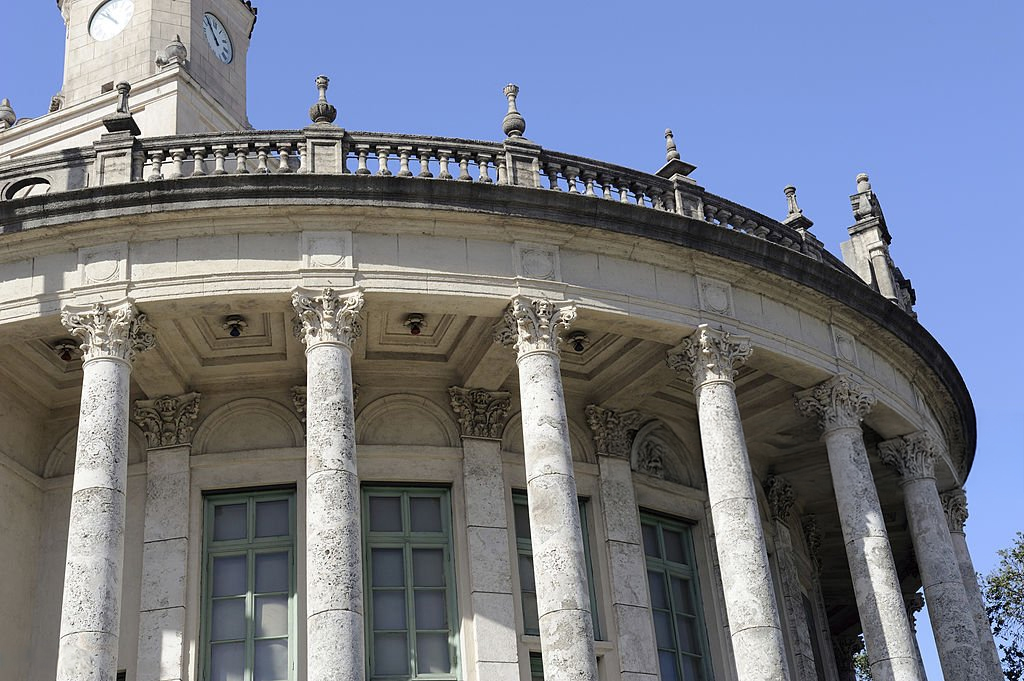
It began in the 1920s, when aviation and surveying courses were first offered in the Anastasia Building. These early classes laid the groundwork for what would become one of South Florida’s most consequential centers of engineering education and applied research. One of the university’s earliest signature projects was the Vacuplane, a prototype aircraft developed on campus in the 1930s—a symbol of the school’s ambition even before it had a name.
By the onset of World War II, that ambition had expanded. The University offered technical training to cadets in the U.S. Army Air Corps and Britain’s Royal Air Force, preparing future pilots and engineers for critical roles in navigation and precision bombing. When the war ended, a new national demand emerged—for engineers who could build peace as well as win wars.
In 1947, the School of Engineering was officially established. Its first class included 400 students, many of them veterans attending on the GI Bill. Within a decade, enrollment had tripled, driven by surging interest in aviation and aeronautics. Generous private support, including a $2 million gift from J. Neville McArthur of McArthur Dairy, helped fund the construction of a permanent engineering building that bears his name.
The 1960s brought the space race—and with it, opportunity. Many University of Miami graduates contributed to NASA’s most ambitious undertakings, including the Apollo missions and the space shuttle program. In the following decade, as an energy crisis reshaped the global economy, the School of Engineering led early research into renewable solutions, including solar energy and hydrogen storage. A new environmental engineering wing was added to the McArthur Building, cementing the school’s commitment to sustainability before it became a catchword.
Later in the 1970s, the school established its Department of Biomedical Engineering—one of the first in the region—ushering in a new era of innovation in health care. Early projects included artificial organs designed to sustain patients awaiting transplants. It was a turning point that demonstrated how engineering could serve not only infrastructure but life itself.
As the college grew, so did its reach. In 1983, the faculty voted to separate the architecture program, which had been housed within the engineering school. The move established both the College of Engineering and the School of Architecture as independent academic units—an acknowledgment of how both disciplines had evolved.
The digital revolution of the 1990s saw the college pivot toward telecommunications and computing. Faculty and students played a role in advancing satellite communication, microchip design, and supercomputing. Programs in cybersecurity soon followed, anticipating a workforce increasingly dependent on data protection and digital infrastructure.
In the 21st century, the college embraced the maker movement and the rise of advanced manufacturing. The Johnson & Johnson 3D Printing Center of Excellence gave students, faculty, and industry professionals access to state-of-the-art metal printing systems—used to create orthopedic implants, aerospace components, and experimental prototypes. By 2021, the college had grown to six departments, adding new programs in chemical and materials engineering and launching research in aerosol science and atmospheric studies.
Today, the college is focused on expanding its local, national, and global impact—including ventures that reach into space. With new initiatives underway in health tech, digital tech, nanotech, cleantech, and fintech, the College of Engineering is preparing students not just to adapt to the future, but to shape it.












Can you be more specific about the content of your article? After reading it, I still have some doubts. Hope you can help me.