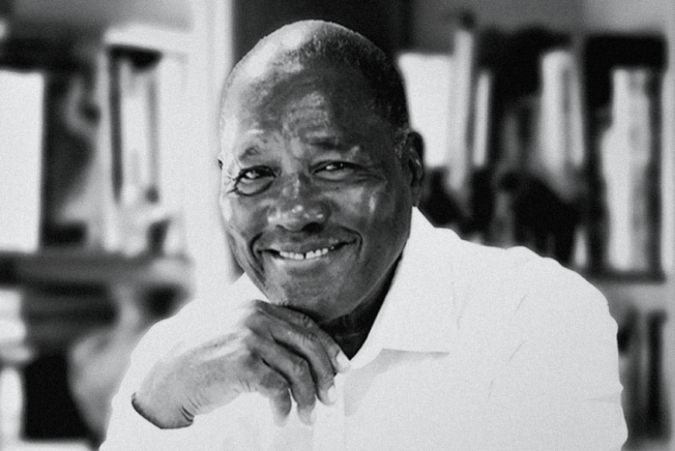
More than a century after a white mob destroyed the predominantly Black community of Rosewood, Florida, two documentaries by historian Marvin Dunn will bring the town’s history — and physical remnants of what was left behind — to Coral Gables.
Coral Gables Art Cinema will screen Dunn’s “Rosewood” and “Uncovering Rosewood” on Sunday, Sept. 20, followed by a discussion with the historian about the 1923 massacre and his continuing work to preserve its history. Attendees will also have an opportunity to view artifacts from Rosewood.
The two-hour program, presented with the Miami Center for Racial Justice, begins at 1:30 p.m.
What happened in Rosewood
Rosewood was a small, predominantly Black community in Levy County. By 1920, it had three churches, a school, a train station and a large one-room Masonic hall, along with Black-owned businesses and homes.
That community was destroyed during the first week of January 1923.
The violence began after Fannie Taylor, a white woman in nearby Sumner, reported that a Black man had attacked her in her home. A search for the alleged assailant drew armed white men into the area and quickly escalated into mob violence.
Over the following days, Black residents were killed, homes and community buildings were burned and survivors fled into the surrounding woods and swamps. Some escaped aboard a train; others were sheltered by white residents. The Black residents who survived did not return to rebuild Rosewood.
Exactly how many people died remains uncertain.
A state-commissioned investigation completed in 1993 concluded that eight deaths could be documented: six Black residents and two white men. The report acknowledged other accounts placing the toll considerably higher but said it could not find documentation to substantiate them.
A grand jury convened afterward found insufficient evidence to indict anyone. No one was prosecuted for the killings, assaults or destruction.
Rosewood then largely disappeared from public discussion for decades. In 1982, St. Petersburg Times reporter Gary Moore published an investigation that helped return the massacre to public attention.
That eventually led survivors and descendants to seek compensation from Florida.
In 1994, Gov. Lawton Chiles signed a $2.1 million compensation package. Nine survivors received $150,000 each, money was provided for qualifying property losses, and Florida established a scholarship program for Rosewood families and their descendants. The scholarship program continues today.
Florida’s action has been widely described as the first state compensation to victims of racial violence in the United States.
A historian preserving the ground itself
Dunn, a professor emeritus and retired chairman of Florida International University’s psychology department, has spent years documenting Black history in Florida.
After the murder of George Floyd in 2020, Dunn and other community advocates founded the Miami Center for Racial Justice, a nonprofit dedicated to preserving Black history in the state.
In January 2023, the organization began its “Teach the Truth” tours, taking students, educators and others to sites associated with racial violence in Florida. Stops have included Ocoee, where July Perry was lynched during the 1920 Election Day violence; Live Oak, where 15-year-old Willie James Howard was lynched in 1944; Newberry, site of a 1916 mass lynching; and Rosewood.
Dunn owns more than five acres in Rosewood that include part of the historic railroad bed used to evacuate residents during the massacre. The Miami Center formally launched Rosewood Historic Park there in January, part of its effort to preserve the physical landscape as well as the story of what happened.
Two films and pieces of the town
Sunday’s program pairs “Rosewood” and “Uncovering Rosewood,” documentaries distinct from director John Singleton’s 1997 dramatized feature film “Rosewood.”
The screenings will be followed by a discussion with Dunn about the films and the preservation work in Rosewood. The cinema says attendees will also have an opportunity to see historic artifacts.
Dunn’s private Rosewood collection includes objects excavated from the site of the town’s Masonic Lodge: ceramic shards, druggist bottles, glass fragments, metal objects, railroad spikes and wash basins. FIU previously displayed the collection alongside “Uncovering Rosewood.”
Together, the films and objects offer two ways of approaching the same history: through testimony and research on the screen, and through pieces of the community that survived underground.
Dunn is also the author of “Black Miami in the Twentieth Century,” “A History of Florida: Through Black Eyes” and “The Kingsleys,” and co-author of “The Miami Riot of 1980: Crossing the Bounds.”
If you go…
“Honoring Rosewood with Dr. Marvin Dunn” runs from 1:30 to 3:30 p.m. Sunday, Sept. 20, at Coral Gables Art Cinema, 260 Aragon Ave. The cinema describes the program as a limited, one-time presentation. Tickets are available through the theater’s website.