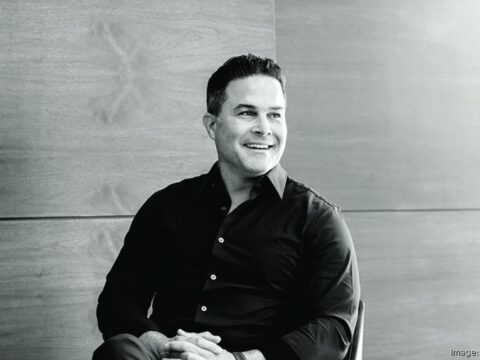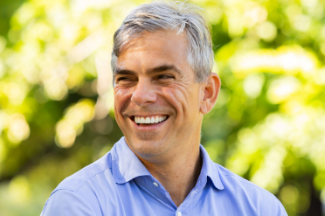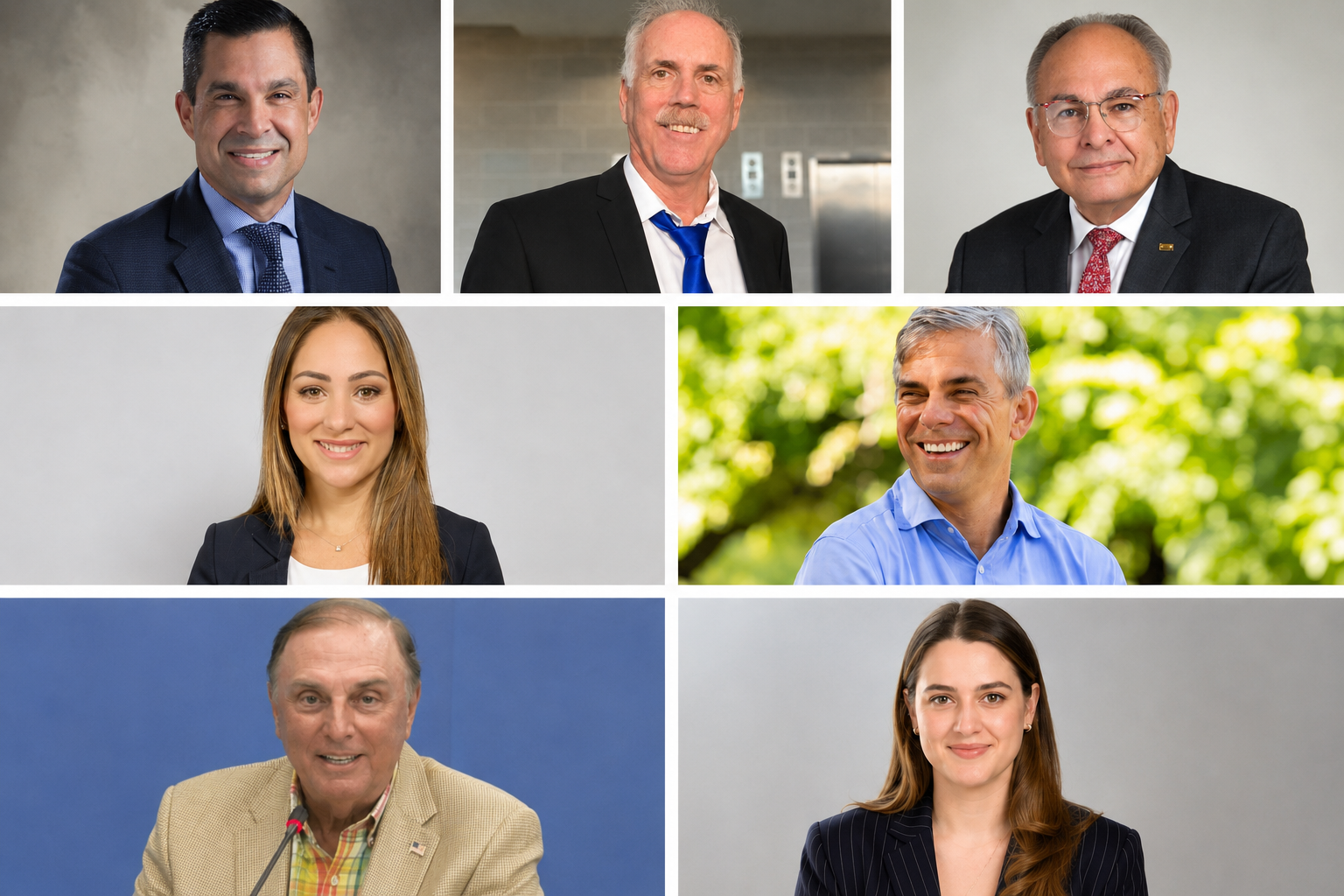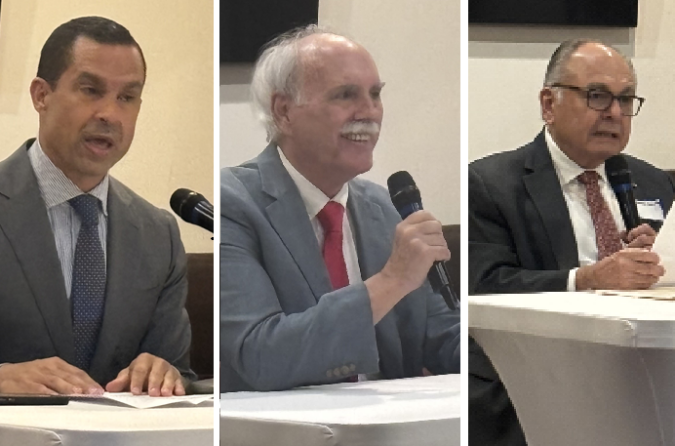
The three candidates for Coral Gables mayor offered sharply different visions for the city at a candidates forum Wednesday night, with incumbent Mayor Vince Lago highlighting his more than a decade in office and challengers Jackson “Rip” Holmes and Laureano Cancio focusing on development, city government and what they described as a need for change.
The forum, hosted by the Gables Good Government Committee at Coral Gables Congregational Church, also featured candidates in the two contested City Commission races. Commissioner Melissa Castro and Nestor Menendez are running for Group 4, while Gonzalo Sanabria and Nikki Whiting are competing in Group 5.
Lago asked to speak first, saying he had another engagement to attend. He used his time to make the case for his record on city finances, public safety, infrastructure, parks and development.
Lago touts record and impact over more than a dozen years
Lago pointed to what he described as the city’s improved financial position since he first became involved in Coral Gables government 13 years ago. “When I got here 13 years ago, our pension was funded to 52 percent, second worst in the state,” Lago said. “I had to make some very, very tough decisions.”
Lago said the city made difficult decisions to improve its financial position, including repeatedly declining cost-of-living increases for employees. He said the pension is now funded at nearly 80%, and that Coral Gables has the second-lowest millage rate among full-service cities. He also pointed to reserves that he said now represent about 25% of the city’s budget, compared with less than $20 million when he first took office.
Lago highlighted public safety, saying four fire stations had been added during his time in office and that legislation he authored increased the number of police officers to the highest level in the city’s history. He said crime is at its lowest level in 20 years.
On development, Lago said his record was not one of simply approving projects proposed to the city. He cited votes against projects including Plaza Coral Gables and the Lifetime building and said he had fought to limit development on Miracle Mile. At the same time, he acknowledged that property owners have legal rights and said the city has to work with developers rather than simply reject projects.
“When a building comes before us, I negotiate with the developer,” Lago said, describing negotiations that he said resulted in additional benefits for the city, including park land.
He also highlighted the development agreement with the University of Miami, saying it gave the city greater control over land-use decisions involving university property and helped secure land for a park.
Lago’s comments prompted an exchange with Castro, who asked about his current employment with Hammer Commercial Construction and whether he was directly or indirectly compensated by the University of Miami. Castro noted that Lago was noted as a principal on the company’s website, which also listed projects with UM.
The mayor responded by taking a dig at Castro’s resident status. “This is a first. I’ve never had an elected official join in the conversation – a renter making decisions about taxes and COLAS,” he said.
Lago then said he has worked on UM projects for 22 years and has also worked for Florida International University, Miami-Dade County and Miami-Dade County Public Schools. He said he was proud of his construction background and did not shy away from his professional work.
Holmes says incumbent mayor on way to changing Gables character for good
Holmes, a longtime attendee of City Commission meetings and a perennial candidate for local office, made development the central theme of his remarks. He repeatedly accused Lago of misleading residents about development and said the mayor’s policies were changing the character of Coral Gables.
“The mayor doesn’t tell the truth,” Holmes said several times during his remarks, primarily while discussing development issues. Holmes said he had knocked on roughly 3,000 doors during his campaign and claimed that about 60% of the residents he encountered were opposed to what he characterized as overdevelopment.
He warned that the city was facing what he called a “tsunami” of development and said Lago’s reelection would mean “the end of Gables as a suburb.”
Holmes also criticized the mayor’s handling of other political disputes, including Lago’s conflicts with outgoing Commissioner Ariel Fernandez. He said Lago’s actions toward Fernandez were intended to advance development interests, a characterization Lago has disputed.
Holmes said public safety and basic city services would also be priorities under his administration. He called for more firefighters and additional trash collection personnel and said he would seek to reduce property taxes, and that he was in favor of the upcoming referendum increasing the Homestead Exemption.
He also called for ending Coral Gables’ contract with U.S. Immigration and Customs Enforcement, saying the city did not need to partner with the federal agency.
Cancio looking for a return to civility
Cancio, who has lived in Coral Gables for 26 years, presented himself as an alternative to the increasingly contentious political environment that has characterized City Hall in recent years.
He said he initially became active in city affairs after attending a commission meeting about two years ago and becoming concerned about how residents were being treated.
“I was aghast,” Cancio said, recalling a meeting in which he said Lago warned that residents who spoke too loudly could be removed from the meeting.
Cancio said the experience prompted him to become more involved in city government and eventually run for mayor.
“Coral Gables deserves a City Hall that residents can be proud of,” he said, describing the kind of government he wants to lead as one defined by “stability, fairness and mutual respect.” Cancio said residents, business owners and public servants should be treated better and that city government should serve as a source of unity rather than division.
“Every resident, business owner and fellow public servant needs to be treated with respect,” he said.
The three candidates will face voters Nov. 3, when Coral Gables holds its first general election in November following the city’s switch from its traditional spring election cycle.