

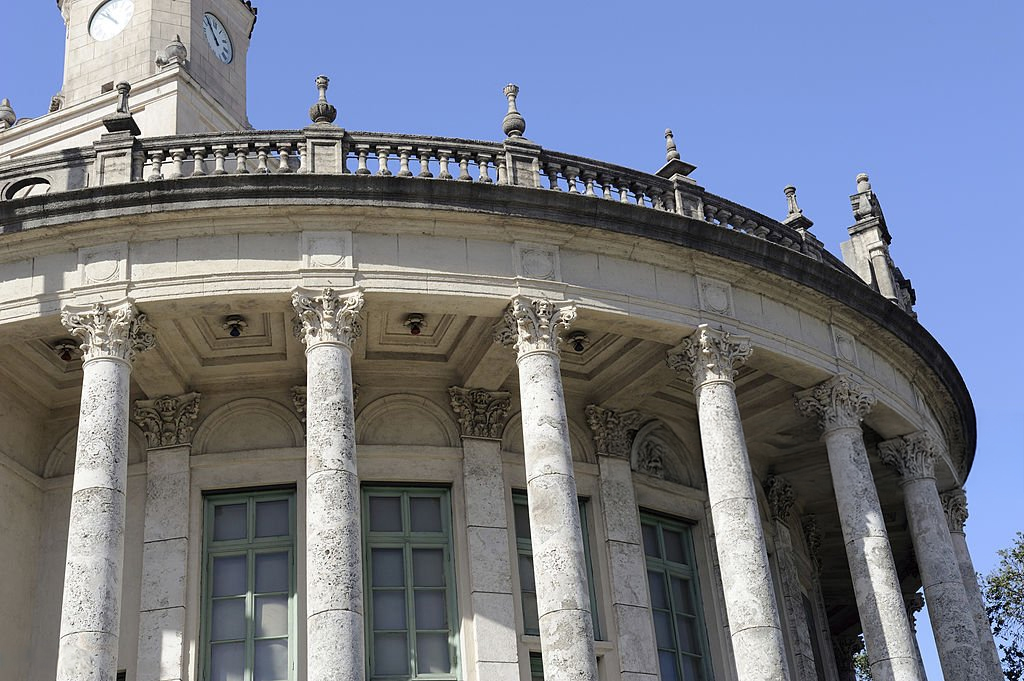
The Coral Gables City Commission voted to replace the original wood windows at City Hall with steel-framed units, advancing an accelerated renovation plan over the objections of historic preservation advocates and city preservation officials.
The decision on July 1, made with Commissioner Ariel Fernandez absent, came after the city’s Historic Preservation Board, the city’s preservation officer, the Coral Gables Historic Preservation Association, and outside experts urged restoration rather than replacement. They argued that original wood windows could meet current building and storm standards at a lower cost and with better historical fidelity.
City manager cites durability, speed
City Manager Peter Iglesias said the steel windows were selected for their durability and to avoid delays. The city combined multiple phases of the project—assessment, design, and documentation—into one in order to streamline the process.
“What we’ve done is we’ve taken [a] two phase project and combined it into one phase—cut about a year and a half,” Iglesias said. “We worked on the window issue about a year, trying to match historically as close as possible… to have a window that could sustain wind pressures of a hurricane, impact criteria, and also water infiltration.”
Iglesias did not address the preservation board’s request for a full assessment of the existing windows, a step that historic advocates said was critical to ensuring federal compliance and evaluating whether restoration was feasible.
Castro pushes for delay; motion fails
Commissioner Melissa Castro made a motion to defer the decision until a comprehensive assessment could be completed. She cited the recommendation of the Historic Preservation Board, which asked the city to assess the current condition of the 100-year-old windows before determining whether replacement was necessary.
Her motion failed, with the rest of the commission voting to move forward with the steel replacements.
Mayor Vince Lago supported the expedited plan and emphasized practical concerns. “The intent is to stop spending money on assessments, assessments and assessments,” he said. “It’s always been said at county commission, that we will assess ourselves and study ourselves to death and there won’t be any money left in the budget.”
“This is a project that needs to get moving,” Lago added. “It is critical. We are in hurricane season. We need to commence the work.”
Although Lago said the Historic Preservation Board was “satisfied,” the board’s formal recommendations reflected a different stance. In a memo to the commission, the board advised three key priorities:
- Protect the building to last another 100 years;
- Retain the original windows if possible, as they are a defining feature of the historic landmark;
- Direct the city’s architect to explore hurricane-resistant solutions that preserve the existing windows.
Preservation advocates seek more dialogue
Karelia Martinez Carbonell, president of the Coral Gables Historic Preservation Association, spoke during public comment and urged a delay.
“I hear the assessment issue as a negative, but with a historic building it’s actually an asset,” Carbonell said. “No one is saying one side is wrong and the other is right, but let’s have a dialogue with all the information.”
Carbonell noted that even the city’s staff report called for an assessment to ensure compliance with federal preservation guidelines.
Despite those concerns, the commission voted to proceed. Work is projected to begin no earlier than summer 2026, with an estimated 18-month construction schedule and completion targeted for December 2027.
Just before voting against the deferment, Lago said, “We would never do anything to compromise the historic nature of this building.”
For preservation advocates, the question remains whether expedience came at the cost of due process—and whether a deeper evaluation might have yielded a solution that protected both the building’s function and its history.











Amazingly…the recommendation from the Historic Preservation Association was totally ignored, not “satisfied” as Lago claims, and the historic nature of City Hall has most certainly been compromised.
After ignoring the engineering reports for well over a decade, now there seems to be an urgency which supersedes the need to assess first and do the work correctly.
Sad, but that’s the state of Coral Gables decision-making by the majority of the commissioners today.
LET’S COMPARE APPLES TO APPLES NOT APPLES TO ORANGES.
There was discussion at the July 1 Commission meeting that since the historic Biltmore Hotel windows were replaced, then replacement of the historic City Hall windows would be following precedent.
LET’S SET THE RECORD STRAIGHT.
There is a difference in windows. The referenced Biltmore windows were NOT original to the 1920s building. City Hall windows ARE original to the 1920s building.
Coral Gables City Hall retains its original 1920s wood casement windows and is currently one of only a few buildings in the City with its original fenestration. The Biltmore Hotel lost its original wood windows in the 1940s. They were damaged when the building was transferred to the Army in 1946 and many of the windows were sealed with concrete.
SO NO, the Biltmore Hotel was not fortunate to possess its original fenestration. The landmark hotel’s 800 [not original] windows were “replaced” in 2019 to LOOK LIKE the original wood window design.
I think the bigger issue is one of setting precedent for future historical homeowners and construction associates who want to save time and cost in their projects, much as the City did in theirs. Precedent is a slippery slope and the City just set a new one where saving time and money trumps historic preservation.
References:
Hitnspin login wiki.angloscottishmigration.humanities.manchester.ac.uk
References:
Hitnspin anmelden http://cmbe-console.worldoftanks.com
References:
Lollybet Willkommensbonus https://podnova.com/player/player_add_frame.php?url=https://alginis.yoo7.com/go/aHR0cHM6Ly9sb2xseWJldC5jb20uZGUvhttps://podnova.com/player/player_add_frame.php?url=https://alginis.yoo7.com/go/aHR0cHM6Ly9sb2xseWJldC5jb20uZGUv</a
References:
Lollybet Registrierung http://images.google.ga/
References:
Hitnspin kundensupport http://maps.google.lt/
References:
Hitnspin freispiele http://cse.google.ws/url?q=https://gamesgrom.com/user/aprilyear71/
References:
Australian online pokies payid https://gitea.quiztimes.nl/guillermohardm
References:
Payid online pokies australia https://www.atlantistechnical.com/employer/best-payid-slots-australia-2026-instant-deposit/
References:
Payid online pokies https://a2znaukri.com/employer/payid-scams-how-they-work-and-how-to-stay-safe/
References:
Lollybet Erfahrungen google.si
References:
Lollybet Echtgeld images.google.co.in