

When the Coral Gables Code Enforcement Board convenes on Wednesday, June 18 at 8:30 am in City Commission Chambers, it will face a docket that reads less like a routine compliance list and more like a referendum on the city’s most contested issues: Preservation, unpermitted construction and accountability for absentee owners.
The most egregious violations up for discussion involve unpermitted renovations, potential threats to public safety, and in at least one case, alterations to a historically designated property in violation of city codes.
Twin Catalonia buildings under scrutiny
Among the most serious entries are two adjacent multifamily buildings—931 and 935 Catalonia Avenue—owned by Biltmore Apartments Owner LLC. The properties have been cited for extensive unauthorized work, including the installation of air conditioning systems, exterior lighting, clay tile flooring, metal doors, awnings, and even a new roof—all without the required permits. The volume and breadth of modifications suggest systemic disregard for building regulations.
Worse still, mold issues have been reported at 935 Catalonia Ave. by a tenant, raising concerns that code violations may jeopardize occupant health. Given that both buildings are income-generating rentals, their owner’s failure to seek permits or follow safety standards could become a test case for how the city enforces accountability among commercial landlords.

Historic Zamora structure: Unauthorized alterations?
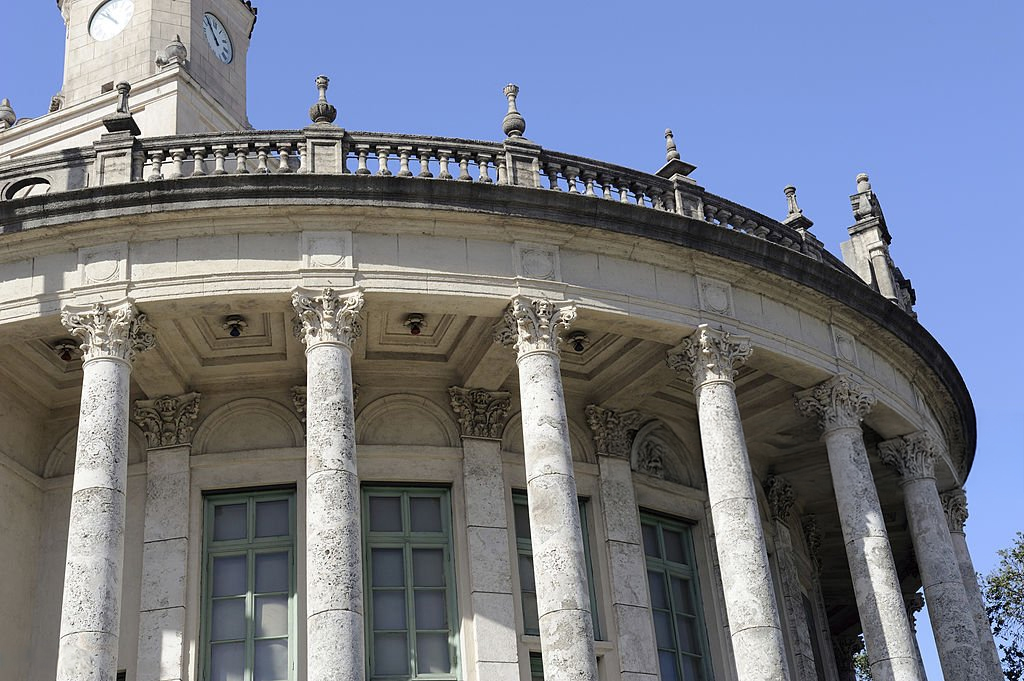
Historic preservation is one of Coral Gables’ founding ideals. Yet the city’s oversight of its historic inventory will be tested again with the case of 131 Zamora Avenue, a designated historic property owned by 3 Martinez Partners LLC. According to the city’s complaint, the owners replaced windows on the historic structure without first obtaining required permits or design approval.
In a city where Mediterranean Revival architecture is not only aesthetic but heritage policy, such unauthorized alterations are not taken lightly. The Historic Preservation Board is expected to weigh in on the violation, and penalties could include mandatory restoration to original conditions. The case underscores the delicate balance Coral Gables must maintain between property rights and preservation, especially when developers or speculators acquire historic assets without proper stewardship.
Tree protection law preached on Perugia Ave.?
Another case with broader implications concerns 401 Perugia Avenue, where property owner Milltower 1905 LLC has been cited for cutting down city-owned trees without a permit. Coral Gables enforces one of South Florida’s more stringent urban forestry codes, reflecting its identity as “The City Beautiful.”
Unauthorized tree removal not only violates that identity but also strips away natural cooling, stormwater control, and neighborhood character. Penalties for such infractions can be steep, including fines and mandatory replanting ratios. If found in violation, Milltower 1905 LLC may become a high-profile example of the city’s resolve in defending its green canopy.
Possible violation on Granada Boulevard
Further attention may center on a home at 1612 Granada Boulevard, owned by Mark A. and Vanessa Cereceda, who allegedly undertook extensive property modifications without permits. These include the removal of mature trees, installation of new exterior doors and alteration of driveways and hardscape.
Hardee Road property raises abandonment concerns
The agenda also includes a violation at 1021 Hardee Road, a long-vacant property owned by the Juan M. Delgado Revocable Trust. City records indicate the site has been plagued by structural disrepair, outdoor storage, and multiple abandoned permits dating back to 2018. It presents not just a code compliance issue but also a potential neighborhood blight.
Board members are likely to ask whether extended neglect of such properties should trigger proactive interventions—such as forced compliance, liens, or city-managed cleanups—before they drag down surrounding property values.

Author: Coral Gables Gazette News Staff
Originally established in 1996 and relaunched as a digital publication in February 2025, the Coral Gables Gazette is an independent local news organization dedicated to factual, objective and accountable community journalism. Our newsroom reports on the people, policies, institutions and events shaping Coral Gables, Florida, providing residents with timely, informative coverage of the issues affecting their community. Our reporting includes City Hall, local government, municipal elections, public spending, real estate development, business, education, arts and culture, and neighborhood affairs throughout the City Beautiful. We follow City Commission decisions, examine public records and report on the businesses, organizations and individuals contributing to Coral Gables. We believe informed residents are essential to a healthy, engaged community. Stories published under the Coral Gables Gazette News Staff byline are prepared or compiled by the publication's editorial team. We strive for accuracy, fairness, transparency and clear distinctions between news reporting, opinion and advertising. Readers are encouraged to submit news tips, corrections, editorial inquiries and story suggestions through our Contact page and learn more about our standards through our Editorial Policy.










Shame on all the owners who feel that they are ‘above’ meeting the CG building codes preserving historic properties and mature trees in our neighborhoods. Appropriate permits and inspections are in place for many reasons, not only for safety but to prevent self-serving modifications from affecting everyone else around that property. I hope the penalties will be punitive enough to discourage others from doing the same.
I lived in the Catalonia buildings and they were notorious for mold issues! Many residents stated the same
We lived at 314 Romano Avenue for 42 years and always pulled permits for everything we did to when we owned the property. The new owners have removed an 85 year old 60 foot tall Poinciana tree without pulling a permit. In fact, there are no trees at all left in the front yard now – it is completely naked! You can look on Google maps and see what a lush yard it once was.
There have been numerous major projects done on the house and when I look in the public records I do not see any permits pulled.
How is it people get away with this?
Well, that’s a good question!
If you consider the all the work that was done to the lower lobby area at the Biltmore without permits, I guess it can happen anywhere.
How is it people get away with this?