

By Coral Gables Gazette staff
Lines of credit, capital reserves — and trees. That was the unlikely lineup at the Coral Gables Budget and Audit Advisory Board meeting on Oct. 22, where financial oversight met environmental stewardship in a discussion that spanned from the city’s borrowing power to the value of its shade.
The presentation came courtesy of Deena Bell-Llewellyn, the city’s assistant director of Public Works, who briefed board members on the Tree Succession Project, an initiative to maintain and expand Coral Gables’ renowned tree canopy. The topic was unusual for a budget meeting but, as Bell-Llewellyn reminded the board, the city’s greenery is not just an amenity — it’s an asset.
“They increase property values,” she said. “Trees have a proven financial benefit to the city.”
According to Bell-Llewellyn, Coral Gables manages roughly 40,000 trees located in parks and public rights-of-way. The city has earned the Tree City USA designation every year since 1985 and plants between 100 and 200 new trees annually. That investment has paid off: about 42 percent of the city’s total land area is shaded by tree canopy, the second-highest coverage in Florida — behind Gainesville, which she noted lacks Coral Gables’ urban density.
The cost of the canopy
To sustain the canopy, the city dedicates $1.9 million annually to tree care, maintenance, and replacements. Bell-Llewellyn described a meticulous operation that includes pruning, relocating trees, and removing those deemed unsafe or beyond recovery.
Coral Gables manages roughly 40,000 trees located in parks and public rights-of-way. The city has earned the Tree City USA designation every year since 1985 and plants between 100 and 200 new trees annually. That investment has paid off: about 42 percent of the city’s total land area is shaded by tree canopy, the second-highest coverage in Florida.
“We remove trees only when they’re hazardous or in extreme decline,” she said. “We’re very conservative because we want to maintain our tree canopy.”
The benefits extend well beyond aesthetics. Trees help reduce heat, filter air pollutants, manage stormwater runoff, and even lower neighborhood cooling costs.
Staffing and strategy
When board members asked what her department most needed, Bell-Llewellyn didn’t hesitate. “Staff,” she said.
Her division of Public Works has about 30 employees, including six certified arborists who monitor contractors responsible for pruning and maintenance. With seven designated tree zones across the city, she said having one arborist per zone would be ideal.
She also clarified the city’s tree permit rules: on private property, homeowners can prune up to 25 percent of a tree without a permit, but all work on public trees or right-of-way trees requires one.
Mapping every branch
One of the most forward-looking parts of the city’s tree management strategy is its use of geographic information systems (GIS). Bell-Llewellyn introduced the board to Cartographer, a new database that tracks every city-managed tree and its maintenance history. The platform provides real-time updates to staff and contractors and will soon be accessible to the public.
Nod to Merrick’s vision
Bell-Llewellyn also gave credit where it was due — to city founder George Merrick, whose early design for Coral Gables wove tree-lined streets and public green spaces into the urban fabric.
Her presentation ended with words of appreciation from the board, whose members seemed surprised by the scale and complexity of managing the city’s canopy. Several board members thanked her for connecting the dots between finance and the city’s tree maintenance efforts.
Line of credit scrapped
After the environmental interlude, the board returned to more conventional business. Members revisited a proposal to recommend that the City Commission establish a $100 million line of credit for use in emergencies such as hurricanes or natural disasters.
City financial adviser Jay Glover advised against it, citing unnecessary costs. “Banks are very willing to lend that type of money on short notice,” he said. “But there’s a cost — at least 25 basis points per year, or about $250,000 annually — just to keep it open.”
The board agreed with his assessment and voted not to move the recommendation forward. Instead, members opted to explore other post-disaster financing tools available through federal and state recovery programs.
Balancing budgets, branches
The meeting closed with a brief discussion of upcoming fiscal reports and capital reserve strategies. But it was clear that the morning’s most engaging conversation wasn’t about numbers.
In Coral Gables, where civic pride is measured as much in shade as in balance sheets, the Budget Board’s deep dive into the city’s urban forest underscored an essential truth: stewardship of “The City Beautiful” is both an aesthetic and a fiscal responsibility.

Author: Coral Gables Gazette News Staff
Originally established in 1996 and relaunched as a digital publication in February 2025, the Coral Gables Gazette is an independent local news organization dedicated to factual, objective and accountable community journalism. Our newsroom reports on the people, policies, institutions and events shaping Coral Gables, Florida, providing residents with timely, informative coverage of the issues affecting their community. Our reporting includes City Hall, local government, municipal elections, public spending, real estate development, business, education, arts and culture, and neighborhood affairs throughout the City Beautiful. We follow City Commission decisions, examine public records and report on the businesses, organizations and individuals contributing to Coral Gables. We believe informed residents are essential to a healthy, engaged community. Stories published under the Coral Gables Gazette News Staff byline are prepared or compiled by the publication's editorial team. We strive for accuracy, fairness, transparency and clear distinctions between news reporting, opinion and advertising. Readers are encouraged to submit news tips, corrections, editorial inquiries and story suggestions through our Contact page and learn more about our standards through our Editorial Policy.



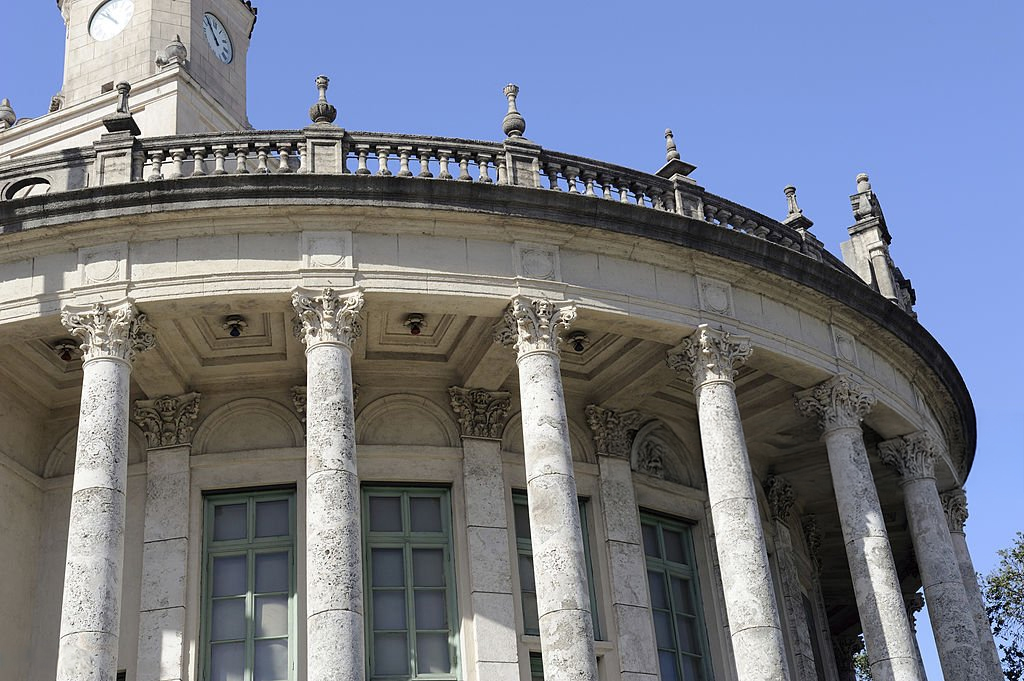








“Bell-Llewellyn also gave credit where it was due — to city founder George Merrick, whose early design for Coral Gables wove tree-lined streets and public green spaces into the urban fabric.”
Yes!
In planning Coral Gables, founder George Merrick employed the concepts of the Garden City and City Beautiful movements of comprehensive planning. This type of planning took into account the philosophy of aesthetics which played a major role in the movements.
Furthermore, the city plan’s landmark status not only protects its carefully developed urban landscape from ill-conceived projects that detract from the harmonious existing attributes of Merrick’s vision, but also safeguards against any potential giveaways or takeaways — specifically the greenscape features that are an integral part of the Garden City precepts.
On page 32 of the plan, Merrick goes on to stipulate exact instructions to preserve the trees in the area. “The new development also will take steps to save from destruction full grown trees when new buildings are erected in new sections…as all of the full grown trees and old foliage will be kept intact…”
The landmarked city plan covers the entire cityscape including the protection and preservation of the city’s tree canopy and green corridors.
On page 11 of the city plan, Merrick’s master planner, Frank Button, Florida’s first registered landscape architect, observed during an assessment of Merrick’s land: “A careful study was made of the natural conditions and beauties of the property [a tract of 1200 acres] and care taken to preserve all trees.”
These trees were standing long before Coral Gables ever existed. And Merrick respectfully navigated the inherited greenscape as a central edict to his urban planning dictum.
Yes, Merrick was a developer, and, yes, he developed a brand new city, but he also made sure to keep the old foliage intact.
Let’s continue to protect our trees!
I don’t think the title of your article matches the content lol. Just kidding, mainly because I had some doubts after reading the article. https://www.binance.com/register?ref=IHJUI7TF