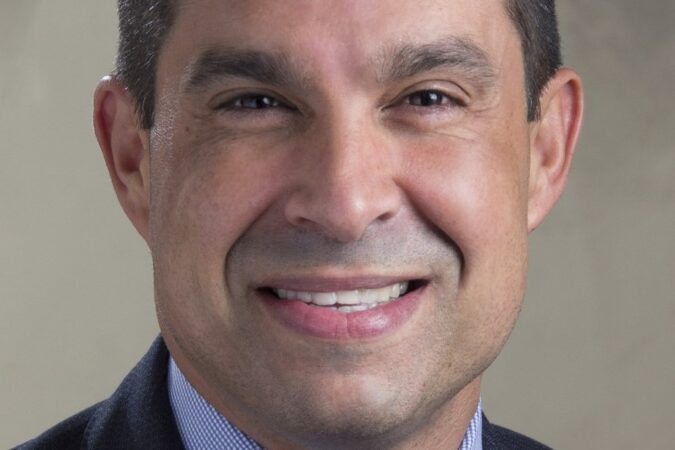
Lame-duck mayors usually spend their final terms watching power drain away. Vince Lago begins his with more of it than he has ever had.
Voters reelected him Nov. 3 with 56.8 percent and elected both commission candidates he endorsed. “This is a mandate,” he told supporters, and in the candidate races he has earned the word. He finished first in every precinct and held his share of the vote while participation nearly doubled. Nikki Whiting won the open Group V seat, and Nestor Menendez led Commissioner Melissa Castro, the mayor’s most persistent critic, by 121 votes in the most preliminary returns.
Consider what the next two years look like. Since last year, Lago has governed with a majority alongside Vice Mayor Rhonda Anderson and Commissioner Richard Lara, facing two dissenters, Castro and Commissioner Ariel Fernandez. Fernandez did not seek reelection. Castro’s defeat removes another independent voice. When the new commission takes office next month, Lago’s four colleagues will either have been his governing allies or won with his endorsement. And because this is his final consecutive term, he cannot seek reelection as mayor in 2028.
That is an open lane. The dissent of the past three years was often personal, and residents had reason to expect better from everyone on the dais. Yet dissent did useful work. A commissioner who presses for a contract’s details or casts a lone no vote makes officials defend their reasoning and leaves a record voters can read. Losing the two members who did most of that work would be a real change, whatever one thought of how they did it.
With his allies now occupying all the seats on the dais, the mayor will have few, if any, political obstacles to implementing his agenda and no one to blame if it falls short.
The harder question is who will check a mayor who may soon face no established opposition on the dais and no reelection ahead of him. A commissioner willing to demand answers, scrutinize contracts and, when necessary, vote no provides a check that professional staff and auditors cannot. Incoming City Manager Joe Gómez, appointed without a national search, will answer to the same commission. The inspector general voters authorized in April does not yet exist in working form.
Some guardrails do remain. Voters kept the requirement for formal solicitation on public-works contracts above $25,000, and they adopted Lago’s own amendment requiring 60 percent voter approval for specified sales and long-term leases of city parkland. Courts can review certain quasi-judicial decisions, and state ethics and open-government laws still apply. Those safeguards are real. But they do not replace the daily scrutiny of a commissioner willing to challenge a proposal before it becomes a decision.
Few guardrails would matter less if the stakes were small. They are not. The restoration of City Hall rests on a construction proposal of nearly $40 million that excludes some costs. The Mobility Hub, which Castro alone voted against advancing, will demolish Garage 1, while the city has explored selling or redeveloping Garage 4 to help finance it. The 30-year University of Miami agreement, approved in September, now must be carried out. A $60 million plan to replace the War Memorial Youth Center remains an unfunded, unapproved proposal. Each of these decisions will outlast the mayor who makes it.
Coral Gables can afford more ambition than most cities. It has a substantial commercial tax base and approximately $64 million in General Fund reserves, meeting its reserve-policy target. Amendment 3, which Florida voters approved Nov. 3 with about 62 percent support, will not erase that financial strength. But it will change the city’s revenue outlook. At September’s budget hearing, City Manager Peter Iglesias estimated an eventual annual loss of $7.7 million. Separate city projections identified losses of $5.7 million in fiscal 2028 and $11.4 million annually beginning in fiscal 2029. Those estimates reflect different assumptions and time periods that warrant a clear public explanation.
The amendment also halves the annual cap on assessment increases for non-homestead property, including commercial property, from 10 percent to 5 percent. That effect can compound over time. A wealthy city can absorb financial pressure without facing a fiscal crisis. It should still make decisions lasting decades with current numbers in hand.
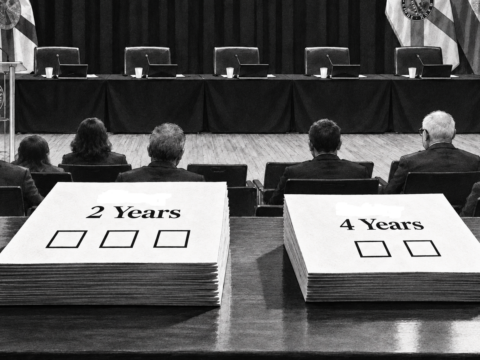
Voters seemed to understand the value of limits. On the same ballot that returned Lago, they rejected his proposal for four-year mayoral terms and his plan to let more public-works contracts proceed without formal solicitation. The longer term would never have applied to him, yet it ran behind his own share in every precinct. Voters chose the man and kept the guardrails they were offered.
The new commission can establish an independent check beyond its own ranks. We suggest three commitments.
First, give the inspector general real independence. In April, voters authorized contracted inspector general services with subpoena power, a reform Lago himself proposed. At an October workshop, he suggested requiring four of the commission’s five votes before any matter could be referred for investigation. Guarding against politically motivated referrals is a fair concern. But making a commission vote a prerequisite puts elected officials in control of which matters reach an investigator. A four-vote threshold goes further, allowing any two commissioners to block an inquiry supported by the other three. The ordinance should let residents file complaints directly and allow the investigator to decide which merit inquiry without political interference. The commission should adopt it on a set timetable, before the term’s biggest decisions come due.
Second, before committing more money to City Hall, the Mobility Hub or a new Youth Center, publish a five-year financial plan that updates and explains the Amendment 3 estimates and shows each project’s full price: construction, financing, contingencies and the cost of running what gets built. A project’s desirability does not establish its affordability, even in a wealthy city.
Third, the two incoming commissioners should prove their independence through their votes. Both told the Miami Herald they would exercise independent judgment. Menendez did not answer the Gazette’s candidate questionnaire, including our question about where he disagrees with his strongest political ally. The inspector general ordinance will give him and Whiting an early chance to answer it on the record.
Lago already had the votes to advance his agenda. What he may no longer have is a persistent opposition demanding that he explain it. The bell has rung on his years as mayor, and in two years someone else will inherit whatever this commission builds, borrows and sells. The best measure of his final lap is what the next mayor finds waiting.