The Coral Gables City Commission is designing an oversight system to investigate misconduct, identify waste and improve accountability in city government. But commissioners themselves may get to decide which matters an outside investigator can examine.
That is the tension emerging from the city’s effort to establish an inspector general, an oversight mechanism approved by 68.86 percent of voters in April.
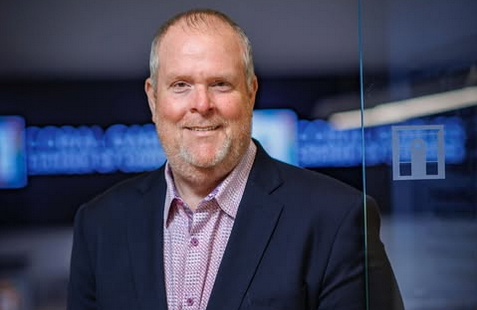
At an Oct. 13 workshop, Mayor Vince Lago proposed requiring four of five commissioners to authorize a referral for investigation. The arrangement would allow two commissioners to block a referral supported by the other three.
“If we’re going to refer anything to the inspector general, it has to have a four-fifth requirement, which I think is important and sets a standard,” Lago said.
Vice Mayor Rhonda Anderson said she “totally” agreed. Another commissioner predicted that “the likelihood of us sending things to the inspector general will be incredibly limited, which is a good thing.”
No commissioner voiced opposition during the discussion, but no formal vote was taken.
The proposed threshold is only one of several provisions commissioners discussed at the workshop. Together, those ideas raise a question that goes beyond how investigations are authorized: How independent can an inspector general be when the officials potentially subject to scrutiny control access to the investigative process?
The charter amendment voters approved authorized Coral Gables to contract with Miami-Dade County or a private entity for inspector general services as needed, with powers to subpoena witnesses and documents. It left the investigator’s appointment, term, functions and authority to an ordinance the commission has yet to write.
There is a substantive argument for requiring four votes.
Commissioners expressed concern that an inspector general could become a tool for political “weaponization” or a costly distraction. A contracted investigator would bill for services, and investigations launched primarily to damage political opponents could consume public money.
Requiring broader agreement could discourage frivolous referrals. Coral Gables also has internal and external auditors, police internal affairs and procedures for forwarding certain sworn complaints to county or state ethics authorities, Deputy City Attorney Stephanie Throckmorton noted.
An inspector general would not need to duplicate every existing oversight function.
But a supermajority requirement would screen complaints through a political vote rather than an independent assessment of their merits. Four votes show how many commissioners agree. They say little about how strong the evidence is.
The distinction matters because receiving a complaint, deciding whether it warrants investigation and conducting that investigation are separate powers.
At the Oct. 13 meeting, an FIU student visiting City Hall asked Lago how government corruption is identified. The mayor described a process open to residents, businesses and commissioners, but with the commission serving as an intermediary.
“If there’s an issue that’s identified, it will be presented to the commission and then the commission will refer it over to the inspector general,” Lago said.
Earlier, he had called for “every case” to be reviewed by the commission before submission to an inspector general.
Under that approach, residents could raise concerns, but commissioners would decide whether an outside investigator receives them. The workshop did not establish whether residents could also submit complaints directly to the inspector general or whether the investigator could independently initiate a case.
An office can have subpoena power and still possess limited independence if elected officials control which allegations it may examine.
The commission also discussed exercising authority after a referral is approved.
One approach would establish a roster of prequalified investigators. Another would require four votes to select the investigator assigned to a particular matter.
Commissioners also discussed spending limits. At one point, a speaker said the commission would “have to vote on how much is going to be spent on a particular investigation.”
Throckmorton raised the question of what happens if an investigation continues for an extended period, generates substantial expenses and commissioners decide they are satisfied with the work already performed.
“How can they end that investigation?” she asked.
She also asked whether the four-fifths threshold would apply to terminating an investigation. The available transcript does not establish an answer.
Choosing qualified investigators, controlling expenses and determining when inquiries should conclude are legitimate administrative concerns. But if the commission ultimately controls referrals, investigator selection, funding and termination, an investigator could find that professional discretion extends only as far as commissioners permit.
None of those provisions has been adopted. Their combined effect will depend on the ordinance’s final language.
The comparison with Miami illustrates how an apparently identical voting requirement can serve a very different purpose.
Lago cited that city’s four-fifths rule as a model. “That’s what the city of Miami has,” he said.
Miami’s requirement, however, concerns removing its inspector general, not authorizing individual investigative referrals. The city’s inspector general system also provides for investigations to be initiated independently.
Throckmorton described the different removal standards used in other jurisdictions. “Some are regular, some a supermajority,” she said, explaining that independence is a hallmark of the inspector general’s role.
A supermajority requirement for removal can protect an investigator from being dismissed by a narrow political majority. Applied to referrals, the same threshold can give a minority of elected officials the power to prevent an investigation from being authorized.
One protects the investigator from political interference. The other can make access to the investigator dependent on political consent.
Coral Gables is considering a different model from Miami’s permanent office. Its voters authorized contracted services on an as-needed basis, making the terms of each assignment particularly important.
Several questions remain unresolved.
Could residents approach an inspector general without commission approval? Could an investigator pursue evidence of additional misconduct uncovered during an authorized inquiry? Would a commissioner whose conduct was under examination participate in the referral vote? Would vacancies or recusals change the number of affirmative votes required?
Recent commission disputes show why those questions are more than theoretical.
On Sept. 29, Commissioner Melissa Castro sought an independent ethics review concerning Lago’s professional relationship with a construction firm and his participation in the University of Miami development agreement.
Her resolution died for lack of a second.
Castro sought an outside determination of whether ethics rules required disclosure, recusal or other action. She did not claim that wrongdoing had been established. Lago disputed suggestions of an improper conflict and said he welcomed independent review.
Supporters of a four-vote requirement could point to such politically charged disputes as evidence that safeguards are needed to prevent investigations from becoming extensions of commission rivalries.
Critics could draw the opposite lesson: A request for independent scrutiny can die at the commission table before an outside authority has evaluated its merits.
That episode does not establish that an investigation was warranted. Nor was Castro’s proposed ethics referral governed by the inspector general rules now under consideration. It illustrates the procedural question those rules will have to resolve: Who decides whether allegations involving elected officials receive independent examination?
The ordinance is expected to return after the Nov. 3 municipal election, when voters will fill three of the commission’s five seats, including the mayor’s.
The commission has not decided whether an inspector general could initiate investigations independently, pursue evidence beyond an initial referral or continue working without further political authorization.
Those decisions will determine how much independence the oversight system possesses.
Coral Gables voters have authorized an outside investigator to examine misconduct in their government. Whether that investigator can examine City Hall without first securing City Hall’s permission remains an open question.

Author: Coral Gables Gazette News Staff
Originally established in 1996 and relaunched as a digital publication in February 2025, the Coral Gables Gazette is an independent local news organization dedicated to factual, objective and accountable community journalism. Our newsroom reports on the people, policies, institutions and events shaping Coral Gables, Florida, providing residents with timely, informative coverage of the issues affecting their community. Our reporting includes City Hall, local government, municipal elections, public spending, real estate development, business, education, arts and culture, and neighborhood affairs throughout the City Beautiful. We follow City Commission decisions, examine public records and report on the businesses, organizations and individuals contributing to Coral Gables. We believe informed residents are essential to a healthy, engaged community. Stories published under the Coral Gables Gazette News Staff byline are prepared or compiled by the publication's editorial team. We strive for accuracy, fairness, transparency and clear distinctions between news reporting, opinion and advertising. Readers are encouraged to submit news tips, corrections, editorial inquiries and story suggestions through our Contact page and learn more about our standards through our Editorial Policy.