Coral Gables voters approved inspector general oversight with subpoena power in April, but left the City Commission to determine how it would work, who would provide the services and what authority the inspector general would exercise.
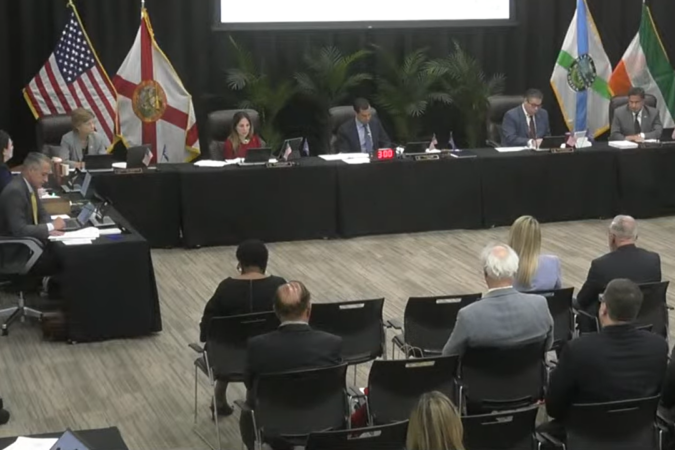
On Tuesday, Oct. 13, commissioners and city staff are scheduled to discuss those questions at a public Sunshine meeting, beginning at 4 p.m. or immediately after the regular commission meeting concludes.
The discussion comes nearly six months after voters authorized the city to contract for inspector general services to investigate fraud, waste, mismanagement and abuse of power in municipal government.
The city has not yet put an inspector general system into operation. The charter amendment leaves its implementation to an ordinance, making the commission’s decisions central to the independence, effectiveness and scope of any future investigations.
The meeting will take place in the Community Meeting Room at Police and Fire Headquarters, 2151 Salzedo St. The city’s notice identifies no specific proposals, draft ordinance or cost estimates for public review.
Voters approved the authority, not the operating rules
The inspector general proposal appeared as Amendment 5 on the April 21 special mail-ballot election.
According to official Miami-Dade County election results, 5,955 voters supported the measure, or 68.86 percent, while 2,693 voted against it.
As the Gazette reported in its analysis of the referendum, voters supported the inspector general proposal while rejecting another amendment that would have expanded commissioners’ authority to remove their board appointees.
The inspector general amendment authorized the city to contract with Miami-Dade County or a private entity for services, as needed, to investigate, audit and oversee municipal matters.
It expressly included the power to subpoena witnesses and require the production of documents.
But the ballot language also states that the inspector general’s “appointment, term, functions, and powers shall be established by ordinance.”
That distinction is consequential. Voters did not approve the detailed structure of a permanent municipal office or specify the circumstances under which investigations would begin. They authorized a contracted oversight mechanism whose operating rules the commission must now establish.
The ordinance will determine how that authorization is translated into practice.
Among the unresolved questions are who selects the inspector general, what grounds would permit removal, how investigations would be initiated, whether residents could submit complaints directly, and what safeguards would protect investigations from political interference.
The commission must also determine the scope of oversight, including whether it would cover elected officials, city employees, vendors and contractors. Any authority over political committees would require a legal basis beyond the ballot’s general language.
Funding presents another question. The city has not identified in the meeting notice what the service would cost or whether an inspector general would operate on a standing contract, individual assignments or another arrangement.
County or private contractor?
The charter amendment permits two approaches: obtaining services from the Miami-Dade County Office of the Inspector General or contracting with a private entity.
The county model has an established local precedent.
Miami-Dade County Public Schools has received inspector general services through an interlocal agreement with the county since January 2008. The agreement authorizes independent investigations and oversight of school district operations, with the school district funding the services.
According to the Miami-Dade County Office of the Inspector General, the agreement has been renewed repeatedly, most recently through December 2028.
Coral Gables could pursue a similar arrangement, although doing so would require negotiating the terms and obtaining the necessary county approval.
A private contractor would present different questions about selection, contractual independence, qualifications, reporting obligations, removal and the legal mechanisms for exercising subpoena authority.
Tuesday’s notice does not identify a preferred model or say whether city staff will present competing proposals.
A proposal debated for years
Mayor Vince Lago has advocated creating inspector general oversight for several years.
The proposal was debated repeatedly in 2024, when Commissioners Melissa Castro and Ariel Fernandez and then-Commissioner Kirk Menendez supported sending the matter through the city’s charter review process.
The issue returned to the commission in January 2026. As the Gazette reported at the time, commissioners debated the charter proposals and revised the inspector general language to clarify that services could be contracted rather than provided by a full-time city employee.
The commission unanimously approved putting the inspector general question before voters.
It was ultimately one of eight charter questions on the April ballot.
The approved language authorizes contracted services as needed rather than requiring a continuously staffed city inspector general’s office.
The practical significance of that choice will depend on the ordinance.
An inspector general whose authority is narrowly defined or activated only through a particular approval process could operate differently from one empowered to initiate investigations independently.
The amendment’s broad grant of investigative and subpoena authority does not, by itself, resolve those questions.
Recent disputes give the question urgency
The discussion arrives three weeks before the Nov. 3 municipal election, when voters will choose a mayor and two commissioners.
Recent disputes involving commission conduct, campaign contributions and possible conflicts of interest have underscored questions about who should investigate allegations involving City Hall.
At the Sept. 15 commission meeting, Castro sponsored a resolution proposing to refer three matters for future inspector general review.
As previously detailed by the Gazette, they included allegations involving testimony at an Aug. 25 commission hearing, the timing of political contributions from people or entities appearing before the commission, and activities involving Lago’s political committee, Coral Gables First, where those activities intersected with city officials or official city platforms.
At the time, no inspector general had been appointed or engaged to conduct those inquiries.
Two weeks later, Castro sought an independent ethics review concerning Lago’s participation in negotiations over the University of Miami’s 30-year development agreement and his professional relationship with Hammer Commercial Construction, a company that had performed work for the university.
Her resolution sought an outside determination of whether any disclosure, recusal or participation requirements applied. It did not allege that an ethics violation had been established.
The resolution failed for lack of a second.
In the Gazette’s account of the Sept. 29 commission meeting, Fernandez expressed concern that commissioners were increasingly acting as an investigative body and relying on allegations that had not been independently established.
Lago rejected suggestions of an improper conflict, saying he held no ownership interest in Hammer and that its relationship with the university predated his election. He said he welcomed independent review.
The disputes illustrate a central question for the proposed inspector general system: whether it would provide an established route for independent examination of allegations that otherwise become subjects of political debate at commission meetings.
Public meeting offers a first look at implementation
The city’s Sunshine meeting notice says members of the commission and city staff will attend. The meeting is open to the public, and minutes will be taken and made available.
The notice does not specify whether public comment will be taken, whether commissioners will consider draft ordinance language or when the legislation might come before the commission for a formal vote.
The commission’s regular meeting begins at 9 a.m. in the same room. As the Gazette reported in its preview of Tuesday’s agenda, that meeting separately includes a Castro-sponsored discussion of travel expenses and an update on the investigation into alleged false testimony during an August commission hearing.
Residents may attend the inspector general discussion in person or through Zoom. The city’s listed call-in number is 305-461-6769, and the meeting ID is 305 446 6800.
The city asks participants requiring disability accommodations to contact ADA Coordinator Clifford Friedman at cfriedman@coralgables.com or 305-722-8686 at least three business days in advance.
For residents following the discussion, the principal questions are whether commissioners favor the county or private-contractor model, what independent authority the inspector general would exercise, how the services would be financed and when an implementing ordinance would be brought forward.
Voters authorized the oversight mechanism in April. How the commission writes its rules will determine what that authorization ultimately means for accountability at City Hall.

Author: Coral Gables Gazette News Staff
Originally established in 1996 and relaunched as a digital publication in February 2025, the Coral Gables Gazette is an independent local news organization dedicated to factual, objective and accountable community journalism. Our newsroom reports on the people, policies, institutions and events shaping Coral Gables, Florida, providing residents with timely, informative coverage of the issues affecting their community. Our reporting includes City Hall, local government, municipal elections, public spending, real estate development, business, education, arts and culture, and neighborhood affairs throughout the City Beautiful. We follow City Commission decisions, examine public records and report on the businesses, organizations and individuals contributing to Coral Gables. We believe informed residents are essential to a healthy, engaged community. Stories published under the Coral Gables Gazette News Staff byline are prepared or compiled by the publication's editorial team. We strive for accuracy, fairness, transparency and clear distinctions between news reporting, opinion and advertising. Readers are encouraged to submit news tips, corrections, editorial inquiries and story suggestions through our Contact page and learn more about our standards through our Editorial Policy.