

By Rafael Hernandez
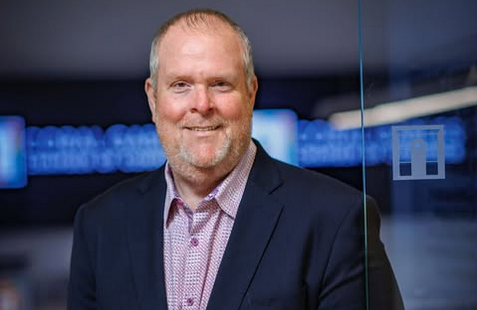
Former Coral Gables commissioners Bill Kerdyk and Chip Withers know their hometown better than anyone.
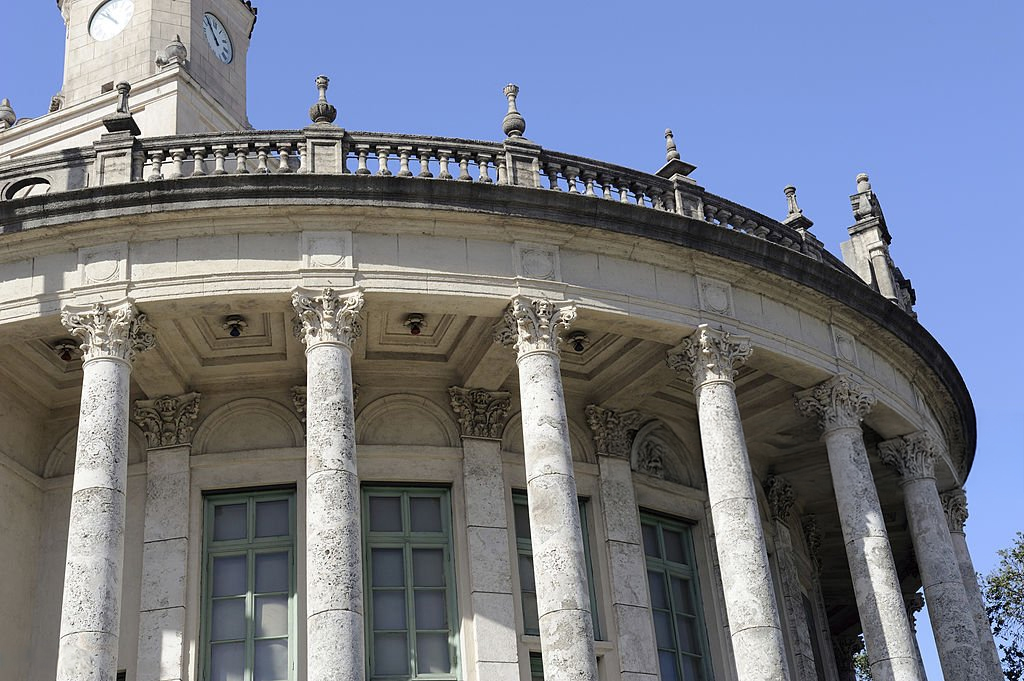
They’ll appear alongside New York Times bestselling author Les Standiford at the Coral Gables Museum on Friday, October 3 at 6 p.m., for the official launch of Coral Gables: From Bankruptcy to Beauty. Presented by Books & Books in partnership with the Coral Gables Museum, the event will feature a public conversation, light refreshments, and on-site book sales. Admission is free, but guests are asked to RSVP here to reserve a spot.
With a combined 40 years serving as city officials and two lifetimes as residents under their belts, Kerdyk and Withers teamed with Standiford to explore the Gables’ history and its founder, George Merrick. The result is a sweeping centennial retrospective that asks: Did Coral Gables live up to Merrick’s vision—and how did the city achieve it?
Merrick founded Coral Gables in 1925 under the “City Beautiful” model, an urban planning philosophy that promoted lush landscapes and Mediterranean architecture. Nearly a century later, the trio looked into how his dream held up.
“The whole premise of the book is, did we maintain George Merrick’s view of what he thought the City Beautiful movement would look like now?” said Kerdyk. “We don’t wholly answer that, but I can tell you from looking at other City Beautiful movements, Coral Gables is probably the best example.”
Kerdyk and Withers hope the book will serve as a resource for residents, planners and civic leaders—reminding future generations what makes their city one of a kind.
A civic legacy
Bill Kerdyk comes from a family that has helped shape Coral Gables across eight decades.
His uncle, Frank Kerdyk, served as a city commissioner from 1957 to 1961, during a period when Coral Gables was grappling with the rise of suburbanization. His father, William H. Kerdyk Sr., followed in 1967 and ultimately served for 28 years, becoming the longest-serving commissioner in city history. Kerdyk Sr. was a champion of historic preservation and instrumental in efforts to save the Biltmore Hotel, enforce Mediterranean-style design codes, and protect the character of residential neighborhoods during a period of rapid growth.
Bill himself held office from 1995 to 2015, including multiple terms as vice mayor. Some of his initiatives include the Coral Gables trolley, which provides connectivity to the metro-rail station, relieving traffic congestion in both commercial and residential areas as well as freeing up downtown parking spaces in Coral Gables. It hosts over a million users yearly. Additionally, he has spearheaded the public-private partnership called Parknership aimed at expanding and improving green spaces throughout the city.
“We’ve always been heavily involved,” said Kerdyk. “It’s not always politics. It’s a lot of time just helping the community out as best we can.”

Outside of government, Kerdyk has built a parallel career in business and civic service. He serves as president and CEO of Kerdyk Real Estate and in 2006 founded the Bank of Coral Gables, later merged into First American Bank, where he remains on the board. His leadership has earned recognition from Florida Trend magazine as one of Florida’s top 500 business leaders and from South Florida Business & Wealth, which dubbed him the “Guru of the Gables.” Alongside his professional life, he has been active in community organizations from Big Brothers Big Sisters to the Miami-Dade Beacon Council and the Metropolitan Planning Organization, and he has been honored with awards including the George Merrick Award of Excellence, the Coral Gables Foundation Legacy Award, and the Junior Orange Bowl Legacy Award. Closer to home, his family established music and beautification scholarship funds through the Coral Gables Community Foundation, ensuring that his civic legacy matches his professional one.
Wayne “Chip” Withers brings a similarly deep-rooted commitment to the city’s civic life. A fourth-generation Miamian, Withers has lived in Coral Gables since infancy. His parents, Wayne E. Withers Sr. and Aneita Blount Withers, settled in the Gables after his father’s service in World War II. Chip attended Sunset Elementary, Ponce Junior High, and Coral Gables Senior High before earning a business degree from the University of Florida in 1973. He took over the family company, Withers Transfer & Storage, in 1980, transforming it from a local mover into a global logistics and freight operation.
Withers served five consecutive terms on the Coral Gables City Commission from 1995 to 2013, including multiple stints as vice mayor. He helped lead the founding of the Coral Gables Museum, served on boards spanning parks, planning, youth services, and economic development, and was named Coral Gables’ Citizen of the Year by the Rotary Club in 2018.
“The opportunity to serve, to be part of the story of this city—it’s something I’ll always be proud of,” Withers said.
From father’s memories to Centennial tribute
Bankruptcy to Beauty was not Kerdyk’s first attempt at chronicling his hometown. The idea first sparked in the mid-2000s, when he hoped to capture his father’s memories and preserve overlooked stories beyond Merrick. But the effort paused after his father’s passing in 2007.
He revived the idea in 2023, motivated by the upcoming centennial. He partnered with Withers and set out to find an author who could help them bring the project to life.
“It was sort of a long time thing I was thinking about, and it materialized. And I couldn’t have two better people with me than Chip Withers… And then Les Standiford is an extremely talented and well-respected writer,” Kerdyk said.
Kerdyk and Withers approached Books & Books founder Mitchell Kaplan, who connected them to Standiford. The Coral Gables bookstore, founded in 1982, has been a literary anchor in South Florida and a longtime supporter of civic storytelling.
“This one was particularly gratifying,” Kaplan said. “It’s bringing people together to shed light on a city that has meant so much to me over the 43 years of us being in business.”
Standiford had previously written Coral Gables: The City Beautiful Story over 30 years ago, and initially declined the offer, believing everything had already been said. But as he reflected, he realized that beyond Merrick’s legacy, the real stewards of the city’s vision were its residents.
A city built by citizens
Although George Merrick laid the foundation, Standiford emphasized that Coral Gables’ distinctive character has been maintained by decades of civic leadership and community involvement.
“The reason that there was, why they rose up a preservation movement in the ’70s in the Gables, was the fact that most people who have been Gables commissioners are Gables residents, and have been and whose ancestors go back to the beginning,” Standiford said. “And that’s beginning to change.”
For Kerdyk, the preservation of Merrick’s vision required residents to stay engaged, from resisting overdevelopment to preserving architectural integrity.
He said this has been a common occurrence throughout the years. For example, in the 1960s a developer proposed building several high-intensity buildings in the Cocoplum subdivision. The commission on an 4-1 vote (Kerdyk Sr. dissented) initially approved the project. However, “The electorate, the people that lived down there, galvanized together, formed committees, and ultimately persuaded the commission to reverse their votes,” Kerdyk explained. “Citizen involvement has been a key ingredient in making our community what it is.”
Withers echoed the sentiment, noting that while parks and architecture shape the city’s physical identity, its true “soul” is rooted in community pride and stewardship.
Looking back, he said the postwar zoning decisions of the 1950s and 1960s set the stage for suburban-style stability. Later decades brought growth, and with it, pressure from developers to encroach on neighborhood space.
“It does start to adversely affect the neighborhoods,” Withers said. “What is it going to do to that neighborhood? Is it gonna take that neighborhood’s soul away because it’s no longer a neighborhood? Because it’s adjacent to a large development? I think history will have to tell us.
Looking ahead
Withers warned that the city’s future hinges on how it responds to mounting development pressures along U.S. 1, the need for more affordable housing, and long-term threats like sea level rise.
Rent in Coral Gables remains well above the national average, with “affordable” units often still costing families over $230,000, he noted. Public school quality, infrastructure strain, and coastal vulnerability are also on his radar.
“Culturally, I think the city is on a great track. It’s more the building, development, and zoning and some of the economic issues that drive the city’s tax base that are more of an issue,” he said. “I’m optimistic, because we’ve always seemed to survive.”
For Kerdyk, the book offers a message to future generations about vigilance and pride: that preservation doesn’t happen by accident.
“Look how hard they maintained their values and stayed involved, and that’s what we need to do—the same thing to keep the same quality of life for the residents,” he said.
In Kerdyk’s view, Merrick would be pleased by the outcome of his vision.
“If he came back today, he would be happy, in my opinion. He would be pleased to see what Coral Gables looks like.”

Author: Coral Gables Gazette News Staff
Originally established in 1996 and relaunched as a digital publication in February 2025, the Coral Gables Gazette is an independent local news organization dedicated to factual, objective and accountable community journalism. Our newsroom reports on the people, policies, institutions and events shaping Coral Gables, Florida, providing residents with timely, informative coverage of the issues affecting their community. Our reporting includes City Hall, local government, municipal elections, public spending, real estate development, business, education, arts and culture, and neighborhood affairs throughout the City Beautiful. We follow City Commission decisions, examine public records and report on the businesses, organizations and individuals contributing to Coral Gables. We believe informed residents are essential to a healthy, engaged community. Stories published under the Coral Gables Gazette News Staff byline are prepared or compiled by the publication's editorial team. We strive for accuracy, fairness, transparency and clear distinctions between news reporting, opinion and advertising. Readers are encouraged to submit news tips, corrections, editorial inquiries and story suggestions through our Contact page and learn more about our standards through our Editorial Policy.









The statement from Mr Kerdyk who observed, “The preservation of Merrick’s vision required residents to stay engaged, from resisting overdevelopment to preserving architectural integrity,” is well appreciated.
The Historic Preservation Association of Coral Gables, established in 1991, and whose mission of promoting the importance of historic resources and their preservation is as strong as ever, is vigorously engaged as partners with the City of Coral Gables and its historic preservation efforts. Members of the HPACG have been active in supporting applicants for Special Certificates of Appropriateness, variances from the Zoning Code, and determination of historic designation. Moreover, the HPACG disseminates information of the local tax incentives available to owners of historic properties.
Herbert Brito, former HPACG board member and past architectural historian for the National Register of Historic Places, observes, “Without reservation, it is highly apparent that the Historic Preservation Association of Coral Gables has demonstrated superlative achievement in the field of preservation and has espoused the National Trust for Historic Preservation’s ideal to save America’s historic places. The focus of HPACG, throughout its existence, is indicative of its desire to protect properties that convey special sense of time and place.”
*The City of Coral Gables adopted its first Historic Preservation ordinance in 1973 in response to the community’s growing concern for safeguarding its irreplaceable historic resources. In 1984, a revised and expanded ordinance was enacted by the City Commission and made a part of the City Code. This ordinance established the Historic Preservation Board, and added further protection to local properties.
Well Done Bill Kerdyk telling the story of Coral Gables