

By Coral Gables Gazette staff
Coral Gables commissioners took two significant steps toward reshaping the city’s downtown at their June 2 meeting, moving the long-delayed Mobility Hub closer to construction and authorizing the city manager to negotiate the purchase of an office building on the same block as City Hall.
Both moves were presented as ways to advance major capital priorities without relying directly on property-tax dollars as the city braces for possible revenue reductions beginning in fiscal year 2028.
Neither action was final. The Mobility Hub financing must return to the commission as a separate bond resolution, and the Biltmore Way purchase still depends on negotiated terms and a future purchase and sale agreement.
The two items, taken up separately during a lengthy meeting, share a common financial logic. The Mobility Hub would be financed through tax-exempt special revenue bonds, with the parking system expected to absorb annual debt service. The building acquisition would be funded with restricted dollars that city officials said cannot legally be spent on general operations.
Together, the actions illustrate how city leaders are trying to keep major downtown commitments moving forward while limiting pressure on day-to-day services during an uncertain fiscal period.
A paused project returns
The Mobility Hub, planned for the sites of Parking Garages Nos. 1 and 4 near Miracle Mile, has been discussed for years. Finance Director Diana Gomez told commissioners the project had evolved substantially since it was first proposed and that the city had taken deliberate steps to position itself for construction.
The commission’s action on June 2 was narrower than full financing approval. Commissioners considered an intent resolution preserving the city’s ability to reimburse eligible costs from future tax-exempt bond proceeds, along with general authorization for demolition and site preparation. Gomez explained that the prior reimbursement resolution had covered only the design phase and was no longer valid for construction.
“The $50 million amount in that resolution is not the final project budget or the final bond size,” Gomez said, “but it creates the IRS-required reimbursement framework so that work can begin on demolition while final construction pricing and bond financing are completed.”
The financing itself is scheduled to return to the commission as a separate bond resolution on July 7. Gomez laid out a timeline in which the financing team would complete rating agency work over the summer, target a competitive bond sale in mid-September and close in early October, positioning the city to execute a construction agreement expected in late October 2026.
Gomez said the recommended structure relies on tax-exempt special revenue bonds issued over 30 years, secured by legally available non-ad valorem revenues. That approach, she said, allows the city to draw on its AAA credit profile to lower borrowing costs while the parking system is expected to carry the annual debt service.
“Parking revenues are legally unrestricted,” Gomez said. “They can be used for any general governmental purpose, and the city has been planning for that debt service with the parking system over the past several years.”
A traditional parking revenue bond, she added, would have carried lower ratings and higher borrowing costs because the pledge would be limited to parking revenues alone.
Why the project stalled, and why it is moving now
City Manager Peter Iglesias walked the commission through the project’s history, explaining why it had been shelved and why staff now recommends proceeding. By 2023, he said, contractor feedback and market escalation had pushed projected pricing above $73 million, a figure that made it impossible to sign a contract without an open-ended escalation clause.
“It was so great that we could not sign a contract with a contractor without an escalation clause,” Iglesias said. “So we really did not know what the upper-end cost of that project would be.”
The project was paused rather than abandoned, Iglesias said, in response to construction-market volatility driven by pandemic-era labor shortages, material shortages and inflation in concrete, steel and electrical equipment. He told commissioners that projected costs had since come back down to a constructible range and that the city was pursuing value engineering and negotiation to control the final figure.
According to a project history the city presented to the commission, the hub’s estimated cost climbed steadily through its design phases — from $47.3 million at the 2020 concept stage to $58.9 million in 2021 and $62.7 million in 2022 — before escalating market pricing pushed it past $73 million in 2023, the point at which the city paused the project. The current figure remains under negotiation but has trended back down, staff said, to a level significantly below the 2023 peak.
Doing nothing, Iglesias warned, would not avoid cost. Garage No. 1 remains an aging asset with limited capacity, he said, and a minimal replacement would still require an equally minimal replacement of obsolete Garage No. 4. The city’s presentation showed the proposed hub is expected to provide roughly the same number of parking spaces as the two existing garages combined — about 626, compared with 627 today — while adding public space, mobility features, a rooftop park and expanded electric-vehicle infrastructure.
Iglesias emphasized that the facility is also designed for adaptive reuse, with floor heights that could allow upper levels to be converted to multifamily housing in the future.
Mayor Vince Lago framed the project as an investment in the city’s commercial core, noting that the business community and downtown apartments account for a substantial share of the city’s tax base. He drew a direct line between the Mobility Hub and the parking revenue expected to repay its debt.
“We’re going to have a project on our hands that’s going to be palatable, that’s going to be funded through parking revenue, which is something why I’m supporting this project,” Lago said. “There’s a revenue source in line, and that is going to feed this parking garage and feed this debt for the next 30 years.”
Lago cautioned that the final number would not be modest.
“Are we going to be able to do it for $40 million? I’ll tell you right now we’re not going to be able to do it for $40 million,” he said. “We’re not even going to be able to do it for $50 million because there’s been a reset in regards to prices.”
Officials debate how the project became viable
The mayor also used the discussion to push back on remarks made at a previous commission meeting, in which Commissioner Ariel Fernandez had suggested he was responsible for making the project financially feasible. Lago rejected that characterization directly.
“This project was made possible because of your hard work,” Lago said, addressing Iglesias and city staff. “And let’s not get that even remotely twisted.”
He compared the claim to assertions that the city had tripled its sidewalk budget, which he has also disputed, arguing that the Mobility Hub became viable because of construction-market conditions and staff negotiation rather than any single commissioner’s action.
Vice Mayor Rhonda Anderson and Commissioner Richard Lara both praised the city manager’s handling of the project through volatile economic conditions. Anderson described the Mobility Hub as replacing two obsolete garages with a single modern, accessible facility that supports downtown businesses, and said reasonable residents could debate height or design while the case for action remained clear.
“What I don’t think can be debated is that doing nothing — if we did nothing, that will no longer serve the residents, the people who come to visit, or the people who do business here in an effective way,” Anderson said.
The commission approved the intent resolution and demolition authorization unanimously.
Buildings to complete the block
Later in the meeting, commissioners turned to a resolution authorizing Iglesias to negotiate the purchase of 475 and 495 Biltmore Way, an office property on the same block as City Hall and Development Services.
Iglesias said acquiring the property would advance a long-standing plan to consolidate city departments into a single complex. City Asset Manager Page Perez told commissioners the consolidation would create a one-stop location for residents to access municipal services, reduce the need for departments to operate from scattered locations and improve coordination among staff.
Lago said he had first raised the idea of acquiring the property seven or eight years earlier, under a previous city manager, and that the opportunity had returned at an opportune moment.
“This would allow us to control the entire city block,” he said, describing the purchase as a way for the city to “control its own destiny” as corporations and residents continue moving into Coral Gables.
The financing structure drew the sharpest exchange of the segment. Resident Maria Cruz spoke against the timing of the purchase, warning that the building would require costly retrofitting and that the city should wait until the outcome of the state tax debate was clear. She pointed to the city’s prior acquisition of a building at 427 Biltmore Way as a cautionary example.
“Even though I like the idea, I think the timing is not good,” Cruz said, “when we know the winter is coming because we don’t know what Tallahassee is going to end up doing.”
Anderson responded that the funds available for the purchase were restricted and could not be directed to the general fund in any case.
“These funds can only be spent for this type of thing,” she said, before moving to approve the resolution.
After the unanimous vote, Lago pushed back pointedly on Cruz’s comment without naming her, criticizing what he characterized as a tendency to cast city actions in a negative light. He maintained that the purchase would not be funded through debt and would rely on money already held in a restricted account.
“The need to continuously paint everything in a negative light, the lack of actual understanding of what we’re doing here today, reflects poorly on that individual,” Lago said.
“I’m all for opposing views,” he added, “but with actual facts and actual knowledge of what we’re trying to do right now.”
What comes next
The Mobility Hub’s bond resolution is scheduled for the July 7 commission meeting, a milestone Gomez described as critical to keeping the financing schedule on track. If the bonds close as planned in early October, the city expects to execute a construction agreement later that month.
The Biltmore Way purchase now moves into negotiation, with Iglesias authorized to finalize terms and bring a purchase and sale agreement forward.
Both investments advance against the same fiscal backdrop: a proposed expansion of homestead exemptions that Florida voters will consider in November, and which city officials expect could reduce property tax revenue beginning the following fiscal year.
By structuring the Mobility Hub around special revenue bond financing, with parking revenues expected to absorb debt service, and by pursuing the Biltmore Way purchase with restricted dollars, city leaders are trying to move two major downtown priorities forward without adding direct pressure to a general fund they expect to come under strain.












Thank you for helping me better understand the process.
Jackson Rip Holmes
A mobility hub that connects to nothing, financed with bonds by a city that may lose most of its tax revenue, and led by a man-child wanna be king that has no idea what business is. This is where we are
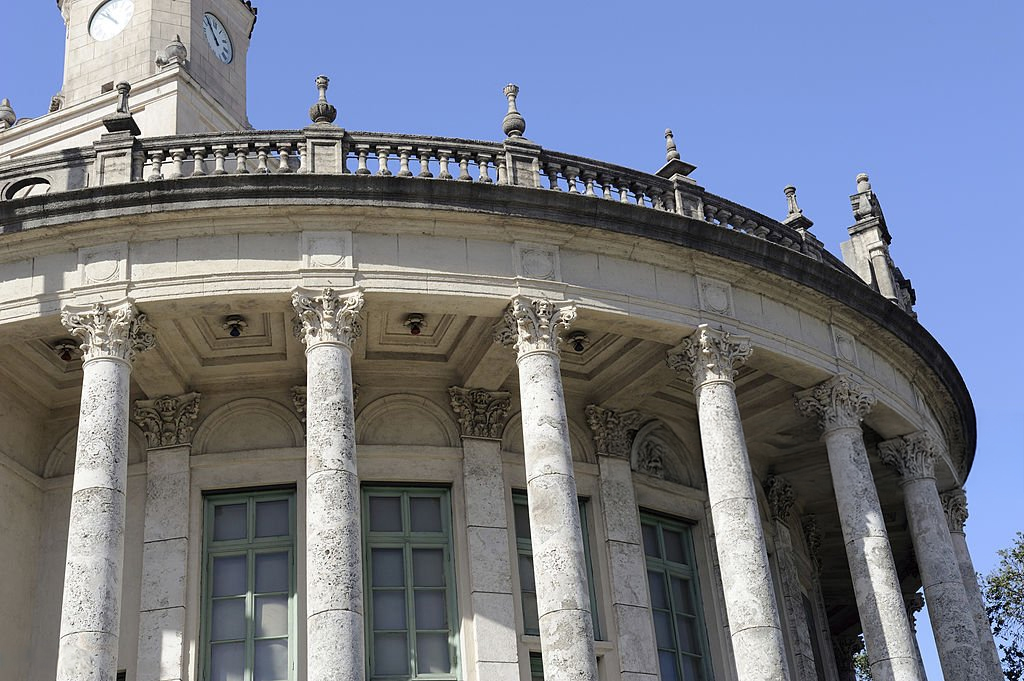
Thirty years ago, the city should have consolidate all the properties in the city hall block to allow for best options in the future. Better late than never. Someday, this block will brilliantly assimilate the old and the new with the restoration of the original city hall edifice and a modern accompaniment of administration space designed by experts that truly understand the original vision for this space.
The mobility hub must reflect a modern approach to parking, which makes the existing facilities seem like ancient artifacts with their inefficient use of limited space. The days of putting a nickel in a parking meter on Miracle Mile have long passed. Those with the gift of clear forward vision need to be involved in this next era parking complex. Not for us, but for future generations when mobility evolves — options like ride sharing, electric vehicles, self-driving taxi and a more robust local population that eschews traditional modes of transportation for a simple pedestrian lifestyle in the downtown area.
Congrats to city leaders and administration for moving forward on projects delayed far too long.
If the Mobility Hub/parking garage design eliminates “public space” (not sure what that refers to in a parking garage), “mobility features” (also unclear on exactly what that means), and a “rooftop park” (which seems ridiculous in the South Florida heat), and changes the floor heights to the standard height for parking garages, how much lower can this towering monstrosity be constructed? And how much money would the city save?
And since sidewalks were mentioned, maybe some of
those savings can be used to replace the deplorable condition of the sidewalks in our city.
References:
KingMaker einzahlung anleitung https://trac.dpi.inpe.br
References:
Hitnspin aktionscode https://www.mauocsp.ru/
References:
Lollybet Deutschland http://image.google.com.lb
References:
Best instant payid pokies australia real money https://zudate.com/@ramirozep54103
References:
Pokies net australia payid withdrawal rukorma.ru
References:
Online pokies australia payid real money intalnirisecrete.ro
References:
Pokies net australia payid withdrawal https://www.abgodnessmoto.co.uk/index.php?page=user&action=pub_profile&id=432214&item_type=active&per_page=16
References:
Online pokies australia payid real money https://bez2.ru/@kiera037070027?page=about
References:
Payid pokies aus atlantistechnical.com
References:
Online pokies with payid git.hanumanit.co.th
References:
Payid online pokies australia https://jobaaty.com/employer/fast-payid-pokies-australia-2026-instant-withdrawals-tested
References:
Pokies net australia payid withdrawal git.zefie.net
References:
New payid pokies https://klimaexpress-tube.de/@bev29j83260008?page=about
References:
Lollybet Kontakt clients1.google.com.ag
References:
Lollybet Willkommensbonus https://typhon.astroempires.com/redirect.aspx?https://link24.click/violettebirtwi
References:
Lollybet Bonus ohne Einzahlung http://clients1.google.ml/url?q=https://strongholdglobalgroup.com/employer/deine-online-spielothek/
References:
Lollybet Registrierung https://tahograf39.ru/