

When it comes to protecting Coral Gables’ most iconic civic building, aesthetics alone should not guide the debate. Nor should political preference. The question of whether to replace the original wood-framed windows at City Hall with steel units—now scheduled for a vote by the City Commission on Tuesday, July 1—demands a clear-eyed look at cost, durability, historical integrity, and public trust.
What the public has received instead is an incomplete process and a resolution that appears to disregard the advice of the city’s own Historic Preservation Officer, its Historic Preservation Board, and multiple outside specialists. That should give commissioners pause.
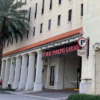
The building in question—Coral Gables City Hall at 405 Biltmore Way—is not just a functioning government facility. It is a symbol of the city’s founding ideals, designed in Mediterranean Revival style and listed on the National Register of Historic Places. The decision over how to preserve it is a matter not only of materials, but of principle.
According to the city’s public notice, the project would “replace the windows with new units that replicate the existing ones in type, configuration, and operation.” But preservation advocates rightly note that replication is not restoration. When original materials can be repaired, partially replaced, and made structurally sound for the long term—often at lower cost—the burden is on those proposing full replacement to make their case transparently.
So far, they have not.
The most troubling aspect of the city’s approach is not the consideration of steel windows itself—reasonable minds can differ on engineering—but the process. The resolution appeared suddenly on the July 1 agenda after three years of dormancy. No public cost comparison has been released. No physical prototypes of restored wood and replacement steel have been presented side by side. And no engineering report has been made public to demonstrate that restoration would be structurally inadequate or less resilient in storms.
To the contrary, multiple preservation professionals have argued that restoration is not only feasible but preferable.
Dean Stanbridge, president of Provive Professional Revitalization Services, stated plainly: “This building and the architect who designed it would have chosen wood for a reason—they could have gone with steel or aluminum at the time, but they chose wood. So wood should be the material of choice.”
Stanbridge has no financial stake in the outcome. His investment is in standards of excellence.
The city’s response has focused on hurricane risk. Communications Director Martha Pantin stated that “one of the building’s greatest vulnerabilities is its original windows,” warning that once breached, they could cause catastrophic internal pressure failures. This is a legitimate concern—and one worthy of public scrutiny.
But that risk exists regardless of whether the city chooses wood or steel. Both options require the full removal of the windows and reinforcement of the openings. Stanbridge noted that restored wood windows can meet modern standards for impact resistance and long-term performance when properly fabricated and installed. If the city believes otherwise, it should present clear engineering evidence—not just a preferred vendor.
It should also disclose the costs. Preservation advocates have cited estimates suggesting that steel windows could cost as much as 50 percent more than restoration. If true, that discrepancy demands public attention. If false, the city can clarify it with a simple, side-by-side breakdown.
Instead, city leadership appears ready to move forward with minimal public engagement and no comparative analysis.
We know Mayor Vince Lago, at least for now, favors metal replacement windows. Perhaps he can change his mind. We don’t know where the other four members of the commission stand. But the public deserves to know whether this vote is based on evidence—or on expediency.
This is not a question of steel versus wood. It is a question of process, trust, and stewardship.
Commissioners have the opportunity—and the obligation—to get this right. That does not mean ruling out steel forever. It means insisting on a complete, side-by-side presentation of cost, safety, durability, and design, with physical samples and third-party validation. They should show residents how each option serves the long-term interests of the building, the budget, and the city’s legacy.
Coral Gables is known for its design standards. But it should also be known for how it makes decisions that shape the public realm. On Tuesday, commissioners can either vote based on preference—or they can defer the item, demand the missing analysis and hold another hearing where residents and specialists can weigh in on equal footing.
We urge them to choose the latter. The windows of City Hall deserve to be strong. So does the process by which they are chosen.










The debate about the wood vs steel windows was addressed two weeks ago at the Coral Gables Museum by the renowned Spanish architect, Eduardo Martinez Moya during the Q&A after his magnificent presentation of the meticulous restoration of La Giralda bell tower in Sevilla, Spain. (The tower on the Biltmore Hotel is modeled after La Giralda.) Mr. Martinez Moya is regarded as one of Europe’s foremost architectural preservationists. A member of the audience asked his opinion about our City Hall’s window replacement options (and the questioner was quite frank about being in favor of the steel windows…although she mistakenly called them aluminum.) The expert preservationist left no doubt as to his opinion. Wood! When he was further pressed on the issue of water and our weather, his unwavering response was that wood was the material of choice, and today with the correct type of treated wood, all of those concerns could be mitigated. Talk about a timely presentation, followed by an unequivocal answer, by the most experienced expert in the field. And free advice, to boot!