

By the Coral Gables Gazette editorial board
Parking has long shaped how people experience downtown Coral Gables. Where drivers store their cars influences where they shop, how long they stay, and whether a visit feels welcoming or frustrating. For decades, parking availability served as a proxy for access and convenience. That reality still matters. Yet it no longer tells the full story of where downtown is headed.
The city’s recently launched downtown parking survey offers a timely opportunity to pause and ask a more fundamental question. The issue is not simply whether there are enough spaces, how much they cost, or how long it takes to find one. The larger question is what role parking should play in a downtown that continues to evolve toward higher residential density, greater walkability, and changing patterns of mobility.
Downtown Coral Gables is no longer defined solely by short visits from drivers who arrive, park and leave. It increasingly functions as a place where people live, work, dine, and socialize without necessarily using a personal vehicle for every trip. Residential development has brought more full-time residents within walking distance of shops and restaurants. Rideshare services have altered how visitors arrive for dining and nightlife. Public space, not just parking supply, now plays a larger role in determining downtown’s vitality.
This shift does not eliminate the need for parking. It reframes it. Parking becomes supporting infrastructure rather than the organizing principle of downtown life. In that context, the city’s effort to gather data about how people currently park serves an important purpose. Understanding today’s behavior provides a baseline for managing the present while planning responsibly for what comes next.
The survey asks practical questions about where people park, how long they search, and what factors influence their choices. Those answers matter. They reveal how curbside spaces, garages, valet services, and pricing interact in daily use. They also expose friction points that affect businesses and visitors today. Addressing those realities remains part of good governance.
At the same time, the value of the survey will depend on how the city uses the information it collects. Data alone does not produce sound policy. Interpretation, transparency, and follow-through do. Residents and business owners have grown accustomed to providing feedback in planning processes. Confidence in those processes comes from seeing how input shapes decisions, even when tradeoffs are required.
A forward-looking parking strategy recognizes that demand will not remain static. As downtown continues to add residents, short-term parking demand may decline in some contexts while curb management grows more important in others. Drop-offs, deliveries, rideshare activity, and future mobility options place different pressures on streets than traditional long-term parking. Planning for that transition now allows the city to avoid locking itself into solutions designed for a past era.
That long horizon is especially relevant as the city contemplates major investments such as the planned Coral Gables Mobility Hub. Whatever form it ultimately takes, the project reflects an acknowledgment that mobility is changing and that downtown infrastructure must be designed for adaptability rather than permanence. Decisions made today about parking supply, curb access, and vehicle flow will shape how such facilities function over time — and whether they remain assets as travel patterns evolve.
This is where the survey can play a constructive role. It should inform not only incremental adjustments but also broader conversations about how downtown functions as a place. Parking policy intersects with economic vitality, public space, and quality of life. Treating it in isolation risks missing those connections.
Good cities plan for overlap rather than conflict. Drivers, pedestrians, residents, workers, and visitors all use downtown differently. A successful parking strategy acknowledges those differences and resists one-size-fits-all solutions. It balances access with livability. It supports commerce without overwhelming streets with vehicles. It adapts as behavior changes.
The future of downtown Coral Gables will be shaped less by how many cars it can store and more by how well it accommodates people. Parking will continue to matter, but it should follow the city’s broader vision rather than define it. Surveys such as this one work best when they are treated as tools in an ongoing process rather than endpoints.
As the city reviews the results, the next step will matter most. Clear communication about what the data shows, what it does not show, and how it will be used will determine whether residents view the exercise as meaningful. Explaining constraints, acknowledging competing needs, and outlining next steps builds trust even when consensus proves elusive.
Downtown Coral Gables stands at an inflection point familiar to many successful cities. The challenge lies in managing present-day realities while preparing for a future in which mobility looks different than it has in the past. Parking policy remains part of that equation, but its role is changing.
Rethinking parking is about aligning infrastructure with the kind of downtown Coral Gables seeks to become. Done well, that alignment supports economic strength, livability, and long-term resilience. The survey opens the door. What follows will determine whether the city walks through it with intention.








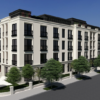




Miracle Mile and in general downtown Coral Gables has a number of great restaurants and places that I, as a resident, would visit more frequently. However, parking is such an issue. The City of Coral Gables continues with the development of high density residential unit (the apartment building across the post office on Valencia) which makes it really difficult to access these places, let alone drive in the area. Valet parking is expensive and there are not enough parking garages to meet the demand. Such pity because it (Miracle Mile and its surroundings) could be a great place to shop and eat.
I walk-metro-trolley into the Gables most of the time, but when I do drive, I/ve always found parking in the Museum garage. Occasionally I park on the street or in the surface lot behind Books and Books. I’ve never had a problem finding a space (albeit I might walk a couple of blocks, but by doing this, I discover new restaurants/shops and sometimes see people I know, etc.).
I would love to be able to ride my bike into the Gables, but there are no ‘safe’ routes available.
In my opinion, the City needs to focus on walkers and bicycle riders and make sure they feel safe and welcome! And, yes, we do need parking, but it seems to me we have enough at present (I do think some of the garages need to be ‘redone’).
Establish ONE parking payment system for all curbside, lots and garages. PaybyPhone is the best! Their app is efficient and easy. Nothing I hate more than going into a garage and having to learn some new system or download another app. I’m done with it. Start with Merrick Village – its system is awful and has actually led to my going elsewhere for shopping in many cases. Make the single parking payment system a requirement of all public, private, government and commercial facilities. Please put this idea in the city’s future planning, surveys and public discussions. Thank you
telegram 888slot có mục “Hỏi & Đáp” được sắp xếp theo chủ đề: nạp/rút, khuyến mãi, kỹ thuật… – bạn có thể tự giải quyết 90% vấn đề mà không cần liên hệ CSKH. TONY04-17