
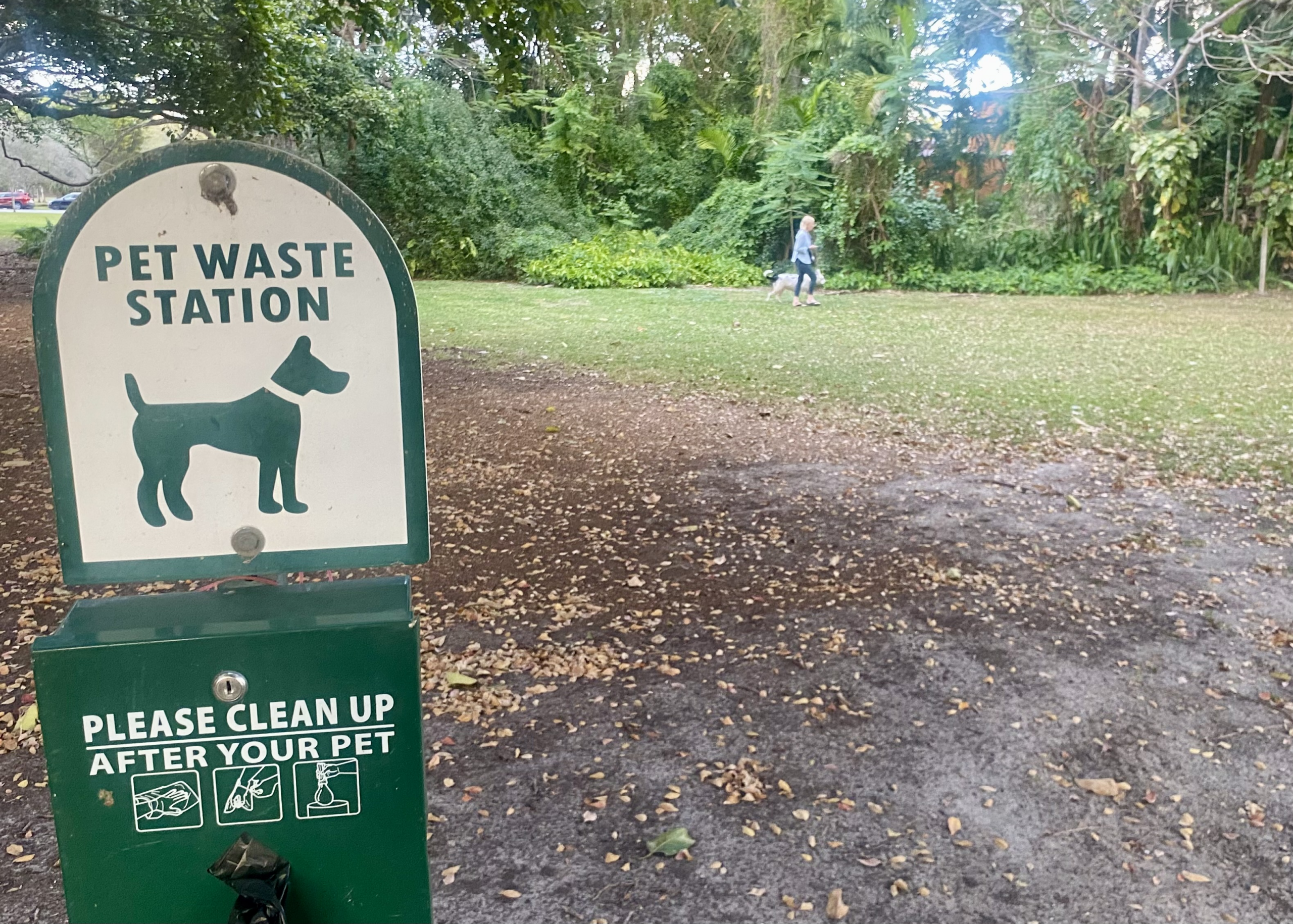
Coral Gables says opponents of the proposed dog park at 520 University Drive are asking a court to overturn an approval the city never made.
“Petitioners bring this Petition against a ghost,” the city wrote in its first full response to a challenge seeking to overturn Ordinance 2026-25.
The 46-page filing says the ordinance neither approved a dog park nor authorized construction of one. Instead, it made what the city describes as two main changes to restrictions dating to 1972: it ended the requirement that 520 University Drive be used exclusively for overflow parking and eliminated a provision that would have automatically returned the property to single-family zoning if the parking use ended.
The ordinance also removed an old requirement that the property have a means of being closed when it was not needed for parking.
The dog park itself stems from a separate City Commission resolution adopted last November and is being challenged in a separate lawsuit.
The city’s response was filed Sept. 22, the same evening Circuit Judge Daryl E. Trawick issued an order saying Coral Gables had failed to file a response as previously ordered. Trawick gave the city another 15 days and warned that failure to comply could result in sanctions.
Coral Gables says its response was already timely.
What the ordinance changed
The dispute centers on the city-owned parcel between the Coral Gables Library and War Memorial Youth Center.
Ordinance 1952 rezoned 520 University Drive and three neighboring city-owned parcels from single-family residential to Special Use in 1972. Among its conditions, the properties were to be maintained in a park-like manner, restricted to overflow parking for the library and Youth Center and returned to single-family zoning if the parking use ended.
Ordinance 2026-25 changed those restrictions only for 520 University Drive.
The property may still be used for overflow parking, but parking is no longer its exclusive use under the 1972 ordinance. Requirements that the parcel be maintained in a park-like manner, preserve existing trees and foliage as much as feasible and limit access to University Drive remain.
Its Special Use zoning did not change. Neither did its Future Land Use Map designation of Public Buildings and Grounds.
That is the basis for much of the city’s defense.
The University Green Neighbors Association and resident Jose Val Cohen contend that commissioners lacked competent substantial evidence for the changes, engaged in illegal spot zoning, violated the Comprehensive Plan and Zoning Code and failed to follow required procedures. They also argue that Vice Mayor Rhonda Anderson should not have participated in the votes because of her earlier involvement with the proposed dog park.
Coral Gables says those arguments repeatedly confuse the ordinance with the separate decision to pursue the park.
Whether a particular dog park complies with the Comprehensive Plan, the city argues, is not before Trawick because Ordinance 2026-25 approved no site plan, development plan or physical improvement.
The city rejects the spot-zoning claim for another reason: no rezoning occurred. The property was Special Use before the ordinance and remains Special Use.
Parking and the evidence before commissioners
The neighbors also challenge whether the city had enough evidence to remove overflow parking as the parcel’s exclusive use.
The Planning and Zoning Board voted 5-2 on May 20 to recommend approval while asking that parking and traffic issues be reviewed before the ordinance reached the commission.
After the hearing, staff from Public Works, Parking, Community Recreation and the city clerk’s office reevaluated parking needs around 520 University Drive and concluded that the property was not needed exclusively for overflow parking.
As the Gazette reported when the petition was filed in August, the neighbors contend that review did not satisfy what the Planning and Zoning Board requested. Their petition argues that the city conducted no actual traffic or parking studies and lacked competent substantial evidence to remove the longstanding restrictions.
The city now answers that a court reviewing the ordinance cannot decide which side presented the stronger evidence. On certiorari review, it says, Trawick must determine whether competent substantial evidence existed to support the commission’s decision, not reweigh competing evidence.
Coral Gables also points to the public process before the vote.
The city says it mailed 340 notices May 7 to property owners within 1,000 feet of 520 University Drive. Signs were posted and a legal advertisement published the following day.
The Planning and Zoning Board held its hearing May 20. Commissioners approved the ordinance 3-2 on first reading June 2 and again 3-2 on July 7.
The petitioners and their attorneys appeared and objected at each hearing.
The city says Section 14-212 of the Zoning Code, which the neighbors contend should have governed the process, applies to zoning-map amendments. No zoning map was changed here.
Even so, Coral Gables argues that it followed most of those procedures anyway: Planning and Zoning Board review, a recommendation and two commission readings.
The one step that did not occur was conceptual review. The city says there was no development concept to review because the ordinance approved no development.
It also argues that, to the extent some procedural objections were raised for the first time in the court petition rather than during the city proceedings, Trawick lacks jurisdiction to consider them.
Anderson and the recusal question
The filing also gives the city’s response in this case to the neighbors’ argument that Anderson should have stepped aside.
The petitioners say Anderson had supported putting a dog park at 520 University Drive, communicated with residents and expressed views on the proposal before voting.
Opponents asked her to recuse herself.
Anderson said on the record that she could be “fair and impartial.”
The city argues that an elected official is not automatically disqualified because she previously advocated a position or discussed an issue with constituents. Doing so, it says, is part of representative government.
Coral Gables also points to Florida law generally requiring commissioners to vote unless a recognized conflict exists.
The law permits an elected official to abstain in a quasi-judicial proceeding to assure a proceeding free from potential bias or prejudice, the city says, but does not require abstention. The city argues that the petitioners have identified no financial interest, prohibited relationship or other recognized conflict involving Anderson.
City says Sept. 22 filing was timely
Trawick’s Aug. 20 order gave Coral Gables 30 days to show why the neighbors’ petition should not be granted.
Thirty days later was Saturday, Sept. 19.
Florida court rules provide that when the final day of a filing period falls on a Saturday, Sunday or legal holiday, the deadline continues to the next day that is none of those.
That would ordinarily have moved the deadline to Monday, Sept. 21. But the Eleventh Judicial Circuit observed Yom Kippur that day as a court holiday.
The city says the deadline therefore moved to Tuesday, Sept. 22.
Trawick’s Sept. 22 order said Coral Gables had “failed to file a Response” as directed in August. It gave the city through Oct. 7 and warned that failure to comply could result in sanctions, including being barred from filing a response or participating in oral argument.
The order is stamped as filed at 6:01 p.m. Sept. 22. The city’s response is stamped as filed at 6:04 p.m.
The following day, Holland & Knight lawyers representing Coral Gables asked Trawick to vacate the order. They said it “appears to have been entered in error” because the city’s deadline was Sept. 22 and its response was filed that day.
Separately, Florida’s time-computation rule provides that, unless a statute, local rule or court order establishes another time, an electronic filing may be made through 11:59:59 p.m. on the final day.
The documents reviewed by the Gazette do not show that Trawick has ruled on the city’s request to vacate the order.
Three proceedings, one property
The ordinance challenge is separate from the lawsuit attacking Resolution 2025-452, the November 2025 measure that directed staff to move forward with the proposed dog park at 520 University Drive.
That case is scheduled for a two-week jury trial beginning Sept. 7, 2027.
The neighbors also have appealed the denial of a temporary injunction in that lawsuit to Florida’s Third District Court of Appeal.
The proceeding before Trawick is different. It asks whether Coral Gables lawfully adopted Ordinance 2026-25 and changed the restrictions governing 520 University Drive.
The city is also studying whether the dog park could go elsewhere. Staff told commissioners Aug. 25 that part of the War Memorial Youth Center parking lot is being considered as an alternative site.











Our city officials should be ashamed of their subterfuge. But it’s obvious there is no shame left in the majority of our city officials, and no truth either.