In less than two months, on Nov. 3, Coral Gables residents will vote in the city’s first-ever November general election in its more than 100-year history.
But election season is already in full swing in the City Beautiful. Campaign signs are popping up in front of homes, candidates are making their cases to voters and political advertising is beginning to fill mailboxes and social media feeds. And with domestic vote-by-mail ballots scheduled to begin arriving around Sept. 24, many residents will effectively begin voting weeks before Election Day.
The election is historic in several ways, most notably because it marks the first time Coral Gables voters will choose their city officials in November rather than April. Voters approved the change in an April referendum, moving municipal elections from April of odd-numbered years to November of even-numbered years to coincide with state and national elections. The change was intended to increase turnout and reduce the cost of municipal elections, while shortening the current terms of several elected officials by roughly four months.
That means Gables residents, accustomed to voting in November for county, state and national offices, will for the first time also be choosing their mayor and commissioners and weighing several significant charter and statewide questions.
Here are the key dates:
Sept. 19: Military and overseas ballots mailed.
Sept. 24: Domestic vote-by-mail ballots mailed. Voting effectively begins.
Oct. 5: Voter registration deadline.
Oct. 19-Nov. 1: Early voting in Miami-Dade County, 7 a.m. to 7 p.m. daily.
Oct. 22: Deadline to request a vote-by-mail ballot, 5 p.m.
Nov. 3: Election Day, 7 a.m. to 7 p.m.
Dec. 1: Runoff election, if required.
Miami-Dade County has confirmed the Oct. 19-Nov. 1 early-voting period and Nov. 3 Election Day.
Three commission races, seven candidates
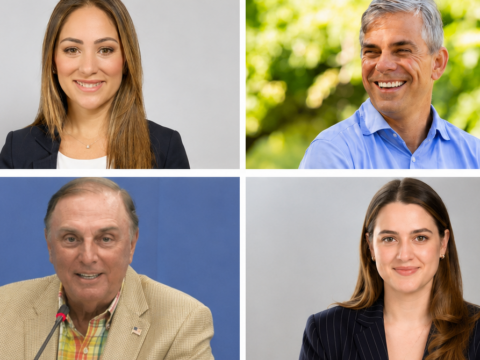
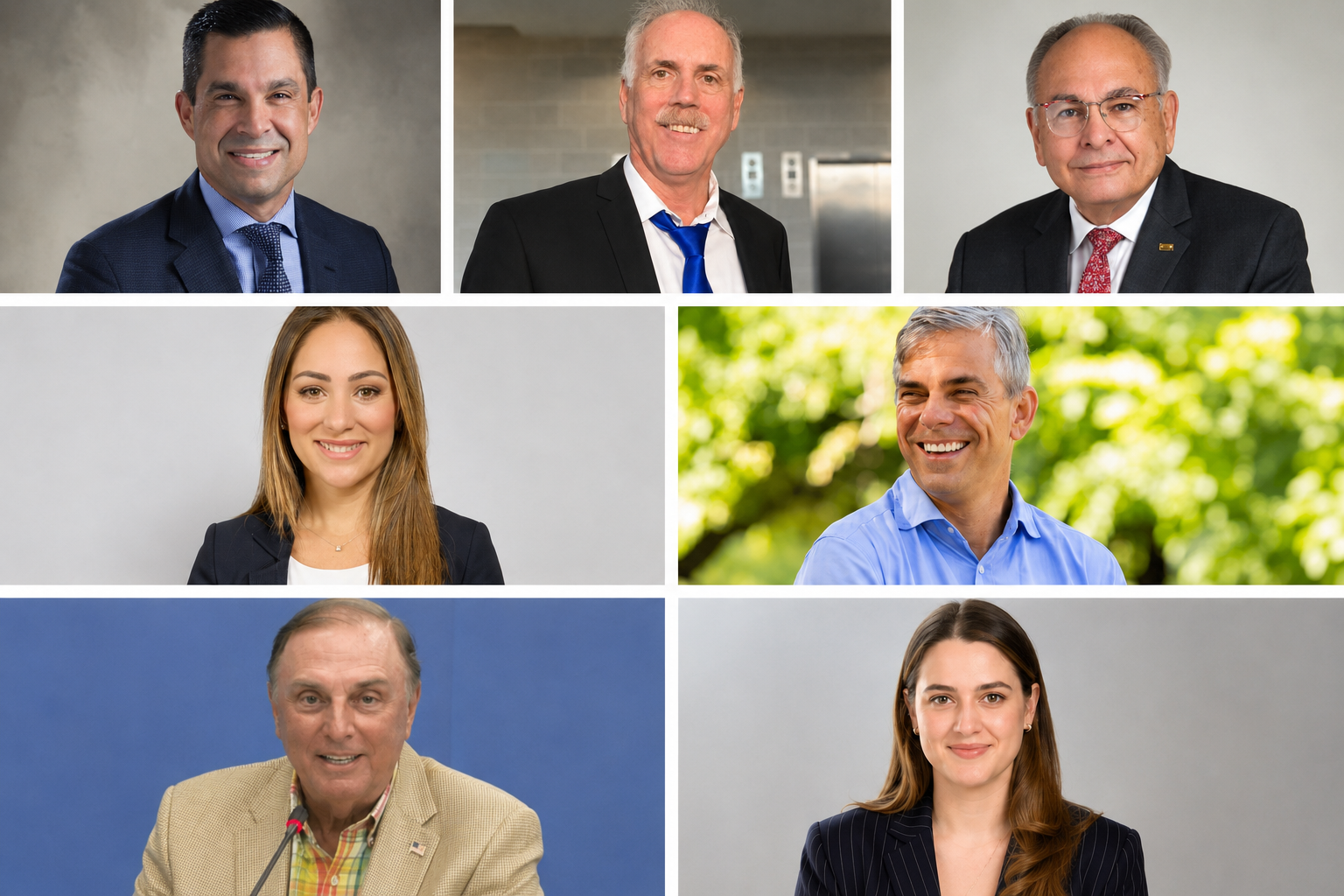
Three of the five City Commission seats are on the November ballot, with seven candidates competing for mayor and two commission seats. The three races are for mayor, Group IV and Group V.
Mayor Vince Lago is seeking a fourth consecutive term. In his way are longtime resident and ubiquitous speaker at city meetings Jackson “Rip” Holmes and Laureano Cancio, an attorney who ran and lost for the Group II commission
seat last year. A victory would be Lago’s final consecutive term as mayor unless he takes a break from the office before seeking it again.
The Group IV commission race pits incumbent Commissioner Melissa Castro against newcomer Nestor Menendez, an attorney and former member of several city boards. Castro is perhaps the mayor’s biggest rival on the dais, with the animosity between the two spilling over to personal insults and general vitriol at every meeting. Menendez’s challenge potentially threatens to eliminate the mayor’s last opponent, and Lago is backing the newcomer, including putting up signs in his yard already.
The Group V race guarantees a new member on the commission when incumbent Ariel Fernandez decided not to seek reelection. Vying to replace him are Gonzalo Sanabria, a current member of the city’s Planning and Zoning Board, and Dominque “Nikki” Whiting, a new candidate in Coral Gables elections but one that comes with significant political
experience in government, communications and campaigns.
And voters will not be deciding only who sits on the commission.
Four charter questions could reshape city government
Four proposed amendments to the City Charter also will appear on the November ballot. They address public-works bidding requirements, residency requirements for candidates, the length of the mayor’s term and voter approval for the sale of certain city parkland. All four were approved unanimously by the commission to go before voters.
The mayoral term question could have one of the most significant long-term effects on the city’s political system. Currently, the mayor serves a two-year term while the four commissioners serve staggered four-year terms. That means the mayor and two commissioners are normally on the ballot together every two years — giving voters the opportunity to change three of the five seats, or a majority of the commission, in every election.
The proposed amendment would make the mayor’s term four years beginning with the 2028 election. That would mean that, in a normal election cycle, voters would choose only two of the five commission members in elections when the mayor is not on the ballot. In other words, the proposal is not simply about giving the mayor a longer term. It would change how frequently Coral Gables voters have the opportunity to alter the composition of the entire commission.
The proposal would not change the existing eight-year limit on consecutive mayoral service. Lago, if reelected in November, would already be term-limited from running for mayor again in 2028, meaning the change would apply to his successor.
A statewide question with local consequences
Also on the Nov. 3 ballot is a statewide constitutional amendment that would increase Florida’s homestead exemption for residential property owners to $150,000 in 2027 and $250,000 in 2028, with additional increases possible thereafter.
For Coral Gables, the question has potentially significant budget implications.
City estimates presented during the budget process put the potential reduction in property-tax revenue at about $5.7 million in fiscal 2028 and $11.4 million in fiscal 2029 and beyond. The figures have varied somewhat in public discussions as the city and officials have worked through the proposal’s potential effects, but there is broad agreement that the measure could reduce a significant source of recurring city revenue.
That makes the tax question relevant not only to homeowners but also to the candidates competing to determine how the city responds to any resulting revenue reductions.
How the Gazette will cover Campaign ’26
From now through Nov. 3 – and into December if a runoff is necessary – the Gazette will cover the election from multiple angles.
That will include profiles and race primers for all three contests, comparisons of their positions on development, preservation, infrastructure, taxes and city finances, and examinations of the records and backgrounds of the candidates.
The Gazette also will follow the money. Campaign-finance reports will be tracked throughout the campaign, with attention to how much candidates raise and spend, their cash on hand, major contributors, outside groups, self-funding, consultants and the interests represented among their donors.
The coverage also will examine the issues facing whoever takes office next. The Mobility Hub, University of Miami development agreement, growth and preservation, sewer costs, the city budget, debt, public safety and other major decisions now before the commission will shape the next commission regardless of who wins.
The Gazette also will cover candidate forums and debates, campaign developments and endorsements, and will maintain a voter guide that will be updated as the election approaches.
American Legion forum offers first head-to-head look at candidates
The first opportunity for voters to see multiple candidates side by side comes Sept. 9, when American Legion Post 98 hosts its 2026 Candidate Forum at the post’s home at 303 Alhambra Circle. The forum is organized by level of government, with local and county candidates appearing from 5 to 5:40 p.m., state candidates from 5:40 to 7:40 p.m., and national and federal candidates closing out the evening from 7:40 to 8 p.m. The event is free and open to the public.
Another early fixture on the calendar comes Sept. 23 when Lago is scheduled to hold a town hall at the Public Safety Building. The meeting is expected to address the statewide property-tax proposal and the four city charter questions headed to the ballot, while giving residents an opportunity to raise questions of their own.
For Coral Gables, the November election is not simply a change in the month when residents vote. It is the beginning of a new era in how the city elects its leaders and voters will have the opportunity to decide not only who leads City Hall, but potentially how City Hall itself is governed for years to come.