

By Janette Neuwahl Tannen
University of Miami
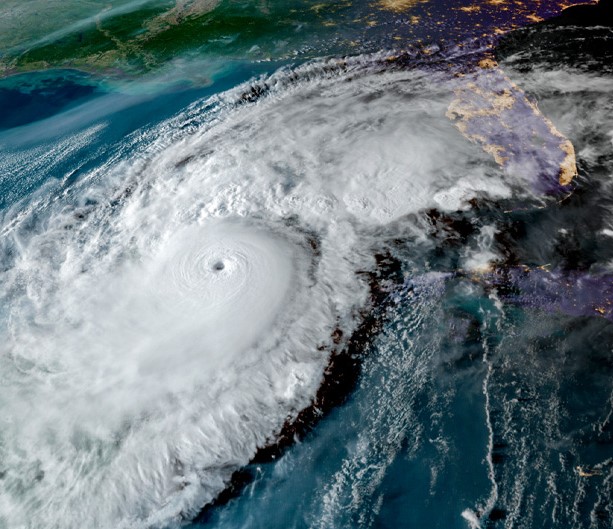
It began as just a figment of an idea from some of the earliest intellectual pioneers who settled in South Florida. But the University of Miami was soon faced with a major hurricane and the Great Depression in its first few years, opening its first classes in a converted hotel. Since then, the U has grown exponentially to include three campuses and more than 19,000 students. It is also known for cutting-edge research and innovative medical care.
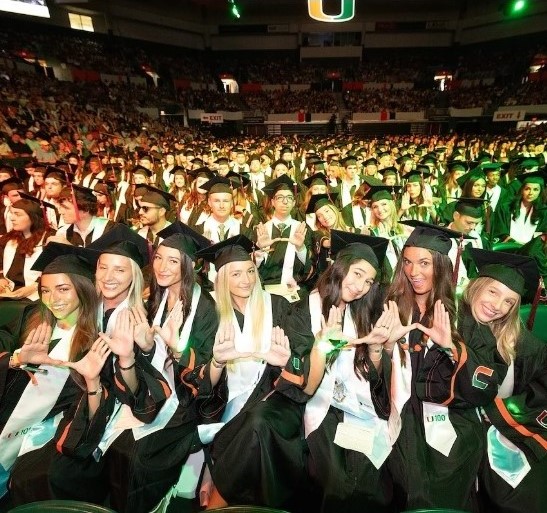
And now University leaders hope that many of its students and alumni will come celebrate the institution’s success at its centennial Alumni Weekend and Homecoming by flooding the main Coral Gables Campus with Hurricane spirit next week.
The week of Homecoming festivities, which are planned by students on the Homecoming Executive Committee, which began Monday, Nov. 3 and continues through Saturday, Nov. 8, concluding with an afternoon football game where the Miami Hurricanes will face the Syracuse Orange at Hard Rock Stadium.
“Homecoming is always that one event that reminds students why they chose the U,” said Nataly Leiva, chair of the 2025 Homecoming Executive Committee and a senior studying health management and policy. “This school has always been known for its spirit and that every person involved is bleeding orange and green, so I am hopeful that energy increases even more this year.”
This year’s Homecoming theme “Stand Forever,” is a throwback to the University’s alma mater, and because it is a landmark year, organizers tried to bring back events that harken the institution’s past, while also adding new ones. Sprinkled throughout the campus will be reminders of the University’s history and its future.
“The 2025 Centennial Homecoming and Alumni Weekend promises a fantastic array of events throughout the week, culminating with a spectacular boat burning and fireworks display on Friday evening,” said Patricia A. Whitely, senior vice president for student affairs and alumni engagement. “We look forward to welcoming our alumni back to campus, many of whom couldn’t join us on April 8, to be part of this special centennial celebration. The many activities and activations planned will make this an unforgettable experience.”
Monday’s events will kick off with a Homecoming Pageant in Shalala Student Center, Grand Ballroom at 8 pm. Then, on Tuesday night, the student organization Hurricane Productions will host their annual Homecoming concert at the Watsco Center featuring A Boogie Wit da Hoodie. The week continues with Hurricanes Help the Hometown on Wednesday, a massive community service project with more than 30 student organizations involved, and Pancakes with Pat later that night.
The largest event by far will be Friday night’s Hurricane Howl, which begins at 5 p.m. and includes a block party, more than 20 food vendors, photo booths, and other opportunities for students, faculty and staff members, alumni, and community members to show their pride for the U.
There are also a host of alumni events starting Thursday, Nov. 6, along with an expanded Canes Lounge event at the Donna E. Shalala Student Center on Friday evening, a new Hispanic Alumni Reunion, various alumni tailgates, and the Golden Ibis Society breakfast on Saturday for alumni who graduated more than 50 years ago.
Alumni Association president Darren Dupriest, who graduated with a bachelor’s in business in 1991, is bringing his entire family from Kansas City, as he has happily done most years. Dupriest said he realized how much he missed the University when he came back for his first homecoming after graduation. Each time he returns, Dupriest often runs into old friends he did not expect to see, which is his favorite part of coming back to campus.
“If you missed the Centennial Celebration back in April, you can’t miss Homecoming because there will never be another one quite the same,” said Dupriest, who has been an integral part of the planning for this year’s expanded celebration. He added: “I hope that everybody who comes to Homecoming walks away with a revived energy for the University. If they can catch the passion and bring it back to their hometown to tell next generation of Canes about it, that is huge.”
Homecoming Executive Committee events
Homecoming Pageant, 8 p.m., Shalala Student Center, Grand Ballroom
Spirit Tree Competition, 11 a.m., Spirit Tree (near the Ashe Administration Building)
Hurricane Productions Homecoming Concert featuring A Boogie Wit da Hoodie, and student opener Poster Child, 7 p.m., Watsco Center (tickets required)
Hurricanes Help the Hometown, Noon-2 p.m., Lakeside Patio
Organized Cheer Competition, 6:30 p.m., Lakeside Patio
Pancakes with Pat, 8:30-9:30 p.m., Shalala Student Center, Promenade
Alma Mater Competition, 10:45 a.m., University Center Rock Plaza
Hurricane Howl, 5-10 p.m., Lakeside Patio, UC Rock Plaza, and Stanford Circle
Homecoming Block Party, 5-8:30 p.m., Lakeside Patio and UC Rock Plaza
Food Trucks, 5-10 p.m., Stanford Circle
Pep Rally and Awards Ceremony, 7 p.m., Lakeside Patio
Boat Burning Ceremony and Fireworks Show, 8:30 p.m., Lake Osceola
Homecoming Football Game vs. Syracuse, 3:30 p.m., Hard Rock Stadium

Author: Coral Gables Gazette News Staff
Originally established in 1996 and relaunched as a digital publication in February 2025, the Coral Gables Gazette is an independent local news organization dedicated to factual, objective and accountable community journalism. Our newsroom reports on the people, policies, institutions and events shaping Coral Gables, Florida, providing residents with timely, informative coverage of the issues affecting their community. Our reporting includes City Hall, local government, municipal elections, public spending, real estate development, business, education, arts and culture, and neighborhood affairs throughout the City Beautiful. We follow City Commission decisions, examine public records and report on the businesses, organizations and individuals contributing to Coral Gables. We believe informed residents are essential to a healthy, engaged community. Stories published under the Coral Gables Gazette News Staff byline are prepared or compiled by the publication's editorial team. We strive for accuracy, fairness, transparency and clear distinctions between news reporting, opinion and advertising. Readers are encouraged to submit news tips, corrections, editorial inquiries and story suggestions through our Contact page and learn more about our standards through our Editorial Policy.








The University of Miami did not start out as “just a figment of an idea from some of the earliest intellectual pioneers who settled in South Florida.” I’m not even sure that sentence can be pulled apart to make sense. The Merrick family purchased the land that George Merrick later turned into and named Coral Gables. He considered his founding of the University of Miami to be his greatest achievement. Far from a figment of an idea from some unnamed “intellectual pioneers,” the university was created with intention. Merrick donated the land and provided the money to found the university. When it nearly went bankrupt during the Great Depression, he raised money to save it. Please see the university’s History page for accuracy.
The University of Miami was not a “figment” of anyone’s imagination. And as June Morris so eloquently stated, “the university was created with intention.”
On June 3 1925, an announcement in the Miami Daily Tribune proclaimed that the University of Miami had been founded, with “a gift of one hundred and sixty acres of land and $5,000,000 toward a $15,000,000 endowment from Mr. George E. Merrick, creator of the City of Coral Gables.” The date marked Merrick’s 39th birthday. According to the Miami Daily Tribune article, “It must not be assumed that Mr. Merrick thought of the university as a consequence. The university was part of his original conception of Coral Gables. Four years earlier, when he first advertised Coral Gables, he announced in his advertisements that included in the plan of development was the founding of a great university. South from the great Miami-Biltmore hotel, across an expanse of golf courses, waterways and lakes will be sitting the University of Miami–made possible by his idealism as much as by his munificent gifts and endowment.” The University of Miami solely exists because of the altruism of George Edgar Merrick.
Wow…doesn’t everything begin with a “figment of an idea”?
And wouldn’t George Merrick be described as an early intellectual pioneer who settled in South Florida?
I fail to see what was so offensive in that first sentence.
With all due respect, the word “figment” used in the above feature is not that it is offensive but more so misleading when addressing Merrick’s calculated plan to create a university. It was not imaginary but an integral piece of his new planned city. By definition, the word ‘”figment” is a thing that someone believes to be real but that exists only in their imagination. Merrick’s university concept was not imaginary it was intentional.
The feature also uses “intellectual pioneers” to describe the founding of the university without referencing George Merrick by name. As a fact, the University of Miami solely exists because of the altruism of George Edgar Merrick. Yes, others joined Merrick in supporting a “great university,” but it was Merrick who made it happen through the gift of his own land and his own money.
As a proud graduate of UM’s Class of ‘77, I appreciated the very informative article on Homecoming events.
I don’t think the first paragraph wasn’t meant to be a history lesson, and the criticism seemed (to me) to be excessive. Your facts about George Merrick are accurate, although in the context of the article, not really necessary. Thank you, though.
Correction:
*was meant
Your article helped me a lot, is there any more related content? Thanks! https://www.binance.bh/futures/ref?code=QCGZMHR6