By Coral Gables Gazette staff
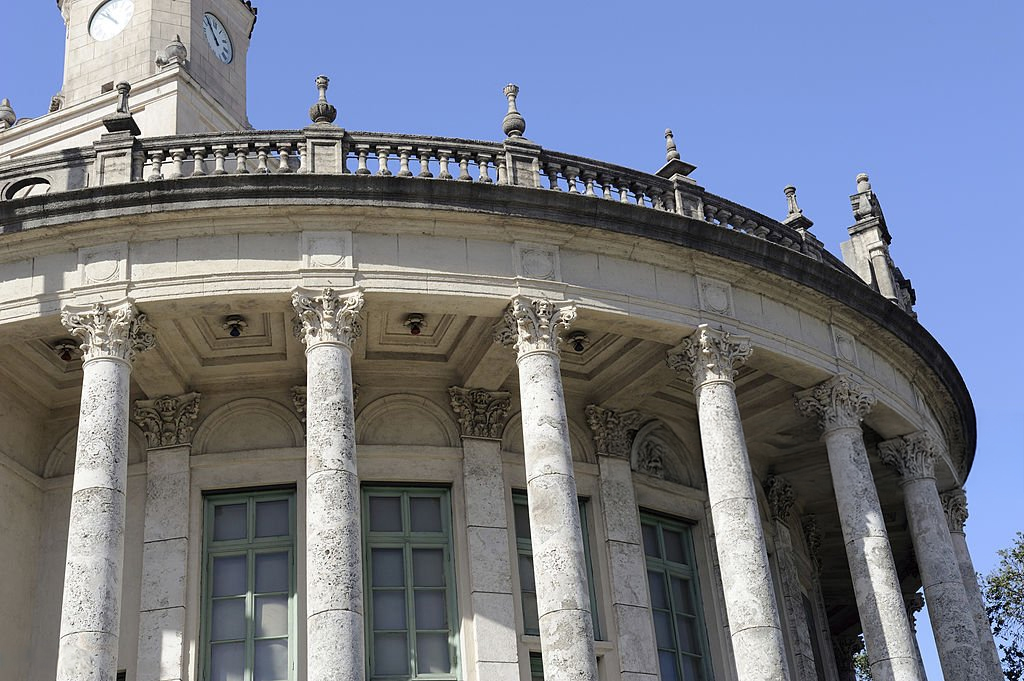
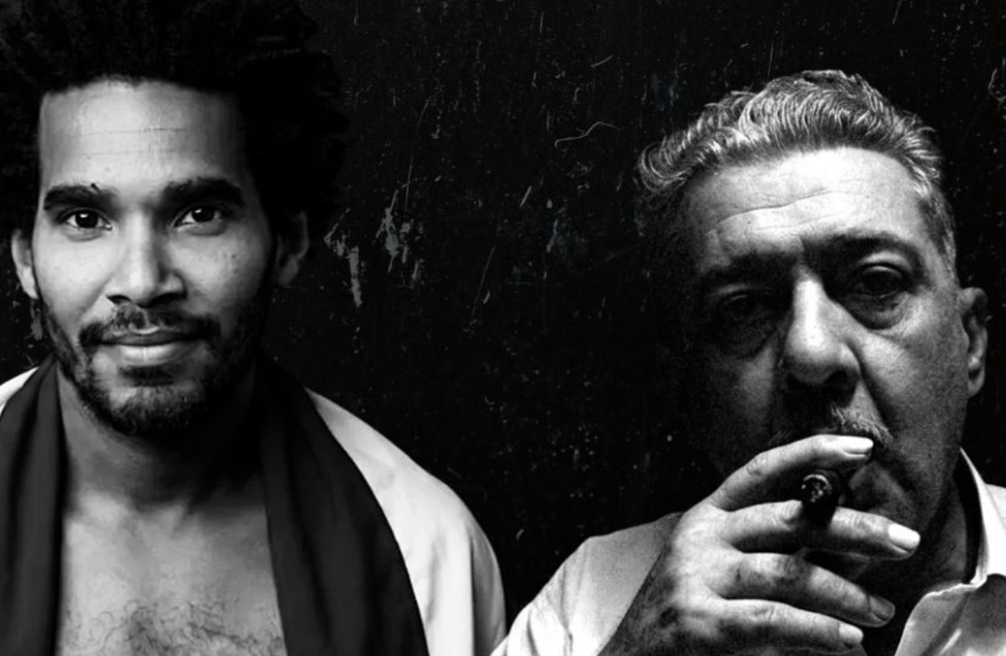
Just 18 days after arriving in Miami under forced exile, Cuban artist and activist Luis Manuel Otero Alcántara will appear at the Coral Gables Museum for a screening of a documentary tracing the art, protests and government repression that led to his imprisonment.
Otero Alcántara will join the opening program of Persecuted: Artists Censored by Communist Cuba, a two-part documentary series by Cuban filmmaker Ernesto Fundora Hernández, on Wednesday, Aug. 5, from 6:30 to 9 p.m.Otero Alcántara will join the opening program of Persecuted: Artists Censored by Communist Cuba, a two-part documentary series by Cuban filmmaker Ernesto Fundora Hernández, on Wednesday, Aug. 5, from 6:30 to 9 p.m.
The evening will feature Luis Manuel Otero Alcántara: Estamos conectados, followed by a conversation with the artist, Fundora and invited guests about the film and the political and cultural conditions surrounding his work.
The museum has told the Gazette that reservations are sold out. It has not announced whether a waiting list or standby admission will be available, and prospective attendees should contact the museum before going.
A screening transformed by his release
When the museum planned the program, Otero Alcántara was still serving a five-year prison sentence in Cuba.
He arrived at Miami International Airport on July 18 after Cuban authorities released him on the condition that he leave the country. Amnesty International described that condition as an extension of the punishment imposed on artists and activists who criticize the Cuban government.
His presence now gives the screening an immediacy its organizers could not have anticipated. Rather than discussing the film only through scholars, witnesses and archival material, the audience will hear directly from the artist whose imprisonment forms its final chapter.
The documentary draws on footage recorded between 2016 and 2021, together with archival material and journalistic research, to follow the development of Otero Alcántara’s performance art, public activism and confrontation with Cuban authorities.
Fundora completed the film in 2025, while its subject remained imprisoned.
From performance art to prison
Otero Alcántara co-founded the San Isidro Movement, a collective of Havana artists, writers and musicians that emerged in 2018 in opposition to government controls over independent artistic expression.
The movement objected in particular to Decree 349, which expanded government authority over public performances, exhibitions and the commercial presentation of art. Otero Alcántara’s performances and online broadcasts increasingly combined artistic expression with direct criticism of the Cuban state.
He was arrested July 11, 2021, while attempting to join the nationwide demonstrations that erupted that day. A Cuban court sentenced him in June 2022 to five years in prison on charges of public disorder, contempt and insulting national symbols.
Amnesty International designated him a prisoner of conscience and repeatedly called for his unconditional release. A United Nations working group concluded that his detention was arbitrary, violated international law and resulted from his exercise of freedom of expression through art and activism.
Eleven days without answers
Otero Alcántara’s sentence was due to expire July 9. Two days earlier, authorities removed him from the maximum-security prison in Guanajay without publicly disclosing where he had been taken.
For the next 11 days, relatives and advocates said they did not know his location or legal status. The human-rights organization Cubalex filed a habeas corpus petition seeking information, and the United Nations Committee on Enforced Disappearances opened an urgent action asking Cuban authorities to account for his whereabouts and safety.
He remained out of public contact until he boarded a flight to the United States on July 18. Supporters said he accepted exile as the only available route out of state custody and a means of continuing his art and activism.
A crowd of friends, activists and members of South Florida’s Cuban exile community greeted him at Miami International Airport. In his first remarks after arriving, he called attention to other imprisoned Cuban artists and pledged to continue working for political change on the island.
A date tied to another Cuban uprising
The museum scheduled Wednesday’s screening for Aug. 5 to coincide with the anniversary of El Maleconazo, the spontaneous anti-government uprising that erupted along Havana’s waterfront in 1994.
The demonstration became one of the largest public challenges to the Cuban government after the 1959 revolution, until the wider protests that spread across the island on July 11, 2021 — the day Otero Alcántara was arrested.
That pairing connects two moments of public dissent separated by nearly three decades and places the artist’s imprisonment within a longer history of protest, censorship and cultural resistance.
The series continues with Lezama Lima
The museum’s two-part series also examines the life of Cuban poet, novelist and essayist José Lezama Lima, whose 1966 novel Paradiso became a landmark of 20th-century Latin American literature.
Lezama Lima’s work achieved international recognition, but he became increasingly isolated and marginalized under the Cuban government’s cultural policies during the final years of his life.
His story will be presented separately on Sept. 9 through Fundora’s 2018 documentary Lezama Lima: Soltar la lengua. The screening will commemorate the 50th anniversary of the writer’s death and the 60th anniversary of the publication of Paradiso.
Fundora, a Havana-born filmmaker based in Mexico City, has directed documentaries, short films, television productions and more than 90 music videos. His subjects have ranged from contemporary Cuban activists to major figures in the island’s literary and cultural history.
Wednesday’s screening, however, will center on a story that is no longer confined to archival footage.
The artist portrayed entering prison at the end of the documentary will be seated in the museum to discuss it — less than three weeks after reaching Miami.
If you go…
Luis Manuel Otero Alcántara: Estamos conectados
Part of Persecuted: Artists Censored by Communist Cuba
Wednesday, Aug. 5, from 6:30 to 9 p.m.
Coral Gables Museum
285 Aragon Ave., Coral Gables