By Coral Gables Gazette staff
In 1959, a group of Miccosukee Indians from the Florida Everglades traveled to Cuba and met with Fidel Castro. The United States government had repeatedly declined to recognize the Miccosukee as an independent tribe, leaving the community without access to federal aid or the legal right to hold its lands in trust. The man who organized the trip — William Buffalo Tiger, then the tribe’s spokesman — was making a calculated move: if the United States would not acknowledge the Miccosukee, he would seek recognition from someone who would.
Castro agreed. The United States took notice. On January 11, 1962, the federal government formally recognized the Miccosukee Tribe of Indians of Florida. Buffalo Tiger became the tribe’s first elected chairman.
It remains one of the most striking acts of political improvisation in the history of Native American sovereignty — a story rarely told outside the Miccosukee community.
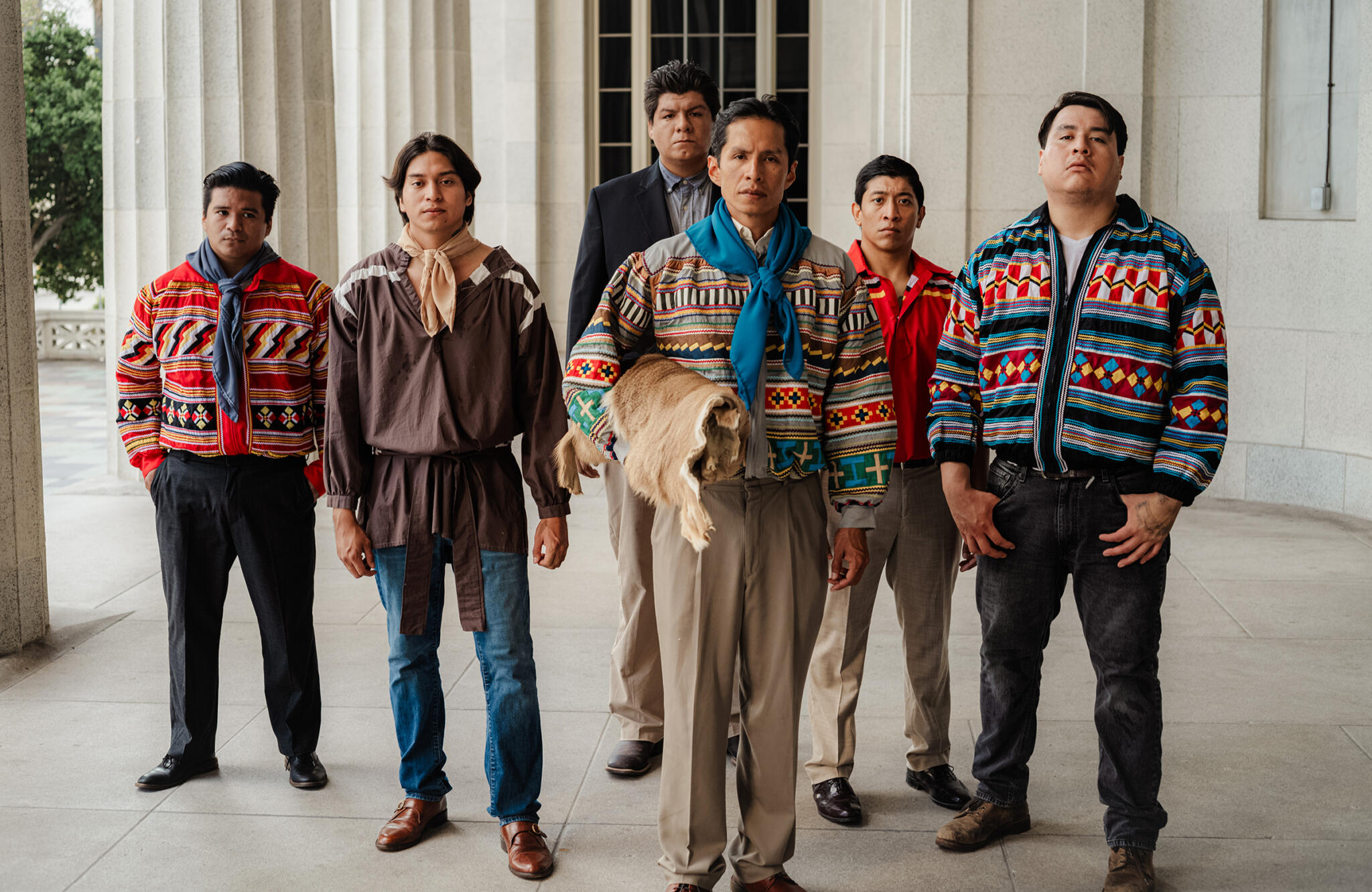
On Thursday, April 9, at 8 p.m., the Bill Cosford Cinema at the University of Miami will screen Becoming Buffalo, a film that tells that story. Written, directed by, and starring Montana Cypress, a Miccosukee filmmaker from Ochopee, the screening is free and open to the public. A Q&A with Cypress will follow, along with pre-screening refreshments. The event is presented by the Iron Arrow Honor Society, the Division of Student Affairs, and the Office of Alumni Engagement.
The filmmaker and his subject
Montana Cypress grew up on the Miccosukee reservation in Ochopee, making films as a child with his brother on a VHS recorder. He later moved to Los Angeles to study at the New York Film Academy. His work since then — across film, documentary, and stage — has centered on a consistent idea: that Native American stories should be told by Native Americans, from within their own communities.
Becoming Buffalo began with a story Cypress heard as a child but did not fully understand. Buffalo Tiger was a celebrated figure in the Miccosukee community, but the details of his Cuba trip — and the political gamble it represented — were not widely documented.
“These stories were never really told,” Cypress has said.
The research took him to the Miccosukee Reservation’s Historical Preservation Office, to conversations with tribal elders, and through archival accounts of the failed negotiations of the 1950s. More than half of the film’s dialogue is spoken in Mikasuki, the Miccosukee language, and the cast includes Miccosukee and Seminole tribal members. Filming took place on both reservations and across South Florida.
The project also drew the attention of producer Jhane Myers, known for her work on Prey, the 2022 film recognized for its predominantly Indigenous cast and crew.
Buffalo Tiger and what he did
William Buffalo Tiger was born in the Everglades in 1920, the son of a traditional Miccosukee family who lived in a chickee and spoke Mikasuki as a first language. As development expanded into the Everglades, he learned English and emerged as one of the tribe’s most effective advocates in negotiations with outside authorities.
By the late 1950s, those negotiations had stalled. Requests for federal recognition produced little progress. In response, Buffalo Tiger sought recognition from foreign governments. Only Cuba agreed.
The trip was a calculated act of political pressure — a way of forcing the United States to confront a reality it had deferred. Within three years, the Miccosukee Tribe of Indians of Florida was formally recognized.
Under Buffalo Tiger’s leadership, the tribe adopted a constitution and, in 1971, became the first in the country to assume control of its own social and educational programs — a step that preceded and helped inform the Indian Self-Determination Act of 1975.
Buffalo Tiger died in Kendall in 2015 at the age of 94.
The venue and the context
The Bill Cosford Cinema, the University of Miami’s art house theater, has long served as a venue for independent and international film, as well as filmmaker conversations that extend beyond the screen. Its scale and setting are well suited to a film rooted in personal history and cultural memory.
The screening is presented by the Iron Arrow Honor Society, which maintains a formal relationship with the Miccosukee Tribe and incorporates elements of Miccosukee tradition into its institutional identity. The alignment is notable: a Miccosukee filmmaker presenting a story about one of the tribe’s defining figures in a setting that reflects that shared history.
The screening is free, with advance registration available through the Cosford Cinema.
The April 9 event offers a rare opportunity to see a pivotal chapter of South Florida and Native American history told from within the Miccosukee community itself.
BECOMING BUFFALO — FREE SCREENING AND Q&A
What: Screening of Becoming Buffalo, followed by Q&A with filmmaker Montana Cypress
When: Thursday, April 9, 8 p.m. (pre-screening refreshments available)
Where: Bill Cosford Cinema, 5030 Brunson Drive, Coral Gables
Admission: Free — advance registration recommended at cosfordcinema.com
Presented by: Iron Arrow Honor Society, Division of Student Affairs, and Office of Alumni Engagement, University of Miami