
By Coral Gables Gazette staff
A teenage boy comes home to his Paris apartment with blood on his face. It is not the first time. His mother wants him to stop wearing his kippah in public. His father has heard enough. They have lived in France for generations. Now, he says, it is time to leave.
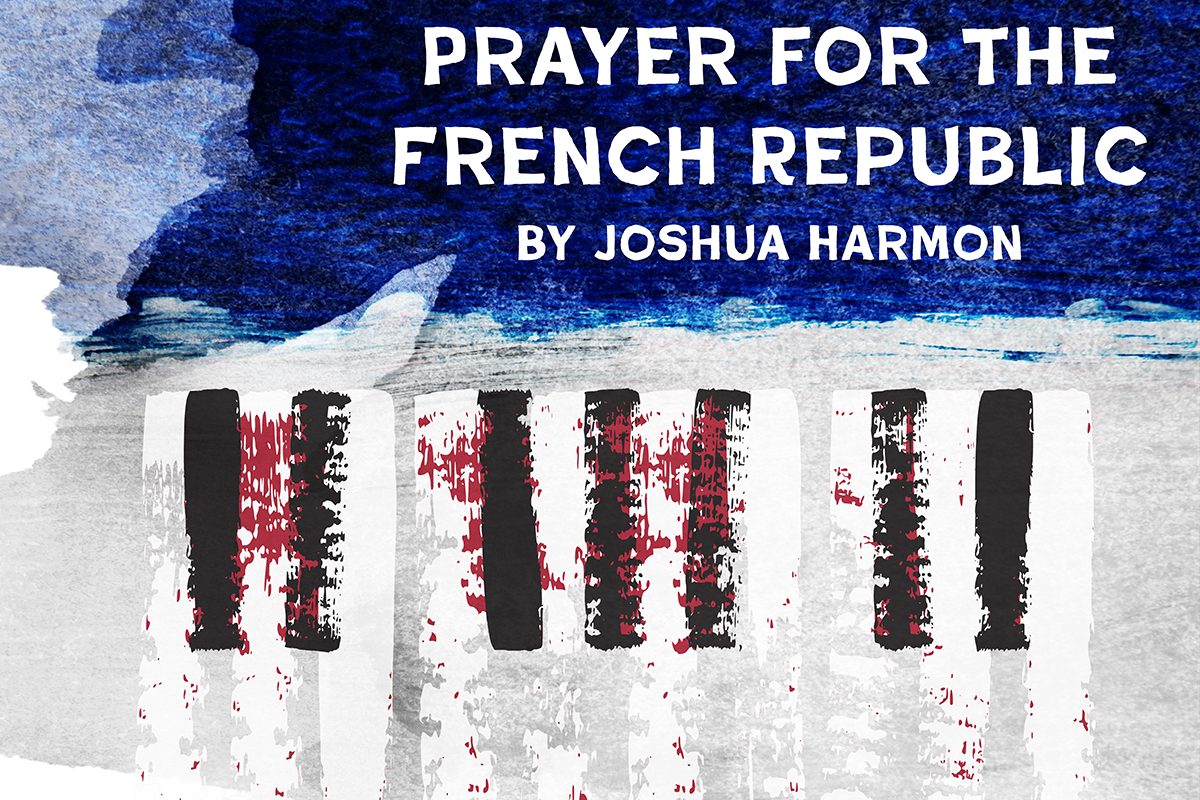
That opening image anchors “Prayer for the French Republic,” Joshua Harmon’s sweeping family drama about belonging, survival and the question every generation of Jewish diaspora life eventually confronts: When is it time to go? GableStage opens the Florida premiere of the play on Friday, March 20, in what the company is calling one of its largest and most ambitious productions. It runs through April 19 at the Wolfson Family Theatre in the Biltmore Hotel.
A play that keeps becoming more timely
Harmon wrote the first draft of “Prayer for the French Republic” nearly a decade ago. It premiered off Broadway at Manhattan Theatre Club in 2022, transferred to Broadway in 2024, was extended twice, and won the Drama Desk and Outer Critics Circle Awards for Best New Play. Each time it returned to the stage, the world had moved closer to the play’s subject. The antisemitic incidents documented by the Anti-Defamation League have risen sharply in recent years. In France, tens of thousands of Jewish citizens have emigrated to Israel over the past decade. The questions the Benhamou family argues about in a Paris living room in 2016 are not historical questions. They are current ones.
The play moves between two time frames: Paris in 2016 and 2017, as the Benhamou family reckons with rising antisemitism and the rise of Marine Le Pen, and Paris in 1944, as their grandparents wait in the same apartment for news of family members deported by the Nazis. Harmon draws the two eras into conversation without collapsing them together. The past is always present in the play. The characters in 2016 are haunted by ancestors they barely knew, shaped by choices those ancestors made, bound by a history they did not choose.
Five generations, one question
The Salomons have lived in France for a millennium. The Benhamous arrived more recently from Algeria and carry a different kind of knowledge about what countries can become. When the two family lines collide over a Passover Seder table, the arguments that follow are not polite. Harmon writes characters who lead with logic, history, and full-frontal verbal force. They are not mouthpieces for positions. They are people who have thought very hard about impossible questions and reached different conclusions.
The play runs three hours and thirty minutes, including two intermissions. That length is not self-indulgence. Harmon needs the time to move between decades, to build the weight of history that makes the final scenes land with the force they do. Broadway critics who arrived skeptical left persuaded. The writing, they noted, is as funny as it is devastating. Harmon earned his reputation with “Bad Jews,” a much shorter play that turned a family argument into a precise examination of Jewish identity. “Prayer for the French Republic” is his most ambitious work: the same clarity of argument at five times the scale.
A cast worth watching — including one debut
Director Bari Newport leads a cast that blends GableStage veterans with South Florida debuts and one genuine first. Jason Peck, a Carbonell-nominated actor who appeared in GableStage’s “We Will Not Be Silent,” plays Lucien Salomon. Playing opposite him as young Pierre is Holden Peck, Jason’s thirteen-year-old son, making his professional stage debut. The casting is not a stunt. It places a real father and son inside a play whose central argument is about what one generation inherits from another, what it owes, and what it cannot escape. That biographical reality will be present in the room every night.
Irina Kaplan, a New York-based actor making her GableStage debut, grew up in Miami and is a Ransom Everglades alumna. Bruce Sabath, also making his GableStage debut, brings Broadway credits that include the Tony Award-winning revival of “Company” and the Drama Desk Award-winning “Fiddler on the Roof in Yiddish.” Patti Gardner, one of South Florida’s most decorated performers and a GableStage regular, rounds out a cast of eleven.
GableStage has produced the Miami and regional premieres of two earlier Harmon plays, “Bad Jews” and “Admissions,” establishing a relationship with one of American theatre’s most precise and provocative voices. Bringing the Florida premiere of his largest work to the Biltmore is consistent with that history. It is also consistent with the mission GableStage has pursued since its founding: theatre that takes its audience seriously enough to make them argue on the way home.
On opening night, the lights will go down in the Wolfson Family Theatre and a family will gather in a Paris apartment. The year will be 2016. Then it will be 1944. Then 2016 again. The question will be the same in both eras and it will not be answered by the time the house lights come up. That is the point. Harmon is not interested in resolution. He is interested in the weight of history in the room, and whether the people in it can bear it together. In Coral Gables, in 2026, that question lands close to home.

Author: Coral Gables Gazette News Staff
Originally established in 1996 and relaunched as a digital publication in February 2025, the Coral Gables Gazette is an independent local news organization dedicated to factual, objective and accountable community journalism. Our newsroom reports on the people, policies, institutions and events shaping Coral Gables, Florida, providing residents with timely, informative coverage of the issues affecting their community. Our reporting includes City Hall, local government, municipal elections, public spending, real estate development, business, education, arts and culture, and neighborhood affairs throughout the City Beautiful. We follow City Commission decisions, examine public records and report on the businesses, organizations and individuals contributing to Coral Gables. We believe informed residents are essential to a healthy, engaged community. Stories published under the Coral Gables Gazette News Staff byline are prepared or compiled by the publication's editorial team. We strive for accuracy, fairness, transparency and clear distinctions between news reporting, opinion and advertising. Readers are encouraged to submit news tips, corrections, editorial inquiries and story suggestions through our Contact page and learn more about our standards through our Editorial Policy.












Very nice pattern and wonderful subject matter, absolutely nothing else we want : D.