

By the Coral Gables Gazette editorial board
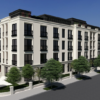
The Development Review Committee’s upcoming agenda includes two proposals that would bring 13 three-story townhomes to blocks west of LeJeune Road. Two older multifamily buildings on Anastasia Avenue would give way to eight townhomes. Two apartment buildings on Valencia Avenue would be replaced with five.
Nothing about the docket suggests a dramatic rupture in the life of the city. West of LeJeune remains overwhelmingly single-family. No towers are rising. No zoning upheaval is proposed. The scale of these projects fits comfortably within existing land-use classifications.
Yet taken together, these proposals illuminate something more consequential than any single parcel: a steady reshaping of the housing fabric west of LeJeune Road.
The shift is subtle. It does not increase density in dramatic ways. In one case, density decreases. But housing form is changing. Mid-century rental apartments are being replaced by larger, three-story townhomes designed for owner occupancy. Even when unit counts hold steady, the character of those units — and the likely price tier attached to them — changes.
Coral Gables has not been a city defined by affordability for decades. That reality requires no embellishment. But even expensive cities contain gradations. Older apartment buildings often serve as entry points — modest rentals that offer proximity to schools, parks and civic life without requiring the capital of a single-family home.
When those structures disappear, they are replaced by townhomes with private garages, expanded square footage and price points that reflect a different buyer. The number of doors may remain similar. The accessibility of those doors shifts.
This evolution is not inherently negative. Cities grow and adjust. Land values rise. Owners seek to redevelop properties within the rules the city establishes. In the Valencia proposal, the reduction from twelve apartments to five townhomes reflects a compliance path fully permitted by zoning. The Anastasia proposal similarly proceeds within adopted classifications. Developers are responding rationally to market incentives.
The question is not whether these projects comply with the code. The Development Review Committee will evaluate that technical alignment. The deeper question is whether the cumulative effect of such approvals reflects a deliberate housing strategy — or quiet drift.
The multifamily parcels scattered throughout the Biltmore Section represent a limited share of the neighborhood’s housing stock. If those parcels increasingly convert to larger, owner-oriented townhome product, the range of housing types narrows. The city’s residential mix becomes more uniform at the upper end.
That outcome may be consistent with long-term policy goals. It may reflect a preference for ownership over rental, for larger units over smaller ones, for a more consolidated residential identity west of LeJeune. If so, that direction deserves articulation. Planning choices gain legitimacy when they are expressed as policy rather than inferred from permit cycles.
If, on the other hand, this pattern emerges simply because each parcel independently satisfies zoning allowances, the city should still acknowledge the aggregate result. Incremental change accumulates. Parcel by parcel, corridor by corridor, the physical and economic character of a neighborhood shifts long before any single meeting captures public attention.
The Development Review Committee’s role is advisory and technical. It does not decide the future of west of LeJeune. But its agendas provide a window into the trajectory of that future. When multiple projects of similar form appear within a confined geography, the pattern merits recognition.
Coral Gables faces a question of intentionality west of LeJeune. The area remains stable, predominantly single-family and architecturally coherent. That stability affords the city an opportunity to shape its evolution deliberately rather than reactively.
Cities evolve in increments. The responsibility of civic leadership is to ensure those increments align with a clear vision. If the residential fabric west of LeJeune is entering a new phase — one defined by the replacement of older apartments with larger townhomes — the city should state plainly whether that future is the one it intends to cultivate.
Clarity guides responsible development.












There is absolutely no problem with replacing rentals with owner owned townhomes. It positions the area as a more desirable neighborhood. Coral gables is competing with other areas such as Coconut Grove, Pinecrest, Brickell and Key Biscayne to attract residents and continue to increase the living standards and the tax base of the city. There is no doubt that replacing old rundown rental buildings with new owner owned homes is a positive development.