By Coral Gables Gazette staff
When Coral Gables Museum hosts a special screening of The Chess Player on Thursday, December 11, it will do more than present a Spanish drama with a powerful historical arc. It will stage an evening that blends art, diplomacy, community engagement, and cultural memory — all centered on a film that treats chess as both a discipline and a lifeline. For a museum that continues to expand its programming with events that speak to the city’s global and intellectual identity, this screening signals an ambitious step.
A film rooted in strategy, survival and historical truth
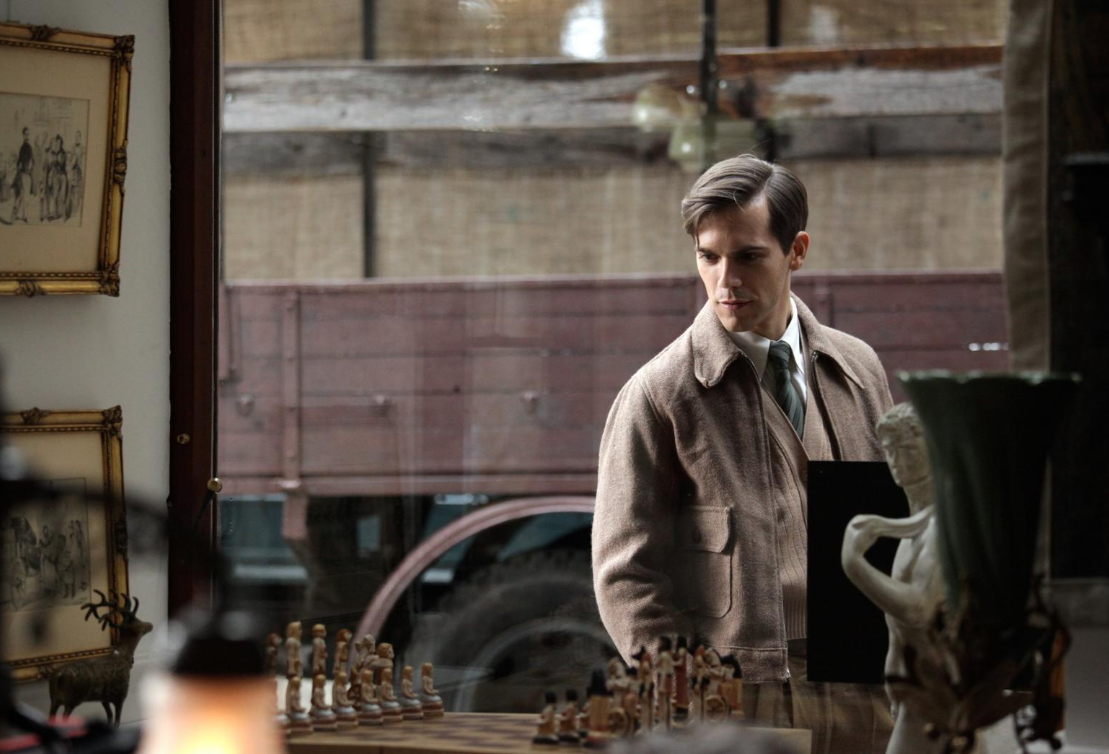
Directed by Luis Oliveros and written by Julio Castedo, The Chess Player (El Jugador de Ajedrez) recounts the story of Diego Padilla, who becomes Spain’s national chess champion in 1934. What begins as a portrait of talent and rising ambition transforms into a narrative shaped by upheaval. As the Spanish Civil War takes hold, Diego and his wife, Marianne, a French journalist, move to France in search of safety. That sense of refuge dissolves under Nazi occupation, and Diego is imprisoned after being falsely accused of espionage. Within this harsh new world, chess becomes his means of endurance — a tool for mental clarity and a language of survival.
The film’s blend of personal drama and wartime tension has helped it stand apart among contemporary Spanish historical works. Its 1930s European settings, elegant period details, and sharply focused interior scenes allow the emotional stakes to unfold through close psychological study rather than sweeping battle sequences. In this way, The Chess Player follows a lineage of films that use war as context rather than spectacle, inviting viewers to examine how individuals adapt when institutions collapse.
A gathering with diplomatic and cultural weight
The Coral Gables Museum screening distinguishes itself not only through the film but also through the audience it will attract. Organizers expect a gathering that includes members of Miami’s diplomatic corps, cultural leaders, elected officials, and figures from the region’s audiovisual and social communities. Coral Gables’ identity has long reflected the intersection of international influence and artistic engagement, and this event mirrors that tradition.
A welcome cocktail reception will open the evening at 6:30 p.m., featuring light bites and Spanish-style beverages. This early portion of the program allows attendees to meet and connect before the formal remarks begin at 7:00 p.m. A brief pre-screening introduction will follow at 7:10 p.m., offering historical and artistic context for the film before the projection starts at 7:15 p.m.
For a museum whose mission includes telling the story of Coral Gables through architecture, design, history, and community life, the decision to host a film about resistance, cultural identity, and the endurance of intellect aligns with its broader goals. The evening’s structure also underlines the museum’s growing ambition to operate as a civic convener — a place where art brings together communities that might not otherwise share the same room.
Chess as discipline, culture and new community program
The evening carries an additional purpose: all proceeds support the museum’s forthcoming CGM Chess Club. This new initiative will debut in January during Family Day and aims to offer programming for players of all ages and skill levels.
That focus reflects a trend that stretches far beyond South Florida. Chess’s growing popularity — propelled by the global success of The Queen’s Gambit, the accessibility of online platforms, and the rise of scholastic programs — has moved the game into a new cultural moment. Museums, libraries, and community centers across the country now host chess clubs as a way to merge recreation with critical thinking and intergenerational engagement.
For Coral Gables Museum, the club offers a natural extension of its educational mission. It also provides a way for the institution to cultivate sustained community participation beyond its exhibitions and public programs. By linking the club’s debut to a screening of The Chess Player, the museum positions chess not only as recreation but also as narrative, art, and historical witness.
A film that connects personal and political histories
The Chess Player achieves its impact through careful attention to how individuals navigate systems of power. Diego’s imprisonment by Nazi forces, his attempts to preserve his identity, and his reliance on chess as his only outlet present a story defined by discipline and resilience. The film’s aesthetic — intimate lighting, restrained cinematography, and an emphasis on interior spaces — creates an atmosphere where strategy becomes both metaphor and method.
Produced by Tornasol Films, Hernández y Fernández Producciones Cinematográficas, Ishtar Films, and Videoassist.hu, the film brings together a range of collaborators with long experience in international co-productions. Juan Antonio Casado, one of the producers, has contributed to several notable Spanish-language films that explore themes of personal struggle shaped by political forces. This shared creative lineage informs The Chess Player’s tone: reflective, urgent, and grounded in lived history.
The film’s 98 minute runtime allows its central tension to unfold without excess, maintaining narrative focus while giving its characters emotional depth. The Spanish language and European settings enhance the film’s authenticity, underscoring the cultural specificity that anchors its universal themes.
The evening’s program will include the performance by mezzo-soprano Solange Merdinian, accompanied on piano by María Zdralea.
Post-screening dialogue
After the film, attendees will have an opportunity to participate in a Q&A with Casado and chess experts. This portion of the program gives the evening a conversational dimension — a hallmark of the museum’s approach to arts engagement. Viewers can explore the film’s historical context, the strategic elements embedded in its depiction of the game, and the ways chess continues to serve as a cultural thread connecting communities across the world.

Author: Coral Gables Gazette News Staff
Originally established in 1996 and relaunched as a digital publication in February 2025, the Coral Gables Gazette is an independent local news organization dedicated to factual, objective and accountable community journalism. Our newsroom reports on the people, policies, institutions and events shaping Coral Gables, Florida, providing residents with timely, informative coverage of the issues affecting their community. Our reporting includes City Hall, local government, municipal elections, public spending, real estate development, business, education, arts and culture, and neighborhood affairs throughout the City Beautiful. We follow City Commission decisions, examine public records and report on the businesses, organizations and individuals contributing to Coral Gables. We believe informed residents are essential to a healthy, engaged community. Stories published under the Coral Gables Gazette News Staff byline are prepared or compiled by the publication's editorial team. We strive for accuracy, fairness, transparency and clear distinctions between news reporting, opinion and advertising. Readers are encouraged to submit news tips, corrections, editorial inquiries and story suggestions through our Contact page and learn more about our standards through our Editorial Policy.