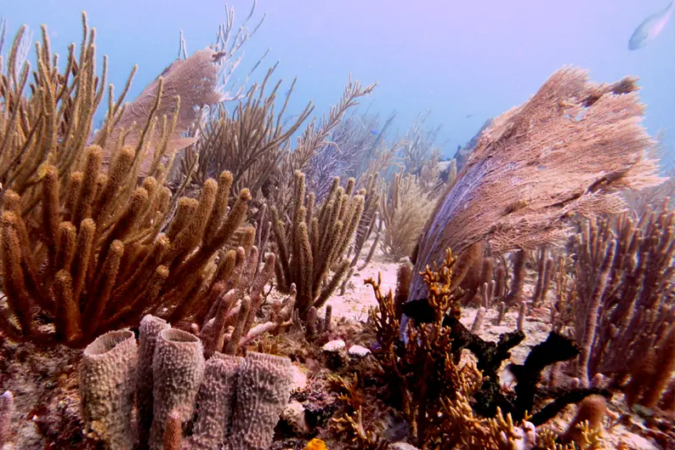
A University of Miami biologist working on the Coral Gables campus has helped document a growing threat to the world’s coral reefs: Nearly half of the reef-building coral species assessed by an international research team face an elevated risk of extinction, with species in the Atlantic Ocean, including the waters surrounding Florida, faring worse than those in the Indo-Pacific.
The study, published Oct. 15 in the journal Nature, found that 340 of 774 reef-building coral species with sufficient data for evaluation — approximately 44 percent — fall into one of three threatened categories established by the International Union for Conservation of Nature: vulnerable, endangered or critically endangered.

Juan Pablo Quimbayo, an assistant professor of biology in UM’s College of Arts and Sciences, was among the international team of researchers who conducted the assessment. Its lead author, David O. Obura, earned his doctorate in 1995 from UM’s Rosenstiel School of Marine, Atmospheric and Earth Science.
“Our investigation paints a very alarming picture about the future of coral reefs,” Quimbayo said in a Nov. 4 article published by the university.
Atlantic corals face greater danger
The findings carry particular significance for South Florida, where coral reefs are an important part of the coastal ecosystem and support fishing, diving and tourism.
The researchers found that approximately 50 percent of assessed reef-building coral species in the Atlantic, which includes the Caribbean and Florida’s reefs, were threatened with extinction. In the Indo-Pacific, home to Australia’s Great Barrier Reef and the Coral Triangle, the figure was approximately 43 percent.
The Atlantic figure describes the region as a whole, rather than a separate assessment of Florida’s coral species. But the results place South Florida’s reefs within the region facing the higher proportion of threatened species.
Quimbayo said the differences reflect how individual coral species respond to environmental pressures.
“Their vulnerability depends on factors such as geographical distribution, biological characteristics, depth preferences and exposure to thermal stress,” he said.
Worldwide, the researchers classified 33 species as critically endangered, 251 as endangered and 56 as vulnerable.
The findings represent a deterioration from the first global IUCN assessment in 2008, when approximately one-third of reef-building coral species were classified as threatened.
Warming oceans drive the decline
The principal threat identified by the researchers was heat stress associated with climate change.
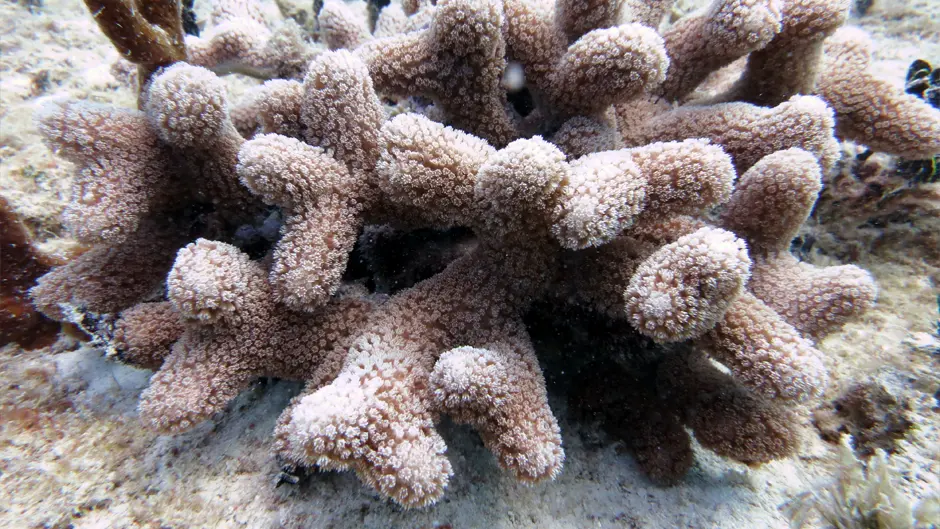
Corals depend on microscopic algae living inside their tissues. Through photosynthesis, the algae provide much of the energy corals need to survive and give them their characteristic colors.
When seawater temperatures rise beyond tolerable levels, corals may expel those algae, producing the whitening known as coral bleaching.
Bleaching does not necessarily kill a coral immediately. But prolonged exposure to unusually warm water can deprive corals of energy, increase their susceptibility to disease and eventually cause widespread mortality.
South Florida experienced those dangers firsthand in the summer of 2023, when unprecedented marine heat affected reefs throughout the Florida Keys.
Scientists and conservation organizations raced to protect surviving corals by moving specimens from underwater nurseries into temperature-controlled facilities and relocating others to deeper, cooler water.
According to the National Oceanic and Atmospheric Administration, coral specimens from University of Miami nurseries were among those transferred to land-based facilities to preserve their genetic diversity.
The emergency illustrated the challenge confronting researchers: Even as conservation programs work to restore damaged reefs, rising ocean temperatures threaten the corals they are trying to save.
An assessment already overtaken by rising temperatures
The international team reassessed 892 reef-building coral species previously evaluated by the IUCN. Of those, 774 had sufficient information to determine their conservation status.
Because direct population counts are unavailable for most coral species, researchers used historical changes in coral cover, projections of future severe bleaching events and biological characteristics associated with vulnerability to estimate extinction risk.
The assessment drew on data through 2020, meaning its findings predate the extraordinary ocean temperatures of 2023 through 2025 and the fourth global coral bleaching event.
The researchers cautioned that the proportion of species currently threatened may therefore be higher than the reported 44 percent.
The IUCN Red List measures relative extinction risk. It does not predict whether a particular species will disappear or when that might occur.
Nevertheless, the findings show how rising temperatures and increasingly frequent marine heat waves are putting pressure on ecosystems that have developed over thousands of years.
Research with implications beyond the laboratory
At UM, Quimbayo founded and leads the BioScales Lab, which examines biodiversity and the ecological effects of environmental change across terrestrial and marine ecosystems.
His participation in the global assessment connects research conducted at the university’s Coral Gables campus to an environmental challenge with direct consequences for South Florida.
Coral reefs occupy only a small portion of the ocean, but they provide habitats for marine life, sustain commercial and recreational fisheries, and help protect shorelines by reducing wave energy.
Their loss threatens not only marine biodiversity but also the economic activities and coastal communities that depend on healthy reefs.
The study concludes that protecting those ecosystems will require more than individual restoration projects. Local conservation efforts remain important, but the researchers emphasize that limiting further warming is essential to reducing future coral losses.
For Florida, where the consequences of extreme ocean heat have already been documented, the findings underscore the importance of both protecting surviving reefs and addressing the conditions driving their decline.
“With nearly half of assessed reef-building coral species already facing an elevated risk of extinction, the window for protecting these essential marine ecosystems is narrowing,” Quimbayo said.

Author: Coral Gables Gazette News Staff
Originally established in 1996 and relaunched as a digital publication in February 2025, the Coral Gables Gazette is an independent local news organization dedicated to factual, objective and accountable community journalism. Our newsroom reports on the people, policies, institutions and events shaping Coral Gables, Florida, providing residents with timely, informative coverage of the issues affecting their community. Our reporting includes City Hall, local government, municipal elections, public spending, real estate development, business, education, arts and culture, and neighborhood affairs throughout the City Beautiful. We follow City Commission decisions, examine public records and report on the businesses, organizations and individuals contributing to Coral Gables. We believe informed residents are essential to a healthy, engaged community. Stories published under the Coral Gables Gazette News Staff byline are prepared or compiled by the publication's editorial team. We strive for accuracy, fairness, transparency and clear distinctions between news reporting, opinion and advertising. Readers are encouraged to submit news tips, corrections, editorial inquiries and story suggestions through our Contact page and learn more about our standards through our Editorial Policy.