

By Rafael Hernandez
As I stepped towards a Waymo robotaxi last week in Coral Gables, I had no idea what I was walking into.
I knew their fleet of self-driving cars started operating in the Miami area in January, but seeing one in the flesh for the first time still brought an audible ‘woah’ out of me.
Owned by tech giant Alphabet Inc., Waymo has already established itself in major cities like Los Angeles and San Francisco and is looking to expand into Florida. Last week, the company announced Orlando as its next stop in the Sunshine Stat
With rides in Miami currently locked behind invite codes and wait lists, I had the opportunity to sample the service before it becomes available to the public later this year.
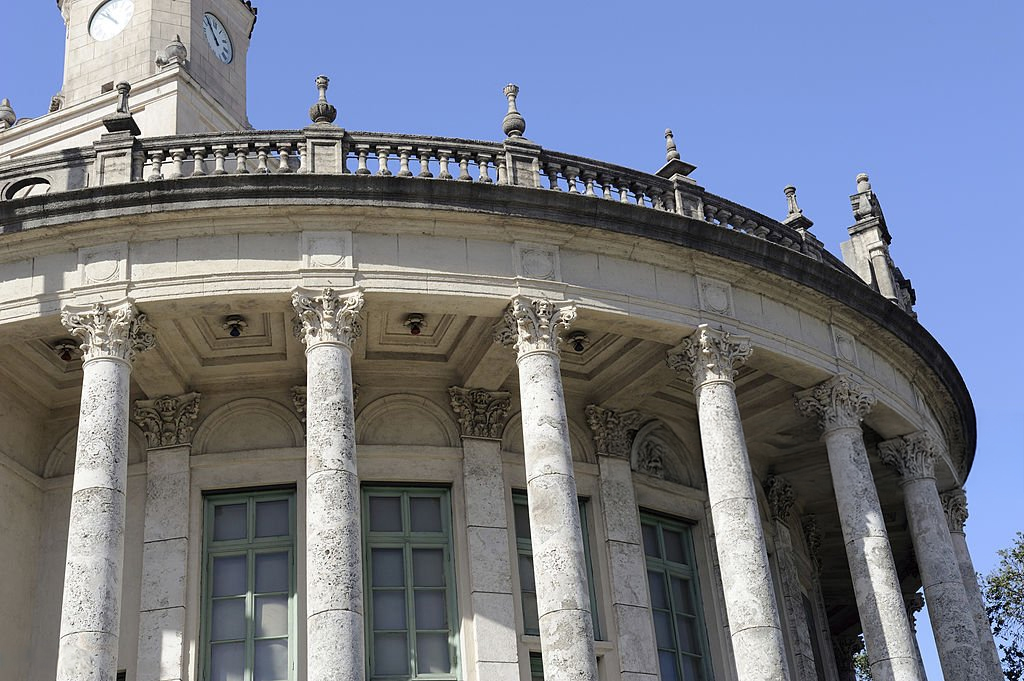
Granted, I didn’t expect the kitted-out Jaguar I ordered to look so out of place near Wayside Park’s aged stone towers, but I chose to be picked up there for a reason.
Rather than ride through the traffic-choked streets of Brickell or Wynwood, I wanted a route that would take me through one of the City Beautiful’s many neighborhoods. The Biltmore Hotel was my drop-off point.
Half of me was nervous, but the other needed to see if the hype was real. I wasn’t just taking a ride—I was getting my first glimpse of a driverless future.
No driver. No handles.
The first thing that caught my eye as I approached the car was its distinct lack of door handles.
One click of a button on the Waymo app and the doors unlocked soon after, prompting a retracted door handle to deploy from the vehicle.
As I opened the rear left door and climbed into the backseat, the radio was already playing a type of melody that accompanied many a study session back in college: lo-fi hip hop beats.
A digital voice then chimed in, assuring me that my safety was of the utmost importance and that I wasn’t going anywhere until my seatbelt was firmly fastened.

For a moment, it felt as if the artificial intelligence inside the Waymo sensed my skittishness and wanted to assuage my fears. I appreciated the AI-generated gesture.
I pressed the “start ride” button on a screen between the two front seats and was off to races.
The invisible chauffeur
The most extraordinary thing about my 10-minute trip through the Gables suburbs was how ordinary it was.
I’d braced myself for the worst, wondering if this car would randomly swerve off the road or come to a sudden stop, sending me flying through the windshield—but nothing happened.
As soon as rubber met the road, the Waymo steadily climbed towards the speed limit.
Up front, the steering wheel spun into position as if manned by an invisible chauffeur.
It made all the right stops and sped back up without issue. I did jostle a bit during the tighter turns, but it was nothing worse than a typical Uber ride.
A few blocks down, the Jaguar spotted a stopped car with its blinkers on taking up more than half the lane. Recognizing the obstacle, it slowed down, turned into the empty oncoming lane, and passed it without an issue.
Near the end of the trip, I even decided to change the destination back to Wayside Park on a whim.
It adjusted its route mere seconds after I made the switch.
The future, quietly arriving
By the time I stepped back outside and watched the Jaguar cruise towards its next job, my prior worries felt like distant memories.
This futuristic take on taxis became yet another ride-hailing service in my mind, only this one didn’t ask for a tip at the end.
My mind remained entirely unblown, which was strange considering I just entrusted a computer with my life.
The Waymo experience felt like a familiar recipe with the same flavor—different, yet fundamentally similar to taking an Uber or Lyft.
It will definitely appeal to many Miamians with its convenience and speed, and I expect to see a lot more of these Jaguars on the road in the near future.

Author: Coral Gables Gazette News Staff
Originally established in 1996 and relaunched as a digital publication in February 2025, the Coral Gables Gazette is an independent local news organization dedicated to factual, objective and accountable community journalism. Our newsroom reports on the people, policies, institutions and events shaping Coral Gables, Florida, providing residents with timely, informative coverage of the issues affecting their community. Our reporting includes City Hall, local government, municipal elections, public spending, real estate development, business, education, arts and culture, and neighborhood affairs throughout the City Beautiful. We follow City Commission decisions, examine public records and report on the businesses, organizations and individuals contributing to Coral Gables. We believe informed residents are essential to a healthy, engaged community. Stories published under the Coral Gables Gazette News Staff byline are prepared or compiled by the publication's editorial team. We strive for accuracy, fairness, transparency and clear distinctions between news reporting, opinion and advertising. Readers are encouraged to submit news tips, corrections, editorial inquiries and story suggestions through our Contact page and learn more about our standards through our Editorial Policy.











What if you need to put something in the trunk?