
By the Coral Gables Gazette editorial board
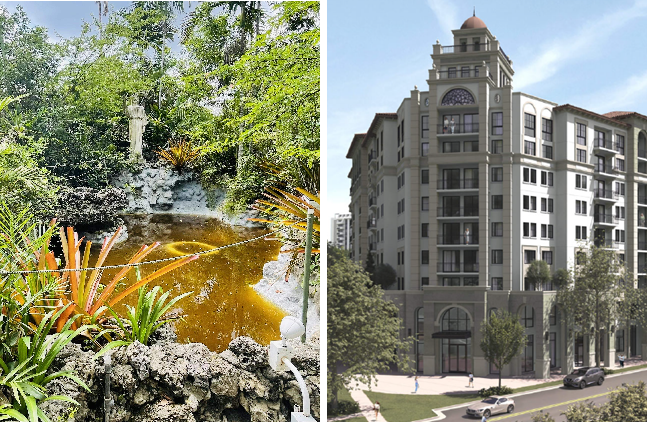
On Wednesday, the Coral Gables Planning and Zoning Board will consider whether to recommend a permanent change to the land beneath one of the most contested development sites in the city. The Crystal Residences project at 110 Phoenetia Avenue has traveled a long administrative road, and city staff now recommends approval of the four requests that would let it proceed. But one of those requests asks the city to do something more consequential than approve a building. It asks the city to remove the parcel from the conservation overlay it created to govern decisions like this one.
That is the request that deserves the board’s fullest attention, and a complete public explanation, before any recommendation moves forward.
In January, this editorial board wrote that process is not the same as judgment, and that the City Commission must weigh compatibility and stewardship rather than defer entirely to technical review. That argument concerned the project’s design approval. The question now is different, and in one respect larger. The applicant seeks to amend the Future Land Use Map from Religious/Institutional to Commercial Mid-Rise Intensity, to rezone the block from Special Use to Mixed Use 2, and — the detail that should give the board pause — to remove the property from the North Ponce Neighborhood Conservation District Overlay.
That overlay is not incidental. The city adopted it to preserve and enhance the garden-apartment character of North Ponce and to ensure that new development contributes to its surroundings rather than overwhelming them. A conservation overlay exists because baseline zoning cannot capture every contextual nuance, and because some neighborhoods warrant a closer reading than the zoning map alone provides. To approve a project within that overlay is one thing. To lift a full block out of it is another. It does not merely permit a building. It removes the parcel from the framework designed to govern what is built there, now and in the future.
A change of that permanence should not advance as a routine map amendment. Before recommending approval, the board should require clear public answers to three questions.
The first is why this block should leave the framework that governs it. North Ponce has long been treated differently because it is different. It sits between the city’s more intense commercial corridors and its lower-scale residential neighborhoods, and the overlay reflects a deliberate judgment that such transition areas require care, not simply absorption into the nearest high-intensity pattern. There may be a sound argument for revising that judgment here. But if the city is going to make this parcel the exception, the public deserves a direct explanation of why this site is different, what limiting principle applies and what precedent the board believes it is setting.
The second is what public benefit justifies the development flexibility being requested. The project is proposed as a Planned Area Development, a mechanism the city code defines as a path to greater design flexibility in exchange for, in the code’s own words, “substantial additional public benefit.” The staff report identifies those benefits as enhanced open space, improved pedestrian circulation, and the integration of residential and educational uses. The flexibility is real: the report states the project would rise to nine stories where the underlying district allows eight, though below the district’s height ceiling of 97 feet. A lawsuit now pending in circuit court raises a pointed version of the same question — whether the public-benefit justification holds up when the open space long associated with the site, the Garden of Our Lord, is the very thing the project would remove. The editorial board takes no position on that litigation. But the public-benefit logic of a Planned Area Development is the city’s own standard, not a private matter between the applicant and staff. It cannot be implied. It should be itemized.
The third is what conditions will make those benefits enforceable. How much open space is provided, and how public is it? If Crystal Academy is part of the public-benefit case, what space, capacity, and continuity are guaranteed if the property changes hands? If open space is part of the case, what access, design, and long-term maintenance are secured? If the project is justified as a transition between Ponce de Leon Boulevard and the residential blocks behind it, how are height, setbacks, streetscape, tree replacement, and the pedestrian experience protected at the edges? A benefit promised in an application and a benefit secured by enforceable condition are different. The public record should make that difference clear.
None of this requires the board to oppose the project. There is a real case for Crystal Residences, and fairness demands that it be stated. The development would add 184 residential units in a market with limited housing supply. It would provide a new, purpose-built facility for Crystal Academy, a school serving children on the autism spectrum, whose future on the site is otherwise uncertain. Those are genuine public goods, and the residents who support the project hold their position in good faith. A reasonable person can weigh the housing and the school against the garden and the overlay and arrive at approval. The point is that the city should reach it in the open.
The Planning and Zoning Board only makes a recommendation, and the City Commission decides later at two public hearings. But that recommendation is the record the Commission inherits, and the framing the public carries into those hearings. One that treats the overlay removal and the public-benefit justification as settled, before either has been publicly explained, hands the Commission a thin record and asks residents to trust a process whose reasoning remains unstated.
So the board’s task this week is narrower than the final decision but no less important: To put the reasoning for these changes on the public record and to forward the Commission a complete one, before any recommendation moves forward.
When the matter does reach the Commission, its members should remember January’s principle: a recommendation is not a substitute for their own judgment. But that obligation comes later. The first obligation falls on the Planning and Zoning Board, on Wednesday. Coral Gables wrote rules for moments like this. Before it sets those rules aside for a single block, it should show its work.








I am totally opposed to the construction on this apartment building without safeguards for the Garden of our Lord, the school, and the church. How can anyone believe that adding 184 housing units and space for offices will not have an impact on traffic?And what about the character of Coral Gables, which this administration and commission seems to ignore? Destroy green spaces, historical buildings? My daughter, who is now 60, attended St, James Lutheran School and so have many generations of Coral Gables residents. A small school, one where I felt my daughter was safe and would receive an excellent education, moral and otherwise. Why change the character of that neighborhood for these mammoth buildings that add nothing but traffic? Where are the trees, the green spaces, the beautiful old buildings, the historical preservation of certain sites?
Thank you for this well thought out commentary.
Agree 100% with Beatriz La Rosa. Construction and more construction is not what Coral Gables is supposed to be. There is no question that traffic will be affected . Please leave the little green areas we have as is.
Like Ms. Goodman I appreciate your organized commentary. A few questions pop up though. One, didn’t the realtor selling the property disclose that there was a height restriction for the area? I believe that is required by a realtor to do so. Next, the group purchasing the property knew of the height restriction but planned a taller building anyway? What was discussed that this was even an option before purchasing the very expensive property? Was the purchaser given a promise that the variance would be granted, so that there shouldn’t be a worry? Why was so much money spent not knowing if the variance would be given-unless there was something that is being left out that isn’t being shared. Why do rules that are for the protection of a community constantly need to be challenged in this city? Why can’t developers work with the plan Merrick came up with? Nine stories is ultimately too high to keep the ambiance that is part of why some people moved to the area and have kept it that way. What will the consequences be to the Free Children’s Dental Clinic next door at the Coral Gables Woman’s Club? How will they be able to operate with the shared extra parking needs of this building-because it is unwritten that tenants will be using the parking at the clubhouse because it is convenient-as shown by the people who do the same at the David Williams and at The Biltmore ll, along with the employees of many of the businesses in the area already using the parking alongside the clubhouse. The club will be penalized because the guests at events that support the clinic will most likely have to pay to park. So so wrong whoever promised this developer that the land designation can easily be changed. (Ethics- ask the realtor, the commission, and the developers what the definition they are using is. Curious to hear if its the same as Merriam Webster’s) So wrong that if this does go through the developer won’t even be using a Coral Gables firm, but one in Chicago!
qfqixu
References:
Legiano Casino Meinungen https://via.hypothes.is
References:
Hitnspin auszahlung dauer http://www.hamatata.com/play?video_src=http://fcterc.gov.ng/?URL=https://de.trustpilot.com/review/der-wikinger-shop.de
References:
Hit n spin casino erfahrungen http://image.google.com.cy/url?q=https://wotspeak.org/engine/dwn.php?xf=https://de.trustpilot.com/review/der-wikinger-shop.de
References:
Hitnspin casino demo http://cse.google.ki/url?sa=i&url=https://wikimapia.org/external_link?url=https://de.trustpilot.com/review/der-wikinger-shop.de/
References:
Hitnspin casino sicher http://www.google.la/
References:
Hitnspin casino https://jugem.jp/
References:
Hit n spin casino deutsch https://jugem.jp/utf/?mode=gallery&act=list&domain=ero-pics.ru/user/winterbengal54/
References:
Hitnspin casino kundenbewertungen spbtalk.ru
References:
Lollybet Casino No Deposit Bonus http://maps.google.co.th
References:
Lollybet Casino Blackjack 16.pexeburay.com
References:
Lollybet Casino PayPal http://images.google.com.ly/url?q=https://bom.so/lKijbo
References:
Lollybet Casino Betrug http://toolbarqueries.google.gp
References:
Hitnspin free spins http://cse.google.com.bn/
References:
Hitnspin casino sign up bonus http://clients1.google.com.ni/
References:
Hit’n’spin casino no deposit bonus http://logen.ru/bitrix/rk.php?goto=https://hack.allmende.io/s/JsnFAOST5
References:
Hitnspin casino bonuscode images.google.ru
References:
Hitnspin casino freispiele http://maps.google.com.cu/url?q=https://writeablog.net/portercicada42/spielen-and-gewinnen
References:
Lollybet Casino Bonus ohne Einzahlung https://58.cholteth.com/index/d1?diff=0&utm_source=ogdd&utm_campaign=26607&utm_content=&utm_clickid=8kc044cswgo8ok48&aurl=https://biokita.id/thereseran&an=&utm_term=&site=
References:
Lollybet Casino Live Casino freesexcamca.chaturbate.com
References:
Lollybet Bonus ohne Einzahlung google.tm
References:
Lollybet Casino Live Dealer http://images.google.co.uk/url?q=https://linkmultidirecional.com/chariseiff
References:
Lollybet Casino Live Chat http://toolbarqueries.google.com.sl/url?q=https://glofcee.com/employer/top-paysafecard-casinos-2026-️-im-online-casino-mit-paysafe-zahlen/
References:
Lollybet Casino Bonus ohne Einzahlung utmagazine.ru
References:
Lollybet Casino Test maps.google.fr
References:
Lollybet Online Casino http://maps.google.cat/url?q=https://staging.marine-zone.com/employer/lollybet-casino-erfahrungen-2026-sicher-oder-ein-betrug/
References:
Lollybet Casino Gutschein 209.127.59.74
References:
Steak Casino Bewertung https://vmcworks.com/employer/casino-bonus-ohne-einzahlung-neu-neue-no-deposit-bonus-codes
References:
%random_anchor_text% https://gitea.fcyt.uader.edu.ar/
References:
Sg Casino Bonus https://s3.amazonaws.com/
References:
Candy 96 casino Australia https://wedeohire.com
References:
Candy96 sign up bonus tsnasia.com
Tôi thấy trang này khá uy tín pikashow download apk TONY08-26