
By Coral Gables Gazette staff
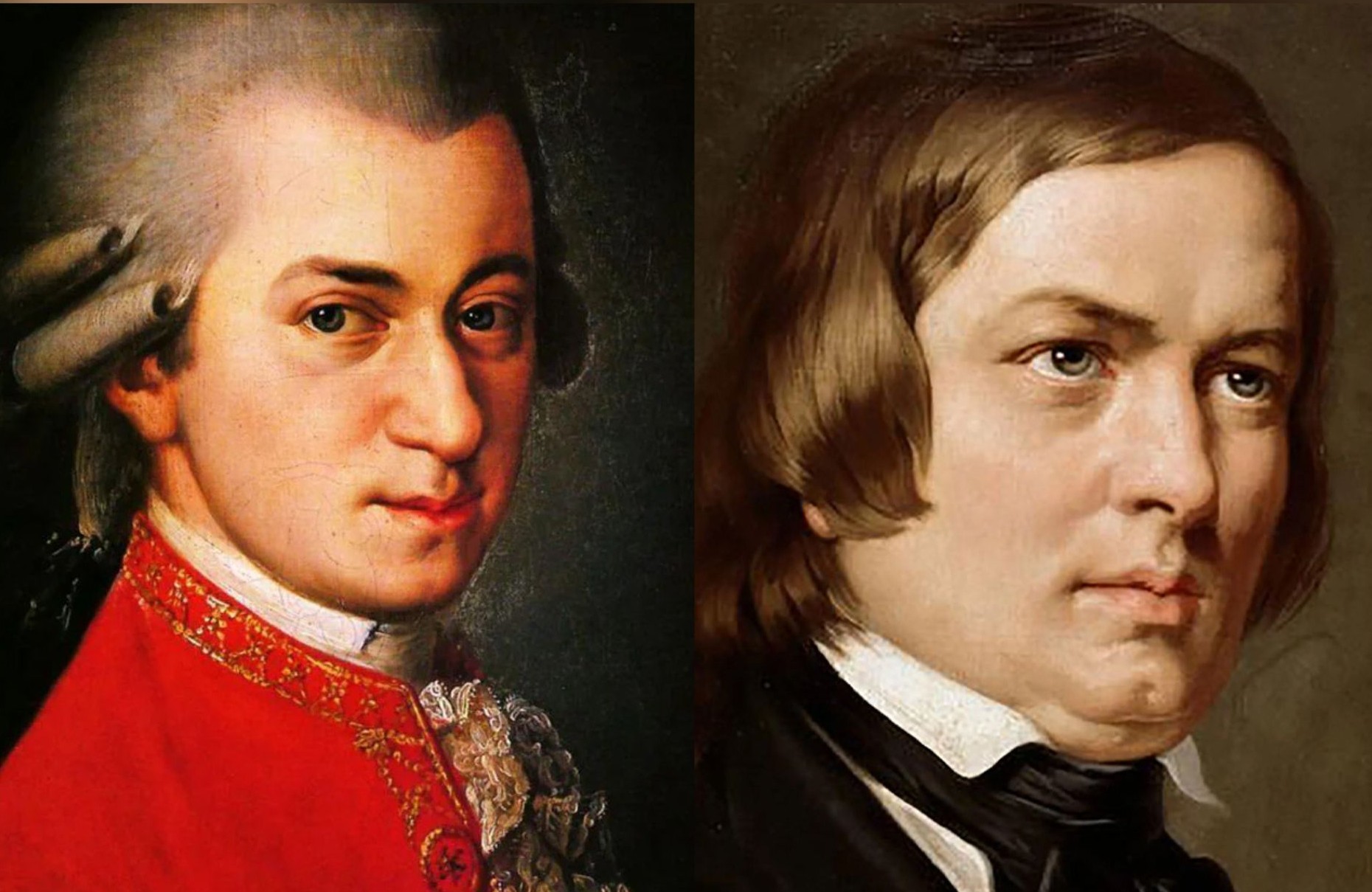
Sixty years separate the two works on the South Beach Chamber Ensemble’s program this Sunday at the Coral Gables Museum — sixty years in which Western music traveled from the sunlit certainty of Mozart’s late Classical period to the restless inwardness of Schumann’s Romantic one. That distance, compressed into a single afternoon, is what makes the program worth your time. Mozart’s Piano Trio No. 4 in E major, K. 542, composed in 1788, and Schumann’s Piano Trio No. 2 in F major, Op. 80, composed in 1847, are not simply two attractive works placed side by side. They are a before and after — an argument in music about how the art form changed, and why it matters that it did. A champagne toast follows.
The concert begins at 2 p.m. at 285 Aragon Avenue. Admission is free for Coral Gables Museum members and students with valid ID. General admission is $40, with a senior rate of $30. Tickets are available at the door.
A South Florida institution built on access and ambition
Founded in 1997 by cellist Michael Andrews, the South Beach Chamber Ensemble is one of the only arts organizations in South Florida dedicated to offering affordable chamber music programs to new audiences while showcasing local musical talent. It began without fanfare: a free concert of Haydn and Dvořák piano trios at the Bass Museum of Art in Miami Beach, which landed well enough that the museum immediately scheduled two more performances that season. Twenty-eight years later the ensemble is still at it, still committed to the proposition that chamber music belongs in beautiful spaces and in front of audiences who may be encountering it for the first time.
The Music in Beautiful Spaces series has been supported by the Miami Beach Cultural Arts Council and the Miami-Dade Department of Cultural Affairs for 26 years — a sustained institutional endorsement that reflects what founder Andrews has built over nearly three decades of patient, purposeful work. Andrews grew up in Wausau, Wisconsin, and studied cello at the University of Wisconsin and the University of Illinois under Gabriel Magyar of the Hungarian String Quartet, before moving to Boston to study with George Neikrug. He spent five years playing with the Orquesta Filarmónica de Caracas, teaching at the orchestra’s conservatory and touring Puerto Rico and the Dominican Republic before settling in South Florida and founding the ensemble that has defined his career.
The ensemble’s ambitions have never been purely local. Its Music in Motion tours brought performances to the Villa-Lobos Museum in Rio de Janeiro and to concert halls and student programs in Buenos Aires and Salvador, Brazil — with student attendance increasing by 300 percent during the 2007 South American tour. It has been heard on a worldwide radio broadcast on WLRN’s Arts Beat, and has performed in historic churches, hotel lobbies, museum galleries, and outdoor stages across two continents, always in pursuit of the right acoustic and the right atmosphere for music that demands to be heard closely.
From Classical poise to Romantic passion — sixty years of transformation in one program
The genius of Sunday’s program is its architectural clarity. The two works tell a story that no program note could tell as effectively as the music itself.
Mozart’s Piano Trio in E major, K. 542, was written in Vienna in 1788 — one of the most astonishing years in the history of Western music. In that single year Mozart completed his final three symphonies, the Piano Sonata No. 16, and a string of chamber and keyboard works, all while struggling under mounting financial pressure and declining health. None of that turmoil is audible in the E major trio, which is a work of extraordinary serenity and formal balance. The key itself is unusual for Mozart — warm, bright, slightly elevated — and the writing for piano, violin, and cello achieves a natural equality that is rare even in his chamber music. The slow movement has a tenderness that has made this one of the most admired of his piano trios, a piece that feels simultaneously inevitable and surprising from first note to last. It is Mozart at his most settled, which is to say Mozart at his most deceptive — the ease is real, but it was hard won.
Schumann’s Piano Trio No. 2 in F major, Op. 80, inhabits an entirely different emotional world. Written in 1847 — a year in which Schumann produced both of his mature piano trios in rapid succession, along with a body of vocal music and choral work — it reflects the full restlessness of the Romantic temperament. Where Mozart resolves, Schumann searches. Where Mozart contains, Schumann expands. The opening movement drives forward with an urgency Mozart would have found excessive and Schumann found essential. The slow movement retreats into a private lyricism that feels genuinely confessional — music that is not performing feeling but experiencing it. The finale gathers energy and releases it with a rhythmic vitality that leaves the listener exhilarated rather than simply satisfied.
Together the two works do what the best chamber music programs do: they make an argument. Chamber music, the program suggests, began as an art of shared pleasure and social grace and became, over the course of a century, an art of shared vulnerability. Mozart and Schumann are not opposites — they are the same impulse at different temperatures.
Sunday afternoon at the museum
The Coral Gables Museum, housed in the city’s historic 1939 Public Safety Building on Aragon Avenue, is an ideal setting for this kind of programming. Its intimate scale and community mission align naturally with what the South Beach Chamber Ensemble has been doing for nearly three decades — bringing serious music into spaces where it can be heard closely, without the distance and ceremony of a concert hall. The building’s history as a civic anchor gives the afternoon a particular resonance: music made for people, in a building made for people, by an ensemble that has never forgotten the difference between accessibility and condescension.
Doors open at 1:30 p.m., thirty minutes before the performance, allowing time to settle into the space before the music begins. The champagne toast that follows is a signature ensemble touch — a recognition that chamber music is also a social occasion, and that the conversation after the last note is part of what makes the experience complete. It is the kind of Sunday afternoon Coral Gables does well, and that the South Beach Chamber Ensemble has been providing for longer than most local arts organizations have existed.








There is clearly a bunch to identify about this. I think you made various nice points in features also.
Thanks for your recommendations on this blog. 1 thing I would want to say is that often purchasing consumer electronics items through the Internet is nothing new. Actually, in the past decade alone, the marketplace for online consumer electronics has grown drastically. Today, you will find practically any type of electronic gizmo and other gadgets on the Internet, from cameras and camcorders to computer elements and video gaming consoles.
Sau vài lần dùng thử 888slot apk , mình thấy mọi thao tác đều rất tiện lợi. TONY07-08