

By the Coral Gables Gazette editorial board
The lawsuit filed last week seeking to halt the proposed dog park at 520 University Drive represents more than a dispute over land use. It reflects a moment of civic consequence. The case, brought by the University Green Neighbors Association and nearby residents, asks a court to invalidate the city’s approval of the project and to block construction. It is, in the most literal sense, an appeal—not to elected officials, but to the judicial system itself.
It is a sobering moment when residents conclude that the only way to be heard by their own government is through a lawsuit.
No city should welcome litigation. Lawsuits consume time, public resources and civic energy. They introduce uncertainty into projects and place decisions in the hands of judges rather than elected representatives. Yet lawsuits also serve an essential purpose. They are part of the constitutional architecture of American government, designed to ensure that power remains accountable to law. Courts exist not to govern cities, but to review whether governments have acted within their legal authority.
Coral Gables has long prided itself on a civic culture rooted in participation. Residents attend commission meetings they deem important. They organize. They advocate. They vote. These forms of engagement are the lifeblood of local democracy. Litigation, by contrast, occupies a different category. It is not a continuation of civic dialogue. It is a declaration that dialogue, in the view of at least some participants, has reached its limits.
This does not mean the city acted improperly. Nor does it mean the residents’ claims will ultimately prevail. Courts will determine the legal merits of the case. But the existence of the lawsuit itself reflects something deeper: a perception among residents that the ordinary mechanisms of civic decision-making did not fully resolve their concerns.
There is also an inherent paradox in such moments. The residents bringing suit are taxpayers. The city defending its decision is funded by those same taxpayers. Public dollars, contributed collectively, now support both the challenge and the defense. This is not a flaw in the system. It is how constitutional governance functions. But it underscores the degree to which litigation represents a final recourse—a step taken when residents believe other avenues have been exhausted.
The University Drive case does not exist in isolation. Across Coral Gables in recent years, disputes over land use, development, and neighborhood character have revealed how deeply residents care about the future of their city. This level of engagement is a strength. It reflects a community that remains invested in its surroundings and its institutions.
The question is not whether disagreements will arise. They always will. Cities evolve. Needs change. Priorities shift. The question is whether residents consistently feel that their voices are heard within the civic process itself.
Courts can resolve questions of law. They cannot create the trust that must exist between a city and those it serves.
That trust is built not only through decisions, but through process—through notice, transparency, listening, and the assurance that participation carries meaning. Even when outcomes differ from individual preferences, confidence in the fairness of the process sustains the legitimacy of the result.
Coral Gables remains a city defined by active citizenship. Residents continue to attend meetings, speak, and engage. Commissioners continue to face difficult decisions in balancing competing interests. The present lawsuit should be understood not as a rupture, but as a signal—a moment that invites reflection on how civic dialogue unfolds and how it can continue to strengthen.
The courts will now do their work. But the larger work of governance remains ongoing. It lives in commission chambers, in neighborhood conversations, and in the shared commitment to preserving a civic culture where residents feel heard not only in courtrooms, but in the public life of their city.











First, it was the city-funded signs about poo bags on the swale that… attract even more poo bags on the swale. Now it’s a dog park that no one wants, and will require us to pay for litigation. Great job, Rhonda!
Commissioner Castro tried to repeal this and move it through the proper process by asking the residents who actually live there and would be directly affected. Instead of respecting that effort, they talked down to her, tried to humiliate her for bringing it forward, and fought her at every turn. It was disgusting to witness that. She didn’t back down. That is what real representation looks like.
Rhonda has been pushing this dog park for two years. She went to the neighbors before and they said no. Yet she keeps forcing it. When an elected official ignores the very people who will live with the consequences, you have to ask why. Who is this really for?
Instead of listening to residents, Rhonda, Vince, and Richard shut it down and reduced the conversation to design details. The issue isn’t design. The issue is whether the neighbors want it there.
It is unacceptable that residents feel they have to sue their own city just to be heard. Elected officials work for the people. If they refuse to listen, they can and should be voted out.
Thank you, Commissioner Castro, for constantly standing firm and demanding that residents come first.
I really do not know who is right on this issue. But I feel there is a disconnect between what officials perceive and what citizens’ concerns are. An example I keep addressing and nothing is done is the increasing traffic of e bikes, scooters, skateboards, bikes and robots on Miracle Mile and Ponce. Despite forbidden by city code there is no enforcement and pedestrian’s lives are continually threatened. If a pedestrian is hit and killed or maimed by one of this vehicles, should the victim sue the city for neglecting their responsibility? Just an example.
Well written article, hope the courts decide that the most affected of this ” Bark Park” are very much against it.
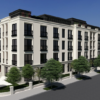
The same thing is going on regarding the 110 Phoenetia project. It is not in line with the neighborhood. It is too big and will cause too much traffic. Neighbors do not want it. Many stood up at the Special Commission Meeting and spoke out against it. So far, only Bonnie Bolton is fighting it. Perhaps everyone against it in the neighborhood should get together and file a lawsuit to stop it? Maybe then the Commission might listen?
The 110 Phoenetia project is a travesty. There are several negative issues with that development…it’s incompatible in scale and size with the existing neighborhood, it will destroy a historic garden and cemetery, and the proposed relocation of a century-old tree is a condemnation of death.
The “special masters” who reviewed the project are not objective in their views, as all have connections here in the city, and it’s hard to believe they didn’t see how a project of that size will irreparably damage the existing neighborhood.
The pleas to the commission fell on deaf ears, as developers are ruling the commission, but unfortunately, that shouldn’t surprise anyone.
The Phoenetia project is not in the best interests of the neighbors or the neighborhood, but just as with the proposed bark park, the best interests of the neighbors and neighborhood have ceased to be important to the majority on the commission.
Bonnie Bolton was direct, precise, descriptive and passionate about the reasons the Phoenetia project is incompatible with the neighborhood. Kudos to her for taking on the city and not backing down. We need more Bonnie Boltons in our city.
And thank you to Commissioner Castro for listening to the residents. We are very grateful for your efforts on our behalf.
It’s a great city! World class destination. Let’s also be stewards for the environment and recognize that our animals need habitat spaces to thrive in so we can gift our children and grandchildren with the exitement of red fox sightings and eastern screech owl viewings.
We really don’t have to develop every square inch of the City.
Lago, Anderson and Lara. Are you hearing and reading what the residents think of your atrocious leadership? We have had enough!! You do not make decisions against what your residents want. Supposedly Lago and Lara have been paid off by contributions to their political accounts and PACS by a developer, without disclosure of same. They should be brought up to Ethics. Lago has been aggressive and vicious to another commissioner who is listening to the people. WE WANT YOU 3 OUT. Hear us clearly. No dog park at that location and no destruction of the Garden of the Lord. Build another on the underline but stay out of our neighborhoods. Please will someone with know-how start a recall on the worst mayor in our history and his 2 sidekicks. They need to be removed from their positions. It is pathetic when you are humiliated by lawsuits from your city residents. We have not forgotten Anderson and her fire station on Coco Plum circle or her push to charge residents $55,000+ for septic tank removals. Lago is a self appointed King, Anderson only wants her agenda, and Lara is the boy on a string doing what he is told.