
By the Coral Gables Gazette editorial board
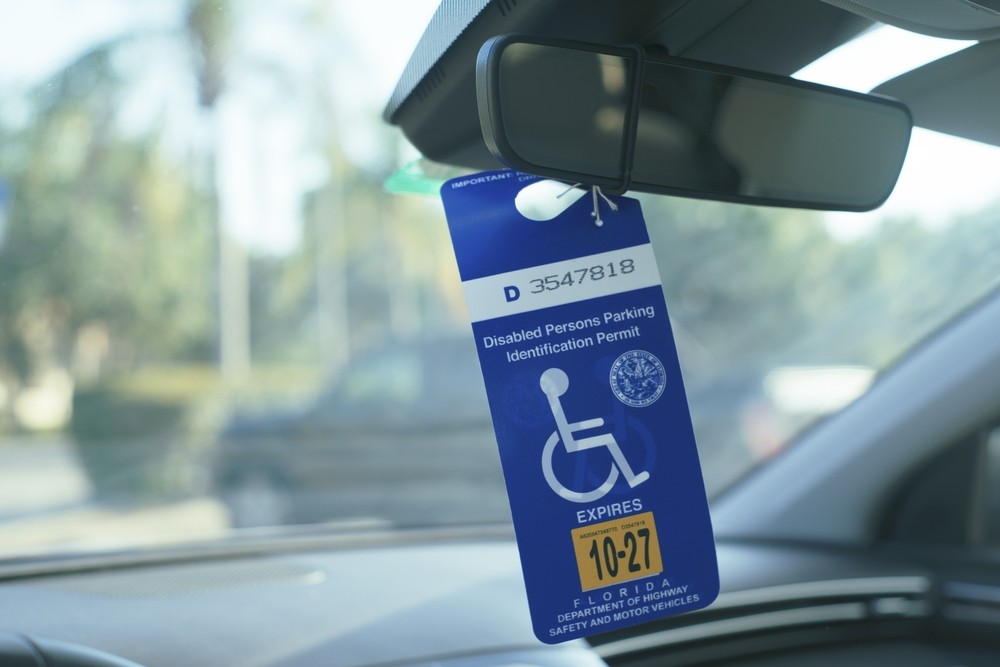
When Miami-Dade County announced last week that it had canceled more than 4,700 disabled parking permits — more than 11 percent of the roughly 41,000 permits reviewed — the figures confirmed something Coral Gables officials had raised publicly months earlier: abuse of the system was serious enough to warrant scrutiny.
Coral Gables deserves credit for raising the issue early and publicly.
At the Jan. 27 City Commission meeting, Mayor Vince Lago and Vice Mayor Rhonda Anderson made a forceful and specific case that disabled parking placards were being misused at the expense of residents who depend on them, including disabled veterans, seniors and people living with serious medical conditions. Lago proposed concrete reforms, including shortening permit renewal periods and increasing scrutiny of online certification services. Anderson identified a significant enforcement gap, noting that parking officers currently lack authority to verify whether the person using a placard is the person to whom it was issued.
They were right to raise concern.
The county’s audit has since validated that concern. The cancellations involved permits tied to deceased individuals, incomplete documentation, potential fraud and other irregularities, with the most serious cases referred for law enforcement review. The evidence is no longer anecdotal. The scope of the problem is no longer speculative.
Coral Gables also did more than talk.
Miami-Dade Tax Collector Dariel Fernandez later appeared before the commission as the county’s broader audit effort took shape, and city officials publicly aligned themselves with that enforcement push. That coordination reflects well on Coral Gables’ willingness to press for accountability beyond its own jurisdiction.
Which makes one unfinished piece of business all the more conspicuous.
At that same Jan. 27 meeting, Lago directed city staff to draft a resolution urging state lawmakers to tighten disabled parking permit regulations, strengthen oversight and explore additional enforcement measures. The directive was given publicly and specifically.
More than four months later, no such resolution has appeared before the City Commission.
This is not a scandal. It is not evidence of bad faith, and it is not proof the city has abandoned the issue.
But public concern deserves public completion.
This is more than a procedural omission. Many of the reforms discussed by city officials would likely require state-level legislative or regulatory action. A formal resolution from Coral Gables would place the city’s position clearly on the record and provide a practical mechanism for encouraging broader reform.
It is the difference between identifying a problem at a commission meeting and advancing a formal response through the channels available to local government.
A single resolution will not, by itself, reform Florida’s disabled parking permit system. The Legislature moves on its own timetable, and one municipality’s voice is only one among many.
That is not a reason to leave the directive unfinished.
It is a reason to complete it and begin building broader municipal support for reform.
The resolution should be placed on a commission agenda, debated in public and adopted if city leaders still believe what they said in January. If they no longer do, they should explain why.
Either outcome would serve residents better than silence.
Coral Gables identified a real issue and raised legitimate concerns. It helped draw attention to a problem now being addressed through county enforcement. The resolution is the logical next step in the process the city itself began.
It should come forward, and the commission should pass it.
Good government is not measured by how forcefully officials identify a problem. It is measured by whether they complete the work required to address it.













This is a duplicate reply..
It is about time someone did something. I have seen just as like many of you have, people driving sports cars such as Ferrari, Lambos, etc., with those permits and part in those spaces designated for people in need, simply probably because they want the larger space so their doors don’t get dinged. I have seem mom’s doing the same thing. Probably the permit belongs to a family member, that is not present. Then of couse when it comes to paid parking, those with permits, park for free as I recall.
I say, fine them, have them spend a night in jail to meet Bubba or the female equivalent. It is shameful, and it is the result of lack of proper enforcement.
I have to say something. I was confined to a wheelchair for months after a neurological event, and after many months of physical therapy 2-3 times a week I am able to travel in car (someone else is driving) and walk with someone giving me a hand to hold. I have bad days, as we all do, and I stay in the car as my husband runs inside to grab something for me. I have had people tap on my window and tell me I am a fraud. Check with the ADA. There are times he needs my help in the store and has to come out and get me. We do not commit fraud. My dog is a service dog and you can’t ask me why. Deal with your own problems.
Yes people are cruel without needing to be.
As a elderly person with severe arthritis in my spine, bilateral knee replacement, bilateral ankle surgery and bilateral shoulder surgery I have seen you healthy men and women using the disability space as their personally parking space.