
By Coral Gables Gazette staff
When J. Sterling Morton proposed a tree-planting holiday to the Nebraska State Board of Agriculture in January 1872, the idea was practical before it was symbolic. The prairie was treeless. Trees meant windbreaks, shade, fuel, and soil stability. On the first Arbor Day, April 10, 1872, an estimated one million trees were planted in Nebraska. The holiday has been observed in all 50 states ever since, with dates varying by region to coincide with the best planting conditions.
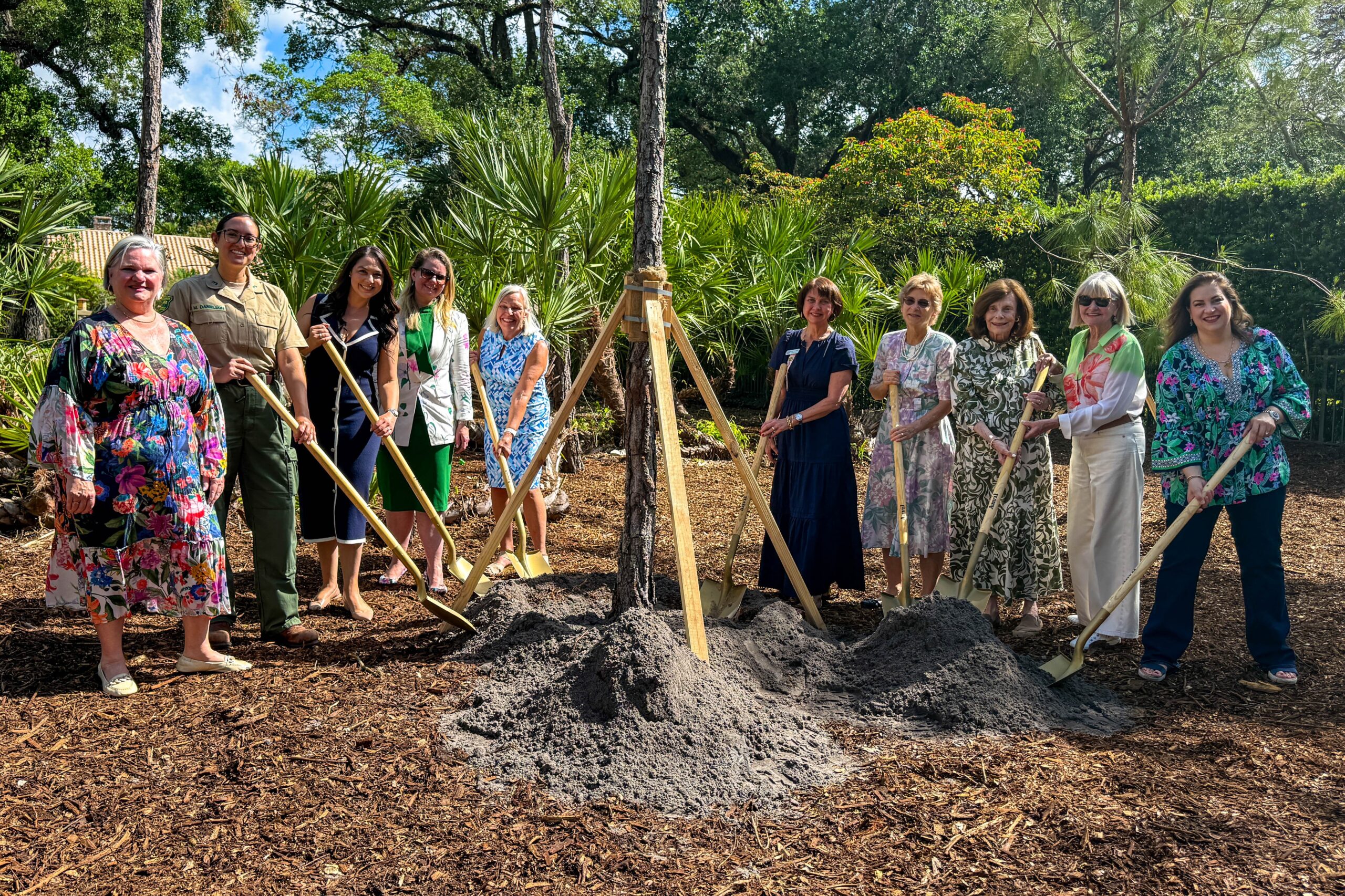
In South Florida, where the environmental stakes are measured not in prairie windbreaks but in the survival of some of the most imperiled habitats on earth, Coral Gables observed Arbor Day 2026 on April 24 with a planting that carries more weight than ceremony. Five slash pines went into the ground at Fewell Park — a small greenspace at the southeast corner of Coral Way and Granada Boulevard — alongside the unveiling of a restoration plan that will run through 2027. The planting was conducted in partnership with the Coral Gables Garden Club and the Landscape Beautification Advisory Board.
The park and what it protects
Fewell Park is a relatively small space. But what it contains is, by ecological measure, extraordinary. The property was deeded to the city decades ago by the Fewell family and preserved specifically to protect a native pine rockland habitat — one of the rarest ecosystems in South Florida and among the most endangered in the world.
Pine rocklands are defined by their structure: widely spaced slash pines rising from exposed South Florida limestone, with a diverse understory of native plants adapted to the thin, porous soil and the particular light conditions that the open canopy allows. The ecosystem historically depended on periodic fire to maintain its balance — fire suppressed the hardwood species and invasive plants that would otherwise overtake the landscape, resetting the understory and allowing the fire-adapted native species to regenerate. In urban settings, that natural cycle is disrupted. Without fire, hardwoods encroach, invasives establish, and the distinctive character of the rockland gives way to the surrounding landscape.
The city’s Greenspace Management Division has responded with a hands-on restoration approach — maintaining the site without potable irrigation or chemical treatments. That discipline earned Fewell Park a Gold-Level Florida-Friendly Landscape designation from the University of Florida IFAS Extension, a recognition that reflects the rigor of the city’s approach to native habitat management.
The restoration effort
Through the Keep Coral Gables Beautiful program, invasive plant removal work carried out in 2024 and 2025 has prepared the site for the long-term restoration now underway. The five slash pines planted on April 24 are the first installation under a plan that extends through 2027. The full restoration will address the park’s canopy structure, understory composition, and the ongoing management required to sustain a pine rockland in an urban environment without the fire cycle that would naturally maintain it.
“Fewell Park represents a rare opportunity to preserve and restore a native pine rockland within an urban setting,” said Deena Bell Llewellyn, the city’s assistant director of public works for greenspace management. “Our goal is to protect its ecological integrity while creating a space where residents can connect with South Florida’s natural heritage.”
The involvement of the Coral Gables Garden Club and the Landscape Beautification Advisory Board reflects the city’s approach to environmental stewardship as a shared civic effort rather than a purely administrative one. Both organizations have long histories of engagement with the city’s green spaces and bring community investment to work that might otherwise remain invisible to most residents.
What pine rocklands are and why they matter
Pine rocklands once covered significant portions of South Florida’s uplands — the elevated, well-drained limestone formations that characterize the Miami Rock Ridge running from Miami-Dade County through the Florida Keys. Today, an estimated 98 percent of that original habitat has been lost to development, agriculture, and fire suppression. What remains exists primarily in Everglades National Park, Big Pine Key, and a handful of isolated urban remnants — among them Fewell Park.
The slash pine — Pinus elliottii — is the defining canopy species of the pine rockland. It is a fire-adapted tree that regenerates vigorously after burns and provides the overhead structure that the understory depends on. The five trees planted at Fewell Park on April 24 are not ornamental gestures. They are structural elements in the restoration of an ecosystem that, outside of protected federal land, has almost nowhere left to exist in South Florida.
Arbor Day in Coral Gables
The City Commission formally recognized April 24 as Arbor Day in Coral Gables at its April 14 Regular Meeting. The city’s observance has historically included tree plantings, educational programming, and recognition of the city’s urban tree canopy as a civic asset — one that provides shade, stormwater management, air quality benefits, and habitat connectivity in a densely developed urban environment.
This year’s Arbor Day observance connects the city’s tree-planting tradition to something more specific: a commitment to native ecosystems that predates the development that surrounds them and that will require active stewardship to survive it. The slash pines at Fewell Park will take decades to reach their full canopy height. The restoration plan they anchor reflects a civic investment in a timeline that extends well beyond any single administration or budget cycle.
The earliest Arbor Day celebrations were ambitious by design, using a single public moment to mobilize thousands of small actions that would only show their full value years later. The planting at Fewell Park last month belongs to that tradition.

Author: Coral Gables Gazette News Staff
Originally established in 1996 and relaunched as a digital publication in February 2025, the Coral Gables Gazette is an independent local news organization dedicated to factual, objective and accountable community journalism. Our newsroom reports on the people, policies, institutions and events shaping Coral Gables, Florida, providing residents with timely, informative coverage of the issues affecting their community. Our reporting includes City Hall, local government, municipal elections, public spending, real estate development, business, education, arts and culture, and neighborhood affairs throughout the City Beautiful. We follow City Commission decisions, examine public records and report on the businesses, organizations and individuals contributing to Coral Gables. We believe informed residents are essential to a healthy, engaged community. Stories published under the Coral Gables Gazette News Staff byline are prepared or compiled by the publication's editorial team. We strive for accuracy, fairness, transparency and clear distinctions between news reporting, opinion and advertising. Readers are encouraged to submit news tips, corrections, editorial inquiries and story suggestions through our Contact page and learn more about our standards through our Editorial Policy.











Five is a nice “start” but it is going to need a lot more.
It’s inspiring to see Coral Gables moving beyond ‘ornamental’ planting to true habitat restoration. Kudos to the Greenspace Management Division and the Garden Club for protecting the Fewell Park pine rockland. This is stewardship done right—preserving the 2% of our natural history that remains.
What a fabulous job the City partnered with the Coral Gables Garden Club is doing!
Thank you!
Fellow travelers of the lucky streak, you are going to love this place. I have played at dozens of sites but this one stands out because of its genuine passion for fair play and player comfort. Everything feels carefully designed around making your downtime truly rewarding. Grab a snack, settle in and let the good times roll because you really deserve it. thriches888
I stumbled upon this platform by chance and it quickly became my daily go to for online gaming. The slot variety is impressive and I appreciate how transparent the bonus terms are. It is refreshing to find a site that values fairness and keeps things simple for us players. in91cube