
By Coral Gables Gazette staff
The Coral Gables City Commission voted unanimously March 10 to direct the city manager to develop public awareness and educational programs on human trafficking — a move officials tied directly to South Florida’s upcoming slate of global events.
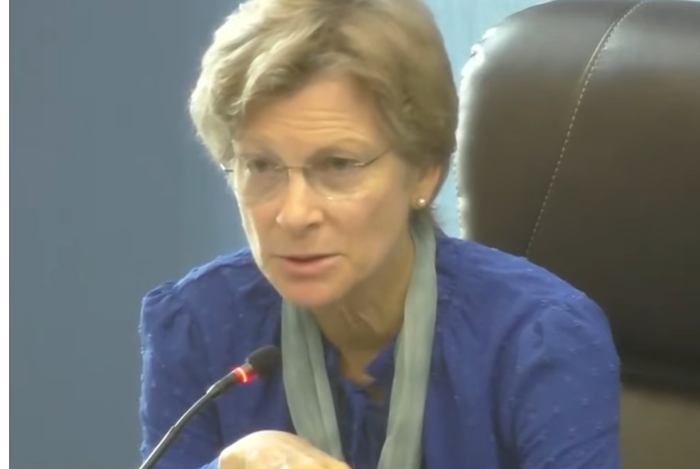
The resolution, sponsored by Vice Mayor Rhonda Anderson, is designed to make Coral Gables residents and business owners more effective partners in identifying and reporting potential victims. The campaign will include fliers at hotels and restaurants, social media and newsletter outreach, presentations at the city’s Farmers Market, and expanded promotion of the SaferWatch app, which allows anyone to submit tips, photos, and video directly to Coral Gables police at no cost.
“See Something, Say Something is an easy way to say to report things in, but if you don’t know what you’re looking at, and if you don’t realize that it’s an issue, then you’re not going to be able to report it in,” Anderson said. “One of our best tools are all the residents that we have in preventing crime and stopping crime.”
A regional push backed by new state funding
Tuesday’s vote places Coral Gables inside a broader enforcement and awareness effort already underway across Miami-Dade County. Florida ranks third nationally for human trafficking cases, behind California and Texas, according to the National Human Trafficking Hotline. With Miami-Dade set to host the FIFA World Cup, the Formula 1 Miami Grand Prix, the World Baseball Classic, Art Basel Miami Beach, Ultra Music Festival, and NASCAR Championship Weekend over the next year, law enforcement officials have warned that the influx of visitors creates conditions traffickers exploit.
Last month Florida Attorney General James Uthmeier and Miami-Dade State Attorney Katherine Fernandez Rundle announced a memorandum of understanding through which the Office of Statewide Prosecution joined Fernandez Rundle’s Human Trafficking Task Force. The partnership is backed by $1.5 million from the state prosecution operation fund to support prevention, investigation, and prosecution of trafficking cases. Fernandez Rundle established the task force in 2012; it operates with more than 70 sworn law enforcement officers and a trauma-informed model designed both to rescue victims and prosecute traffickers. The task force has handled nearly 948 cases involving close to 1,400 victims.
Coral Gables is a member of that task force. Police Chief Ed Hudak told the commission Tuesday that he has secured hands-on anti-human trafficking training for the city’s fire rescue personnel later this month through Fernandez Rundle’s office.
A second training proposal still unresolved
Tuesday’s vote follows a separate effort by Commissioner Melissa Castro to expand specialized anti-human trafficking training for the city’s firefighters and EMS personnel. On February 24, the commission delayed a vote on her proposal to allow time for additional input from police, fire, and the Miami-Dade State Attorney’s Office. Castro told the commission Tuesday she is continuing to develop the proposal.
A disagreement emerged over which organization should deliver the training. Chief Hudak, Mayor Vince Lago, and Commissioner Richard Lara said they preferred routing future training through Fernandez Rundle’s office after learning that the nonprofit Castro had identified was separately requesting the same training from the state attorney’s office that Coral Gables police had already sought — raising questions about the group’s independent capacity to deliver it.
Castro pushed back, saying the source of the training was less important than its quality. She said she did not care who conducted it, as long as it was specialized and hands-on. The question of which organization will ultimately provide the training has not been formally resolved.
What to look for — and who to call
The Miami-Dade State Attorney’s Human Trafficking Task Force notes that victims are often difficult to identify because exploitation frequently occurs in plain sight. Common indicators include signs of physical abuse or malnourishment, individuals who appear coached or fearful when speaking, people who lack control of their own identification documents, and those who use language associated with the commercial sex industry. Victims may not self-identify and in some cases may not recognize themselves as victims.
Chief Hudak offered a direct threshold for when to act. “If the hair on the back of your neck stands up, call us,” he said. “We’ll decide whether it’s real or if it’s perceived.”

Author: Coral Gables Gazette News Staff
Originally established in 1996 and relaunched as a digital publication in February 2025, the Coral Gables Gazette is an independent local news organization dedicated to factual, objective and accountable community journalism. Our newsroom reports on the people, policies, institutions and events shaping Coral Gables, Florida, providing residents with timely, informative coverage of the issues affecting their community. Our reporting includes City Hall, local government, municipal elections, public spending, real estate development, business, education, arts and culture, and neighborhood affairs throughout the City Beautiful. We follow City Commission decisions, examine public records and report on the businesses, organizations and individuals contributing to Coral Gables. We believe informed residents are essential to a healthy, engaged community. Stories published under the Coral Gables Gazette News Staff byline are prepared or compiled by the publication's editorial team. We strive for accuracy, fairness, transparency and clear distinctions between news reporting, opinion and advertising. Readers are encouraged to submit news tips, corrections, editorial inquiries and story suggestions through our Contact page and learn more about our standards through our Editorial Policy.











Oh my goodness! a tremendous article dude. Thank you However I’m experiencing problem with ur rss . Don’t know why Unable to subscribe to it. Is there anybody getting an identical rss problem? Anyone who knows kindly respond. Thnkx