By Coral Gables Gazette staff
When Ernesto Lecuona died in the Canary Islands in 1963, his will contained an instruction that said more about the man than almost anything else in his biography. He asked that his remains be repatriated to Cuba once the current regime runs its course. He is buried in Hawthorne, New York, still waiting.
Lecuona was the greatest composer Cuba produced — a child prodigy who graduated from the National Conservatory of Havana with a gold medal at 17, who unveiled his Malagueña at the Roxy Theater in New York in 1927 to such acclaim that Maurice Ravel reportedly said it was more beautiful than his own Bolero, who received an Academy Award nomination for his song Always in My Heart in 1942, and who left his country after 1959 and spent his final years in Florida, mourning the island he could not return to. His music — Siboney, Malagueña, La Comparsa — became the sound of a Cuba that existed in memory and in exile, performed everywhere except where it was made.
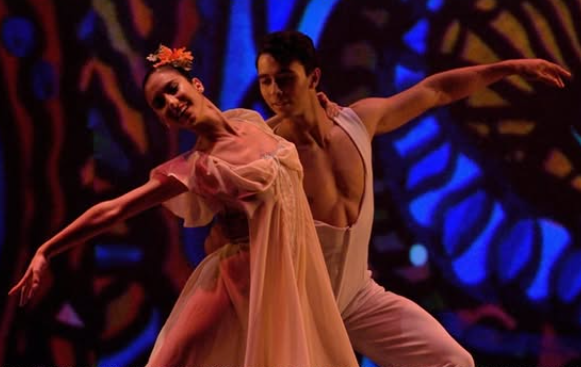
On Sunday, April 12, at 5 p.m., the Cuban Classical Ballet of Miami brings a program celebrating Lecuona and his predecessor Ignacio Cervantes to the Sanctuary of the Arts, 410 Andalusia Avenue. An Evening with the Cuban Classical Ballet of Miami will feature highlights from the company’s repertoire set to the music and legacy of Cuban and Latin American composers, honoring the traditions that the Cuban School of Ballet has carried across borders and generations.
The school and what it preserves
The Cuban School of Ballet is not simply a national tradition. It is one of the most technically rigorous and internationally influential ballet methods in the world — a system developed and codified by Alicia Alonso, the prima ballerina assoluta who founded the Ballet Nacional de Cuba in 1948 and spent the next seven decades producing dancers who went on to principal positions at companies across the globe.
Alonso herself was one of the most remarkable figures in the history of ballet. She began losing her vision in her early twenties, eventually dancing nearly blind — relying on precisely positioned lights on the stage to orient herself during performances. Rather than ending her career, the limitation refined it. Her technique became more precise, more internally focused, more dependent on the kinesthetic intelligence of the body rather than the guidance of the eyes. That precision became the foundation of the Cuban method: a style defined by technical brilliance, expressive musicality, and an integration of the African-derived rhythms that run through Cuban culture into the classical European form.
The method produced generations of extraordinary dancers. It also produced, through the political conditions of the revolution and its aftermath, an extraordinary diaspora — trained artists who left Cuba and brought the school’s technique with them to companies in the United States, Canada, Europe, and beyond.
The company and its founder
The Cuban Classical Ballet of Miami was founded in 2006 by Pedro Pablo Peña, director of the International Ballet Festival of Miami. Peña had himself arrived in Miami in 1980 as a Cuban exile and spent the following decades helping defecting Cuban dancers find professional homes. The company he built — the only professional ballet company in Miami dedicated exclusively to classical ballet works — is both a performance organization and a preservation project. Its goal, stated plainly in its founding documents, is to establish a permanent institutional home for the Cuban classical school outside Cuba, creating performance and teaching opportunities for exiled members of the tradition for years to come.
The roster of dancers who have passed through the company and gone on to major careers elsewhere is a testament to the depth of the tradition the company draws from. Miguel Angel Blanco at the Joffrey Ballet of Chicago. Taras Domitro at the San Francisco Ballet. Hayna Gutierrez at the Alberta Ballet of Canada. Arianne Martin and Randy Crespo at the Arizona Ballet. Many of them return to dance for the company year after year — not because they have to, but because the relationships forged here are lasting ones.
Lecuona, Cervantes and the musical tradition
Sunday’s program honors two composers whose work represents the full arc of Cuban classical music.
Ignacio Cervantes was the 19th-century pianist and composer whose work synthesized European classical training — he studied in Paris, where he was a prize student at the Conservatoire — with the Afro-Cuban rhythms he encountered in Havana. His Danzas Cubanas, a set of 21 piano pieces composed throughout his life, are the foundational document of a distinctly Cuban classical voice. Lecuona’s teacher studied under Cervantes, making the lineage direct.
Lecuona himself took what Cervantes had begun and carried it into the 20th century with an output so vast — more than 600 compositions including songs, zarzuelas, piano pieces, and orchestral works — that his influence on Latin American music is routinely compared to what George Gershwin accomplished in the United States. His music did not merely represent Cuba. It defined how Cuba was heard by the rest of the world for decades.
That these two composers’ legacies are being honored through classical ballet, by a company of Cuban exile dancers, in a Coral Gables church on a Sunday afternoon in April 2026 — is itself a story about what culture does when it is forced to travel. It carries itself. It finds a room. It performs.
AN EVENING WITH THE CUBAN CLASSICAL BALLET OF MIAMI
What: Program of classical ballet highlights set to the music and legacy of Lecuona, Cervantes, and Cuban and Latin American composers
When: Sunday, April 12, 5 p.m.
Where: Sanctuary of the Arts, 410 Andalusia Ave., Coral Gables
Tickets: Available at the Sanctuary of the Arts; contact info@sanctuaryofthearts.org Admission: $33 including fees

Author: Coral Gables Gazette News Staff
Originally established in 1996 and relaunched as a digital publication in February 2025, the Coral Gables Gazette is an independent local news organization dedicated to factual, objective and accountable community journalism. Our newsroom reports on the people, policies, institutions and events shaping Coral Gables, Florida, providing residents with timely, informative coverage of the issues affecting their community. Our reporting includes City Hall, local government, municipal elections, public spending, real estate development, business, education, arts and culture, and neighborhood affairs throughout the City Beautiful. We follow City Commission decisions, examine public records and report on the businesses, organizations and individuals contributing to Coral Gables. We believe informed residents are essential to a healthy, engaged community. Stories published under the Coral Gables Gazette News Staff byline are prepared or compiled by the publication's editorial team. We strive for accuracy, fairness, transparency and clear distinctions between news reporting, opinion and advertising. Readers are encouraged to submit news tips, corrections, editorial inquiries and story suggestions through our Contact page and learn more about our standards through our Editorial Policy.