
By Coral Gables Gazette staff
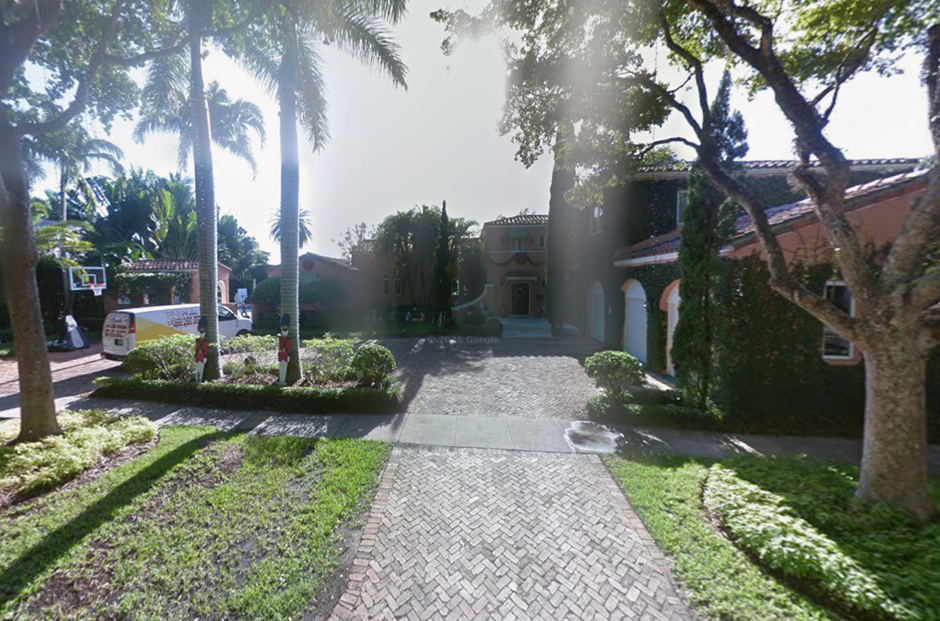
A Coral Gables code-enforcement case carrying $46,500 in fines for tree abuse at a historic property returns to the city’s Code Enforcement Board this week, after the property owners requested a second administrative hearing in response to a possible lien.
The case, tied to 4107 Santa Maria St., centers on four trees the board has already found were effectively destroyed or abused without a permit. The board’s prior ruling carries $45,000 in fines for three trees deemed effectively destroyed, plus $1,500 for damage to a fourth, on top of a running fine of $500 a day until the property owners obtain and close an after-the-fact removal permit.
The case returns to the board Wednesday alongside a second long-running violation, at 931 Roderigo Ave., that has remained open since 2023 — a pairing that illustrates how far enforcement can stretch when property owners contest or delay compliance.
What the ordinance says
The Santa Maria Street violation falls under the city’s tree-preservation code, which prohibits removing, damaging or effectively destroying a tree without a permit.
The code defines “tree abuse” broadly. Any act of tree abuse that renders a tree nonviable or effectively destroyed counts as “effective removal” under the ordinance, requiring the owner to comply retroactively with the permitting rules as if the tree had been removed before a permit was issued.
Code enforcement officers wrote that the three southernmost trees on the property’s right-of-way were effectively destroyed, and that a fourth tree at the north end of the property was also affected.
The board’s earlier finding, issued Feb. 12, held the owners, listed as Manuel A. Penalver and Christina L. Penalver, guilty. The remedy on file requires the owners to cease all work and obtain an after-the-fact permit for tree removal from the right-of-way.
The case is now returning to the board in response to a Notice of Intent to Lien dated June 3, meaning the city has moved toward placing a formal lien on the property over the unpaid fines and unresolved violation.
A second case stretching back years
The Santa Maria Street case is not the only status matter testing how long a violation can remain open.
At 931 Roderigo Ave., a roof-tarp violation first cited in 2023 is also returning for a second administrative hearing, following a separate Notice of Intent to Lien dated May 14. The board previously found the owner, Jacqueline S. Durand, guilty and gave her 120 days to obtain and close a roof-repair permit and remove the tarp, with a $150-a-day running fine to follow if the deadline passed.
Code enforcement officers noted in the case file that the tarp remains on the roof without a roofing permit.
Both properties illustrate a mechanism written into the city’s code-enforcement process: when a board-ordered remedy goes unmet, the case can return for a second administrative hearing tied to a Notice of Intent to Lien, giving the city a path to attach accumulated fines directly to the property.
In both cases now before the board, the running fines — $500 a day at Santa Maria Street and $150 a day at Roderigo Avenue — continue to accrue until the underlying permits are closed, regardless of the lien process.
A wider docket
The two status cases are part of a larger docket for Wednesday’s meeting, which also includes new violations ranging from unpermitted fencing on Grant Drive and unpermitted exterior alterations on Barbarossa Avenue to a rodent and mosquito infestation on Anastasia Avenue and unpermitted gravel installations on swales at Le Jeune Road and El Rado Street.
A separate case involving a tarp and roof disrepair at a historic property on Alhambra Circle is also scheduled for the board’s historic-properties portion of the agenda.
What to know
The Code Enforcement Board is scheduled to meet Wednesday, July 15, at 8:30 a.m. at the Police and Fire Headquarters Community Meeting Room, with a Zoom option available for public comment.
For the Santa Maria Street and Roderigo Avenue cases, the board’s options include allowing the lien process to proceed, adjusting the compliance timeline, or taking further action if it finds the violations remain unresolved.
Until either property owner closes the required permits, the daily fines continue to accumulate on top of the amounts already assessed.













I’m all for protecting trees, but a lot of this sounds like regulatory overreach. a blue tarp over a roof under repair requires a permit? so if I have a roof leak I need a permit to lay down a tarp to minimize water intrusion? of course, getting a permit from this city is never a quick process, so I just let the water stream in until the city says OK? why? how about if you require a permit from residents, we residents require you issue the permit within 2 hours? City has requirements? cool. so do we. since we’re the ones paying, make the requiremnents so they protect us, benefit us, instead of the other way around?regulatory rules that are at the convenience of the regulatiors,not the regulateda re not in the spirit of what America is all about.
I love the theme and the way the slots are designed. It is very easy to get into the flow of the game and I have had some decent wins lately. rezeki777slot
Solid platform with a lot of trust. I appreciate the transparency in their rules and the excitement of the live betting options. bd7000bet