

Last week the Gazette wrote about a driverless Waymo vehicle quietly navigating Coral Gables streets — a technology that may have arrived before the city has fully prepared to receive it. Next week the City Commission takes a final vote on something far simpler: whether residents should be allowed to drive golf carts on certain designated city roads.
At first glance, the two developments appear unrelated. One represents the leading edge of automated transportation. The other evokes a quieter, neighborhood-scale way of getting around. Yet both raise the same civic question: what Coral Gables intends its streets to be for.
There is an important distinction between these two stories worth naming. The Waymo editorial asked whether the city was prepared for a technology that arrived uninvited. The golf cart ordinance represents something different: a city choosing, through deliberate public process, how a new form of movement will be welcomed and governed. That distinction matters. Reactive governance and proactive governance are different, and Coral Gables deserves credit for the difference.
Across the United States, cities are quietly renegotiating what belongs on a street. Golf carts, e-bikes, scooters, and low-speed vehicles are forcing municipalities to ask a question they have not had to answer in a century: is the street primarily for moving cars efficiently, or for enabling people to move comfortably within their neighborhoods? Most American cities built their postwar infrastructure around the first answer. A growing number are reconsidering it.
Coral Gables is well positioned to engage that question honestly, because it was never fully designed around the automobile in the first place. George Merrick’s original vision for the city — conceived in the early 1920s, before the car had fully reshaped American life — imagined streets that were canopied, walkable, and human in scale. The Mediterranean Revival architecture, the setbacks, the plazas, the street trees: all of it reflects a founder who thought of public space as something to inhabit, not merely to pass through.
A golf cart, slower than cars and more quiet, is in some ways more consistent with that original vision than the 4,000-pound SUV that has come to dominate the same streets. That observation is an invitation to notice that the commission is not simply adding a new vehicle to existing infrastructure — it is, in a small way, recovering a sensibility about street life that was always part of this city’s character.
The safety concerns associated with golf carts on public roads are real but manageable, and the regulatory framework the commission is putting in place is the appropriate way to address them. Designated streets, operating rules and enforcement mechanisms are the right tools. The commission is doing its job.
What Tuesday’s vote opens, however, is a set of implementation questions that deserve the same deliberateness that produced the ordinance. Which streets will be designated, and by what criteria? How will the city communicate those designations to residents? What enforcement capacity exists, and is it adequate? These are not objections to golf carts. They are the practical work that follows any well-intentioned framework, and they are where good policy either holds together or quietly falls apart.
The deeper civic value at stake is the question of who the street belongs to. For most of the past century, the answer in most American cities has been: primarily to the automobile. Streets were widened, sidewalks narrowed, crosswalks timed for vehicle flow rather than pedestrian comfort. Coral Gables, with its particular history and its particular sense of itself, has resisted some of that drift. Its walkability is the product of sustained choices about scale, design and what public space is meant to feel like.
A golf cart ordinance, in that context, is a small but legible signal. It says that the city is willing to make room on its streets for slower movement — for the resident running an errand two blocks away, for the family traveling between neighborhoods without a full-size vehicle, for the kind of casual, social mobility that makes a city feel like a place rather than a corridor.
Last week we asked whether Coral Gables would meet the future prepared. Tuesday’s vote is one answer. A city that governs deliberately — that sets rules before problems emerge, that creates frameworks before enforcement is required — is a city that takes its civic responsibilities seriously. The golf cart ordinance, modest as it is, reflects that instinct.
The larger question it opens will outlast Tuesday’s vote. Waymo and golf carts are both on Coral Gables streets now, representing opposite ends of a mobility spectrum that is expanding in every direction. Between autonomous vehicles navigating complex intersections and neighbors quietly rolling to the farmers market, the city will face many more decisions about what its streets are for and who they serve.
Those decisions will not always arrive with advance notice or the benefit of a commission agenda. Some will require the kind of reactive preparation the Waymo editorial described. Others will offer the luxury of deliberation that the golf cart ordinance represents. What Coral Gables owes its residents in both cases is the same: clarity about what kind of city it intends to be, and the institutional will to govern accordingly.
George Merrick imagined streets worth inhabiting. A century later, the commission is still making choices about whether that vision holds. Tuesday is one of those choices. It is a small one. Small choices, made consistently and well, are how a city’s character is either preserved or quietly lost.











Another related issue is the gangs of bicyclists riding 4-5 abreast who use our streets, slowing vehicular traffic and not obeying stop signs or traffic lights. They are dangerous!
I live at 650 Valencia. My drive in the morning out of Coral Gables is an obstacle course. There are always big trucks blocking one lane, usually the landscaping kind. In addition, I walk on
Almeria. This time again the same problem but in addition, the noise of blowers and the dust that throws on your face. Add to this all the construction. And the structures that are built right up to the street. For example, the new apartment building across the post office, Merrick’s vision? Please. That does not exist. Add to this all the traffic that is going to be inundating our streets, when hundreds of vehicles are added to an already dense street and downtown. And what about parking?
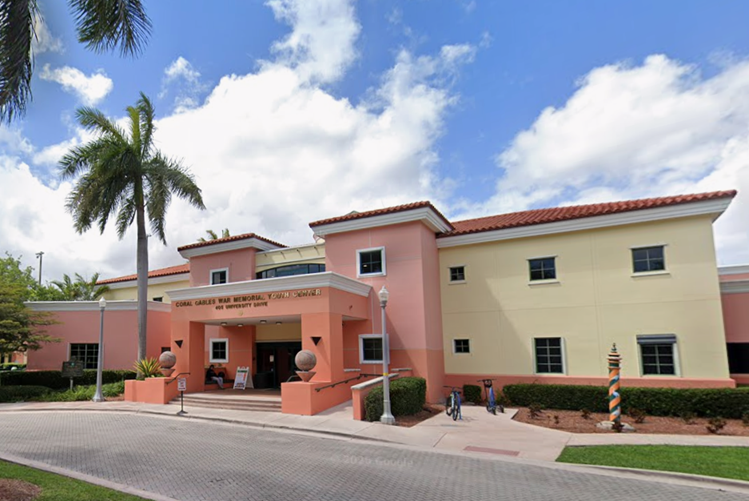
Is wonderful to imagine going to play pickleball at Biltmore or Youth center in my golf cart, or having lunch at Birdie Bistro or Le Parc or the Coral Gables Athletic Club in the golf cart. I live in 600 block of Minorca. Freebie doesn’t come here. I would like to play golf in Granada with my own golf cart. Is that being considered ?
I’m all for it. It’ll be fascinating to see how those self-driving cars navigate the streets around Granada Golf Course, especially North and South Greenway Drive, where the local pastime seems to be jogging directly in the road instead of on the perfectly good sidewalks. It might be a great moment for the city to pair cutting-edge AI transportation with some good old-fashioned public education — maybe a gentle reminder that sidewalks are, in fact, designed for walking and jogging. Or, if we’re feeling creative, we could designate a new special walking zone just for pedestrians… oh wait, we already have that. It’s called the sidewalk! Looking forward to seeing how Coral Gables blends innovation with a little common sense.
When this editorial mentions that adding golf carts is consistent with Coral Gables original vision vs SUV vehicles it seems not to take into account that both modes of transport will be sharing the same road. They simply can’t coexist because one endangers the other in a terrifying way. And enforcement to make this coexistence is not guaranteed. Our city does not even enforce existing code pertaining to prohibition of scooters, e bikes and bikes, on Ponce and Miracle Mile, where they endanger pedestrian’s life daily. How are we supposed to trust it will enforce any codes regarding golf carts? Mr Merrick’s vision was wonderful and it’s why many of us have chosen Coral Gables to live, but modern life and inventions have imposed their way into it before the city’s administrators have divised ways to make both compatible.