By Coral Gables Gazette staff
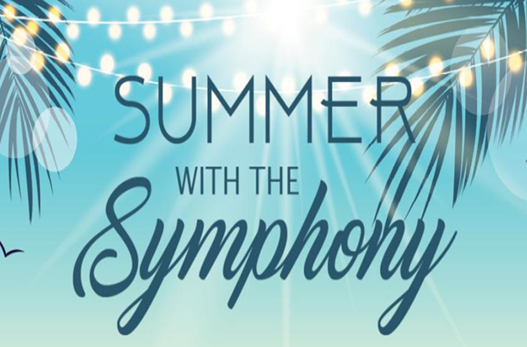
Two composers long pushed to the margins of the classical repertoire will share the spotlight on Thursday, June 25 at the Coral Gables Museum, when South Florida Symphony Orchestra brings its Summer with the Symphony chamber series to Aragon Avenue.
The program, titled “Sparkle & Charm,” pairs piano trios by Louise Farrenc and Dora Pejačević, two composers whose work has been admired by musicians and scholars but has too rarely occupied the center of concert programming. The evening offers a compact argument for their return: not as historical curiosities, but as composers of serious, vivid and rewarding chamber music.
A candlelit summer program
The Coral Gables concert is part of South Florida Symphony Orchestra’s Summer with the Symphony Chamber Music Series, a run of intimate summer performances in Coral Gables, Fort Lauderdale and Key West.
The June 25 program takes place at the Coral Gables Museum, 285 Aragon Ave., a restored 1939 WPA building that once housed the city’s police and fire services. For a chamber program built around musical rediscovery, the setting is a fitting one: civic, historic and close enough to the audience to make piano, violin and cello feel less like a formal presentation than a conversation.
The concert features pianist Catherine Lan, violinist Huifang Chen and cellist Christopher Glansdorp performing Farrenc’s Piano Trio No. 2 in D minor, Op. 34, and Pejačević’s Piano Trio in C major, Op. 29. The summer series is presented under the artistic direction of Maestra Sebrina María Alfonso, South Florida Symphony’s music director, and curated by Lan.
Farrenc’s delayed recognition
Louise Farrenc, born in 1804, was a French composer, virtuoso pianist and teacher whose career unfolded in a musical world that rarely made room for women as composers of large and ambitious works.
She was the only woman in the 19th century to hold a professorship of piano at the Paris Conservatoire. Her piano works drew praise in her own time, and her chamber music is now often regarded as central to her achievement. Yet, like much music by women of her era, it remained underperformed long after its quality should have secured a place in the repertoire.
Her Piano Trio No. 2 in D minor was completed in the 1840s, around the period of her appointment to the Conservatoire. The work is elegant without being slight, dramatic without being inflated. It opens in a pensive mood before gathering force, then moves through passages of lyric grace, instrumental interplay and final-movement momentum.
In a concert preview, the point is not to over-explain the score. It is enough to say that Farrenc’s trio gives listeners what the best chamber music offers: proportion, tension, wit and a sense that three instruments are thinking aloud together.
Pejačević’s brief, brilliant career
Dora Pejačević, born in Budapest in 1885 into Croatian aristocratic society, belongs to a later musical world but suffered a related fate. Her work stood at the edge of late Romanticism and early modernism, yet her reputation did not travel as widely as her talent deserved.
Pejačević wrote the Piano Trio in C major in 1910. She went on to compose works that helped shape Croatian concert music, including a symphony often cited as a landmark in the country’s modern musical development. Her life was short. She died in 1923 at 37, after complications following childbirth.
The trio selected for the Coral Gables program is lyrical, energetic and structurally assured. Its opening movement is built around engaging themes and rhythmic movement. The scherzo brings sharper drive, with pizzicato effects adding texture and surprise. A slower, more contemplative movement follows before the finale builds in intensity, balancing tension and release through to the close.
If Farrenc’s trio asks listeners to reconsider the 19th-century French chamber tradition, Pejačević’s asks them to hear how much expressive life still remained in the piano trio form at the beginning of the 20th century.
Why the pairing works
Together, the two works make a persuasive program. They are not museum-piece programming, and they are not merely a novelty showcase built around rediscovery. They are substantial piano trios by composers who knew the form and used it with imagination.
That matters because the recovery of overlooked composers can sometimes be presented as an act of correction alone. Correction is part of the story, but it is not the whole story. The stronger case is musical: these works can stand on their own.
The musicians are well suited to that argument. Lan, the series curator, anchors the program from the piano. Chen brings the violin line that carries much of the conversational life of both trios. Glansdorp joins for the Coral Gables performance on cello, completing the balance required for music that depends on intimacy, clarity and trust among players.
The program also reflects a broader tendency in South Florida Symphony’s work under Alfonso, whose programming has frequently included women composers and underrepresented voices. In this case, that commitment arrives not as a lecture, but as an evening of chamber music with immediate pleasures: melody, exchange, atmosphere and the close-range electricity of musicians performing in a small room.
After the performance, the orchestra will host a meet-and-greet reception with the musicians at Books & Books next door, with a prosecco spritzer and sweet treat included with admission.
A second Coral Gables concert in the series, “Sweet Serenade,” is scheduled for July 23 at Sanctuary of the Arts.
If you go
Summer with the Symphony: “Sparkle & Charm”
Thursday, June 25, 7:30 p.m.
Coral Gables Museum, 285 Aragon Ave., Coral Gables
Program: Louise Farrenc, Piano Trio No. 2 in D minor, Op. 34; Dora Pejačević, Piano Trio in C major, Op. 29
Performers: Huifang Chen, violin; Christopher Glansdorp, cello; Catherine Lan, piano
Tickets: General admission, $40; limited student tickets, $20 with valid student ID
Information: South Florida Symphony Orchestra or (954) 522-8445

Author: Coral Gables Gazette News Staff
Originally established in 1996 and relaunched as a digital publication in February 2025, the Coral Gables Gazette is an independent local news organization dedicated to factual, objective and accountable community journalism. Our newsroom reports on the people, policies, institutions and events shaping Coral Gables, Florida, providing residents with timely, informative coverage of the issues affecting their community. Our reporting includes City Hall, local government, municipal elections, public spending, real estate development, business, education, arts and culture, and neighborhood affairs throughout the City Beautiful. We follow City Commission decisions, examine public records and report on the businesses, organizations and individuals contributing to Coral Gables. We believe informed residents are essential to a healthy, engaged community. Stories published under the Coral Gables Gazette News Staff byline are prepared or compiled by the publication's editorial team. We strive for accuracy, fairness, transparency and clear distinctions between news reporting, opinion and advertising. Readers are encouraged to submit news tips, corrections, editorial inquiries and story suggestions through our Contact page and learn more about our standards through our Editorial Policy.