
By Barbara Gutierrez
University of Miami
The delicate folding book has several understated color photographs that explore themes of memory, nature, and transformation through visual storytelling. Its name is “Once it Bursts Into the Air, Nothing Dies,” by Peruvian-born visual artist and Miami local Zonia Zena.
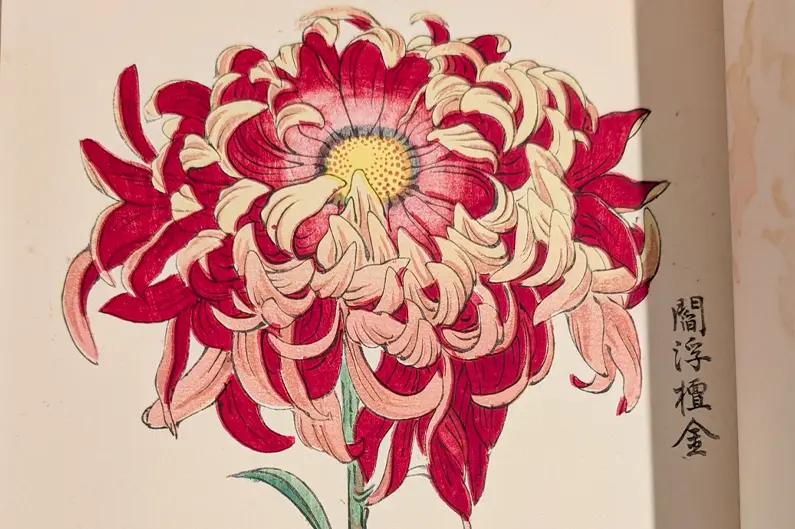
Colorful flowers adorn a work called: “One Hundred Varieties of Famous Chrysanthemums,” a wood-block printed tome of illustrations by Japanese artist Keika Hasegawa. It was done in 1893 and highlights the revival of printing standards in the 19th century in that country.
Another is a book that features a rare account, in Portuguese, of the first official diplomatic mission to Brazil by any African kingdom, sent by King Tegbesu of Dahomey (known to the Portuguese as Kiay Chiri Broncom), who ruled over what is now Benin in West Africa. This pamphlet provides a description of the visit in rich detail and was published in Portugal a few months after the event took place.
These are some of the treasures contained in the University of Miami Libraries Special Collections, a depository of thousands of books, manuscripts, maps, and other materials. Many other precious holdings are kept by the Jay I. Kislak Collection of the Early Americas, Exploration and Navigation and the Cuban Heritage Collection, home to the largest repository of material on Cuba outside of the island.
Special Collections also holds more than 2,000 artists books, creative tomes that sometimes resemble sculptures and other art forms. These works challenge traditional ideas about what a book can be. Some contain no words, others unfold like flowers, and many are designed to be experienced as both art objects and reading material.
Librarians will offer an open house at 5 p.m. on Tuesday, June 2, at the Kislak Gallery to showcase some of the items from the collection and inspire the public to visit in the future.
“We hosted our first open house in the fall, and it was very well-attended and popular, so we knew we wanted to do it again,” said Robin Potter, coordinator for Special Collections. “Sometimes Special Collections and archives can feel a bit mysterious or difficult to access, and we love to remind visitors that we are friendly, the collections are open to anyone who contacts us to make an appointment, and there are surprising and fascinating collections here.”
Potter wants to assure the public that all librarians are eager to talk to visitors about what they do and what is available. She chose several items, which are her favorites in the collection. Among these is “One Hundred Varieties of Famous Chrysanthemums.”
“It is a beautiful three-volume set,” Potter said, “with only 75 chrysanthemums. My guess is that another volume was planned but never made. We talk with students about the history of the book and historic printing processes that would have been used to illustrate books. We discuss the ways that these processes were different in different regions of the world. This book is a wonderful example of Japanese wood-block printing and bookbinding, and each chrysanthemum would have been made using multiple woodblocks—one for each color depicted and a final block used for the black outlines.”
She chose the book for the open house as an example of how broad and worldwide the Libraries collections are, but also just as a beautiful example of botanical illustrations in the Japanese style.
“I imagined it would be interesting to anyone with an eye for art or a love of nature,” she said.
The open house is open to the public but registration is required.









References:
KingMaker einzahlung banküberweisung maps.google.com.na
References:
Legiano Casino Abzocke https://www.forosperu.net/
References:
Legiano Casino No Deposit Bonus https://abc.fengniao.com
References:
Monro Casino Bonusbedingungen https://board-de.farmerama.com/
References:
Hitnspin casino mit echtgeld http://www.99nets.com/
References:
Hitnspin casino spielautomaten as.uv.es
References:
Lollybet Support http://images.google.nr/url?q=https://volos-volos.ru/proxy.php?link=https://lollybet.com.de/
References:
Lollybet Gutschein fenix.astroempires.com
References:
Lollybet Casino Gutschein https://cm-us.wargaming.net/frame/?language=en&login_url=https://52.cholteth.com/index/d1?an&aurl=https://lollybet.com.de/&project=wot&realm=us&service=frmhttps://cm-us.wargaming.net/frame/?language=en&login_url=https://52.cholteth.com/index/d1?an&aurl=https://lollybet.com.de/&project=wot&realm=us&service=frm</a
References:
Hitnspin willkommensbonus http://cse.google.com.kh/
References:
Hit’n’spin casino erfahrungen m.animal.memozee.com
References:
Hitnspin promo code http://maps.google.com.sa
References:
Hit n spin casino no deposit bonus maps.google.com.ec
References:
Hitnspin verifizierung http://maps.google.co.mz/url?q=http://tropicana.maxlv.ru/user/peacepolice5/
References:
Australian online pokies payid https://gitea.cfpoccitan.org/deea5639007851
References:
Payid withdrawal pokies vmcworks.com
References:
Lollybet Casino https://www.playground.ru/redirect/https://link.seg.br/malcolmfindley
References:
Lollybet Bonus ohne Einzahlung http://2.ownskin.com/wap_theme_download.oss?t=f94ugk26&c=3&h=https://liy.ke/wilfredoreichs&lang=en
References:
Lollybet Mirror Link https://70.pexeburay.com/index/d1?diff=0&utm_source=ogdd&utm_campaign=20924&utm_content=&utm_clickid=t4w48c4sowkskowc&aurl=https://bybio.co/rickyrtp84&an=&utm_term=&site=&pushMode=popup
References:
Lollybet Anmeldung http://images.google.com.pg
References:
Lollybet Casino Gutscheincode google.jo
References:
Lollybet Login https://golden-resort.ru/out.php?out=https://de2wa.com/dani8230304991
References:
Lollybet Casino Bonus http://cse.google.com.jm
References:
Lollybet Casino PayPal https://maps.google.com.tw
References:
Lollybet Casino Sicherheit http://clients1.google.gm/url?q=https://kleinanzeigen.imkerverein-kassel.de/index.php/author/lenorefabin/
References:
Online pokies australia payid real money http://cse.google.com.my/
References:
Quickwin Casino Bewertung s3.amazonaws.com
References:
Candy96 ios jobcopae.com
References:
Candy96 casino sign in https://brightman.com.gt/empleos/companies/welcome-to-candy96-casino-australia
References:
Candy96 Casino tournaments https://employmentabroad.com/companies/candy96-payment-methods-fast-secure-crypto-friendly
References:
Quickwin Casino Bonus http://maps.google.td/
Sometimes the simplest platforms offer the best experience and this is one of those cases. Everything runs smoothly, the games load quickly, and I never run into confusing menus or hidden fees. It feels like a place built by players for players and that genuine touch really shows. I keep checking back every week because it just works so well. Take a look for yourself vncwin98
I have been exploring new platforms lately and this one really stood out. The interface runs smoothly and customer service replies quickly whenever I have a question. A refreshing spot to unwind and enjoy quality games. betjilicasino
What I appreciate most is how friendly the whole community feels around here. From the instant chat replies to the weekly promotions that actually make a difference in your bankroll you feel supported throughout your journey. I keep playing because the environment is safe and the games are genuinely fair. Give yourself a treat and join us for some serious fun. cosurga19