
By Coral Gables Gazette staff
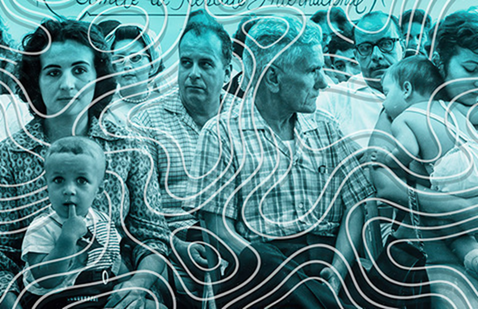
Between 2021 and 2024, approximately 850,000 Cuban migrants arrived in the United States — a wave without precedent in the history of Cuban migration. They came in numbers that exceeded the Mariel boatlift and entered a legal landscape that offered less certainty than any prior generation had faced. And they are now navigating a federal immigration policy environment that has shifted again, sharply, since January 2025.
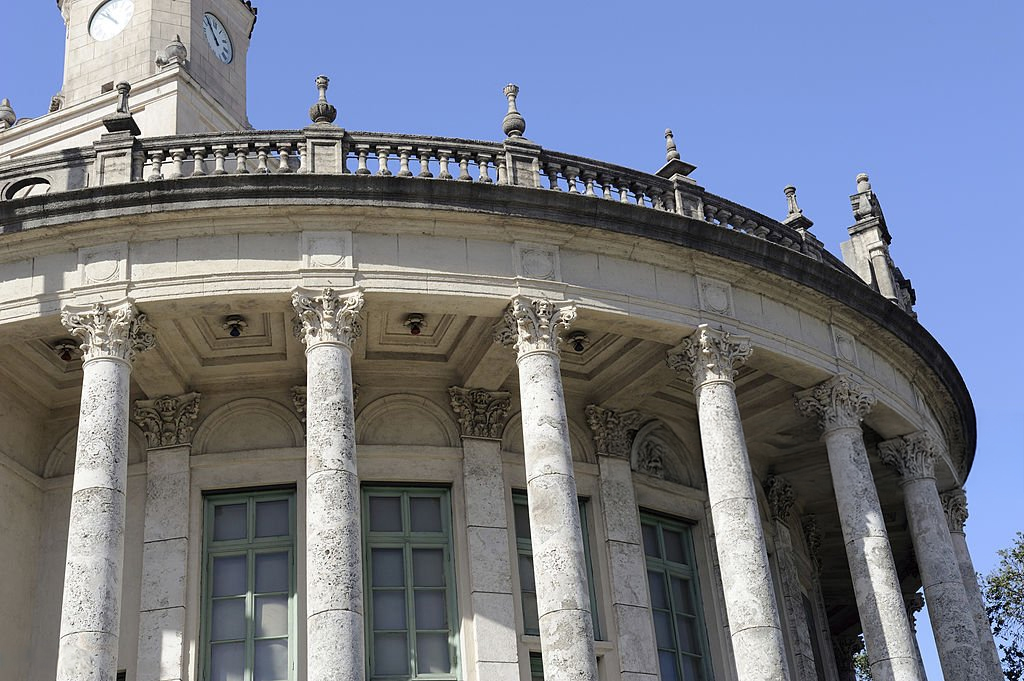
On Thursday, April 2, at 6 p.m., the University of Miami’s Richter Library will host “Unsettled Futures: Recent Cuban Migrants, Federal Immigration Policy, and the Cuban-American Debate” — a panel discussion that brings together voices from journalism, immigration law, and advocacy to examine how those 850,000 people are faring, how the Cuban-American community is debating their status, and how developments in Venezuela may further reshape the migration landscape in the months ahead. The event takes place at the Roberto C. Goizueta Pavilion, second floor, at 1300 Memorial Drive in Coral Gables, and will be conducted in both English and Spanish.
What has changed — and when
The scale of Cuban migration between 2021 and 2024 was extraordinary by any measure. Earlier mass-migration events — the 1994 rafter crisis, the Mariel boatlift — unfolded over months and involved tens of thousands of people. The recent wave sustained itself over three years and reached nearly a million. The arrivals confronted a legal environment that differed in one critical respect from those earlier moments: the pathways that had historically eased Cubans’ transition to permanent status in the United States had narrowed significantly before they arrived.
Since January 2025, the Trump administration has curtailed those pathways further. Legal routes that had been opened or expanded under the Biden administration have been restricted. Detentions and deportations have expanded. Status protections granted to recent Cuban arrivals have been revoked. For a community that arrived with particular expectations about how the United States has historically treated Cubans, the gap between those expectations and present reality is the central subject of Thursday’s conversation.
The panel will also address a geopolitical dimension that has added a new layer of uncertainty to an already complicated picture: the ouster of Nicolás Maduro in Venezuela and what it may mean for U.S.-Cuban relations and the broader migration landscape. Cuba’s relationship with Venezuela has shaped the island’s economy and political stability for two decades. How that relationship evolves — and how Washington responds — may determine whether the migration pressures of recent years intensify, stabilize, or shift in unexpected directions.
The panelists
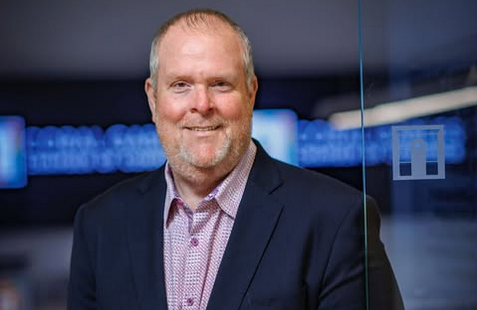
The conversation will be moderated by Michael J. Bustamante, associate professor of history at the University of Miami and holder of the Emilio Bacardí Moreau Chair in Cuban and Cuban-American Studies, where he also serves as director of academic programs for the Cuban Heritage Collection — the largest archival repository dedicated to Cuban materials outside of the island. Bustamante holds a doctorate from Yale University and is the author of Cuban Memory Wars: Retrospective Politics in Revolution and Exile. He is a regularly sought commentator on Cuban affairs and U.S.-Cuban relations for American and international media.
Carla Gloria Colomé Santiago brings to the panel the perspective of Cuban independent journalism. Born in Havana in 1990, she is a co-founder of El Estornudo, the Cuban independent magazine of chronicle, image, and essay that has operated from exile since 2016, navigating harassment, interrogations, and forced resignations of its journalists on the island while continuing to publish. She writes for El País, covering Cuba and Latino communities in the United States, and was awarded the Mario Vargas Llosa Prize for Young Journalism in 2021 for her reporting on the July 11 protests in Cuba. Her work occupies the space between what is seen and what is not seen in Cuban life — a frame that will bring distinctive texture to a panel about migrants whose stories are often told in aggregate.
Wilfredo O. Allen represents the legal dimension of the panel. A Miami immigration attorney with more than 30 years of practice, Allen has built a bilingual firm focused on the Cuban and Venezuelan communities navigating the U.S. immigration system. His practice covers asylum, deportation defense, family petitions, and detention cases, and he has been a prominent voice in the Cuban-American community on the legal implications of recent policy changes — including the status of Cubans who arrived under now-revoked protections and face uncertain prospects under the current administration.
Thomas Kennedy brings the advocacy perspective. Born in Argentina, Kennedy came to the United States as a child, lived as an undocumented immigrant for more than a decade, and built a career in immigration advocacy and journalism. He holds a master’s degree in community and social change from the University of Miami and has worked with the Florida Immigrant Coalition, United We Dream, and the Immigration Hub, among other organizations. His writing on immigration has appeared in the Miami Herald, The Intercept, the Orlando Sentinel, and other publications.
Why this conversation, here
The Cuban Heritage Collection, which is organizing the panel alongside the Emilio Bacardí Moreau Chair in Cuban and Cuban-American Studies, holds the largest collection of Cuban diaspora materials in the world. The institution has spent decades documenting what it means for Cubans to arrive in the United States — the legal conditions they encounter, the communities they enter, the debates they join and reshape. Thursday’s panel is an extension of that institutional mission into the present tense.
South Florida’s Cuban-American community is among the most established in the country, with roots in the exile generation that arrived after 1959 and subsequent waves through the 1980s and 1990s. The 850,000 who arrived between 2021 and 2024 are a different generation, shaped by different conditions on the island and encountering a different America. The debate within the Cuban-American community about how to receive them — and how to advocate for or against their legal protections — is itself a story about what the community has become over six decades.
“Unsettled Futures” promises a serious conversation, conducted by people with direct knowledge of what is happening, at a moment when that knowledge is urgently needed.
UNSETTLED FUTURES
What: Panel discussion — Recent Cuban Migrants, Federal Immigration Policy, and the Cuban-American Debate
When: Thursday, April 2, 6 p.m.
Where: Richter Library, Roberto C. Goizueta Pavilion, 2nd floor, 1300 Memorial Drive, Coral Gables
Admission: Free and open to the public
Language: English and Spanish
Organizers: University of Miami Cuban Heritage Collection and the Emilio Bacardí Moreau Chair in Cuban and Cuban-American Studies

Author: Coral Gables Gazette News Staff
Originally established in 1996 and relaunched as a digital publication in February 2025, the Coral Gables Gazette is an independent local news organization dedicated to factual, objective and accountable community journalism. Our newsroom reports on the people, policies, institutions and events shaping Coral Gables, Florida, providing residents with timely, informative coverage of the issues affecting their community. Our reporting includes City Hall, local government, municipal elections, public spending, real estate development, business, education, arts and culture, and neighborhood affairs throughout the City Beautiful. We follow City Commission decisions, examine public records and report on the businesses, organizations and individuals contributing to Coral Gables. We believe informed residents are essential to a healthy, engaged community. Stories published under the Coral Gables Gazette News Staff byline are prepared or compiled by the publication's editorial team. We strive for accuracy, fairness, transparency and clear distinctions between news reporting, opinion and advertising. Readers are encouraged to submit news tips, corrections, editorial inquiries and story suggestions through our Contact page and learn more about our standards through our Editorial Policy.









I’m not Cuban, yet I can sympathize with the dilemma many Cubans in America face; somewhat.
I say somewhat because I’ve heard some here are okay imposing harsh economic and survival pressures on their brothers and sisters in Cuba as acceptable in pursuit of political goals.
From a humanitarian and Christian perspective, making life harder for innocent families by contributing to conditions that limit food, electricity, or access to medical care cannot be justified. No Christian teaching supports depriving people of basic human needs to force political change.
It’s also troubling to see that the administration imposing the hardships for the more than 800,000 Cubans living here and millions on the island, has created space for a tanker from Russia, an aggressive regime at war, to profit from the situation.
Perhaps this is the moment for the 800,000+ Cubans in the United States to come together, not in division, but in unity, to advocate for solutions that protect their families on the island and uphold the values of compassion, dignity, and Christian responsibility.
I am Cuban! Communism has to end! They are savages! They keep their people down for power! They kill, suppress, starve, whatever it takes! Enough! US should do whatever to end this crippling regime!
Almost everyone in the captive island is responsible, they have supported their oppressors the Castro’s and their thugs since 1959! Perhaps, the youngest generation might not completely be! The Cuban inmigrants into our nation under Biden’s administration lack of controlling the influx at the borders are mostly a financial quimera one, they have been taking advantage of all the monetary benefits of it, they already come from the island knowing and expecting all the handouts the Democrats have so easily given and taking away from our own population retirement benefits! They are sending to Cuba all the money they can to their relatives in the island! Like in the sort of $ 2 billlions a year! That is peanuts compared to the Mexican Americans that send about $60 Billions a year!
Both groups are hurting our own economy to benefit their own families back home! Mexico is also a form of comunista nation of its own perhaps like following the China new model of capitalism! It is my hope that the inminent invasion of Cuba by USA forces under the present administration achieves the freedom of the island and produces an annexation to our nation!
For us Cuban Americans who have been in this great nation since the early 60’s, continue to hope for a free Cuba. But the real issue is the mindset of Cubans in the island. At least two generations have been born under a communist dictatorship. Over the years they have learn to live in an environment where finding sustenance for their families have become more important than freedom itself! Those who have recently come view their migration in economic terms. They have learned from those relatives traveling to the island of the many free benefits they can obtain by coming here. In general the policy if the USA towards Cuba have been a total failure. But there is some hope now with the Trump policy led by Narco Rubio may lead to a free and independent Cuba!!
Sorry Marco Rubio!!
Điều mình hài lòng là slot365 apk hoạt động tốt trên cả iPhone lẫn Android. TONY06-29