
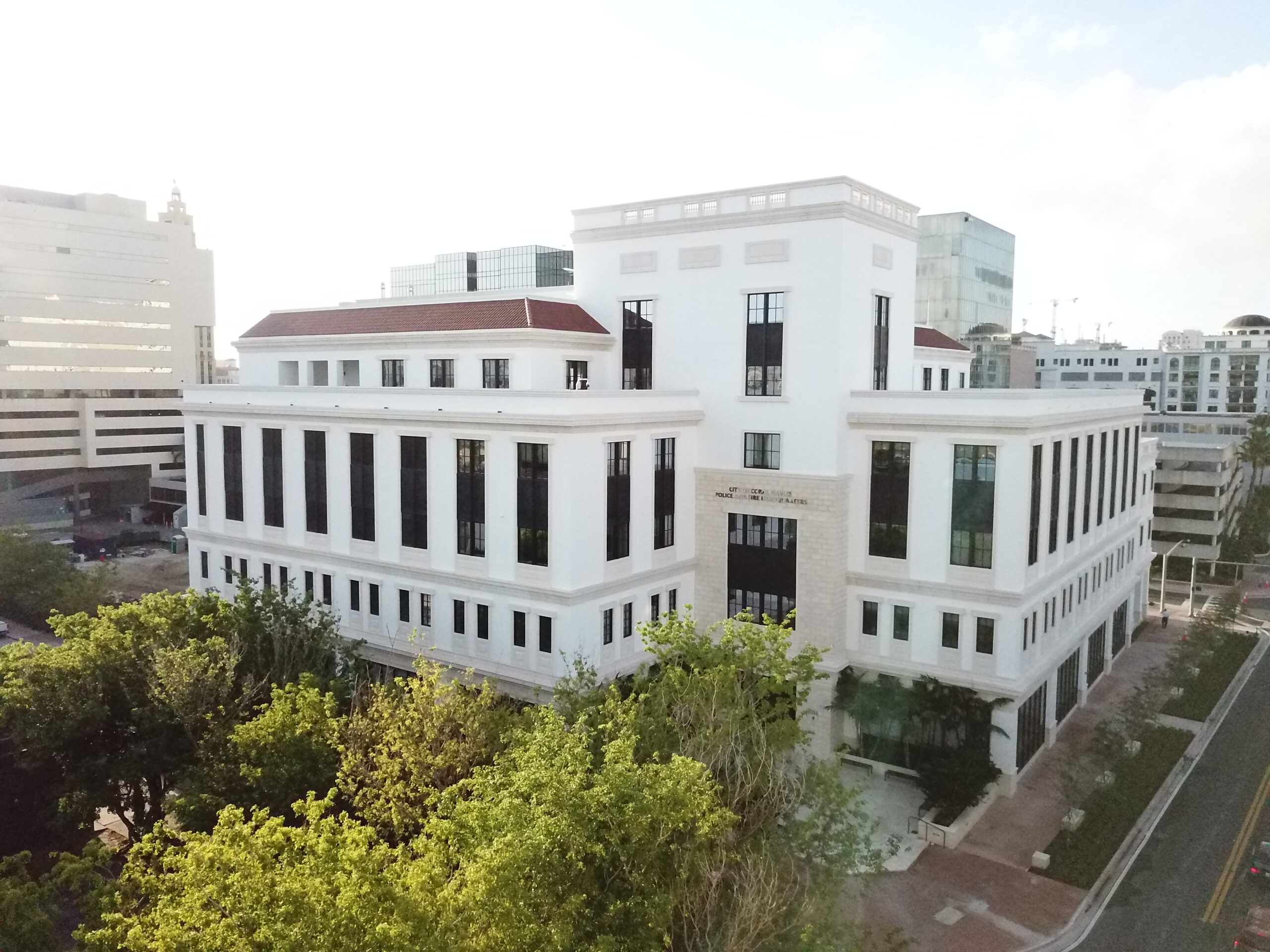
By the Coral Gables Gazette editorial board
When the Coral Gables Police Department first pursued accreditation from the Commission on Accreditation for Law Enforcement Agencies in the early 1990s, Chief Ed Hudak — then an officer — remembers the resistance. It was painstaking, he said, and there was pushback. When the department finally earned it, Hudak recalled, they gave everyone a day off.
On March 10, the Coral Gables City Commission recognized the department for earning its 10th CALEA accreditation, with an “Excellence” designation — one of the highest available under the program. The department now ranks in the top one percent of all law enforcement agencies participating in CALEA nationally. It measures itself against 460 separate standards. It hits every one of them, every cycle. What was once a burden has become, in Hudak’s words, ingrained in the way Coral Gables does its business.
This editorial board congratulates the department and everyone who contributed to that record. But we want to make a larger argument. Because the story of how the Coral Gables Police Department got here is not just a policing story. It is a governance story. And it has implications that extend well beyond the Public Safety Building.
CALEA accreditation is a process. Every four years, independent assessors with public safety experience review the department’s policies, procedures, and operations against internationally recognized standards. They conduct interviews. They inspect facilities. They ride along with officers. They examine whether the department does what it says it does, and whether what it says it does meets the standard. Then they publish a report and present their findings at a hearing. The department cannot grade its own paper.
That last point is the essential one. The value of the accreditation is the external scrutiny. It is the discipline of submitting your institution’s work to reviewers who have no stake in the outcome and every obligation to report what they find. Most government institutions never face that kind of review. The Coral Gables Police Department has sought it out, voluntarily, ten times.
Consider what that discipline requires. It means maintaining written policies that match actual practice. It means documenting compliance rather than assuming it. It means accepting that an outside observer will examine the gap between what you claim to do and what you actually do, and will note every discrepancy. For an institution that has done this ten times, those requirements are the operating system.
Now consider what that discipline looks like when it is absent. A maintenance standard for commercial corridors that existed on paper for years while the corridors deteriorated block by block. A conversation about fixing a known problem that took 15 years to produce a vote. They are failures of institutional accountability — the kind that accumulates quietly when no one is required to measure performance against an independent standard.
Coral Gables has long held itself to a higher standard than most municipalities — a principle written into the city’s founding design, its architectural codes, and its civic identity. The City Beautiful is a standard. But standards require enforcement, and enforcement requires measurement, and measurement requires a willingness to submit your work to scrutiny that you do not control.
The police department has demonstrated, over three decades, that this kind of institutional discipline is achievable. It is difficult. Hudak is clear about that. The first cycle was resisted. The culture had to be built, standard by standard, cycle by cycle, until external review stopped feeling like an intrusion and started feeling like confirmation. That transformation happens because leadership decides that accountability is a practice to be maintained.
The city is now pursuing CALEA accreditation for its communications division for the first time. This editorial board supports that effort fully and encourages the commission to resource it accordingly. If successful, Coral Gables will join a small group of municipalities whose police, fire, and communications operations all meet independently certified international standards. That is a distinction worth pursuing on principle.
But we would go further. The commission should ask which other city departments and functions could benefit from comparable independent evaluation frameworks — the kind of structural accountability that prevents future ones. Historic preservation review. Development approval processes. Procurement practices. They are areas where the absence of rigorous external standards has, at times, produced outcomes that the city’s own record suggests could have been better.
Thirty years ago, a Coral Gables police officer watched his department struggle through its first accreditation cycle and saw everyone get a day off when it was over. Today, that officer runs the department and describes the same process as ingrained in how the city does its business. That is what institutional culture looks like when it works. It is built, standard by standard, review by review, until the scrutiny that once felt like a burden becomes the foundation of everything the institution claims to be.
The Coral Gables Police Department has shown the city what that looks like. The rest of city government should be paying attention.












Your editorial is terric in all respects. I’m proud to live here knowing our cops are tops.
Your editorial is terrific in all respects. I’m proud to live here knowing our cops are tops.
OUTSTANDING!