
By the Coral Gables Gazette editorial board
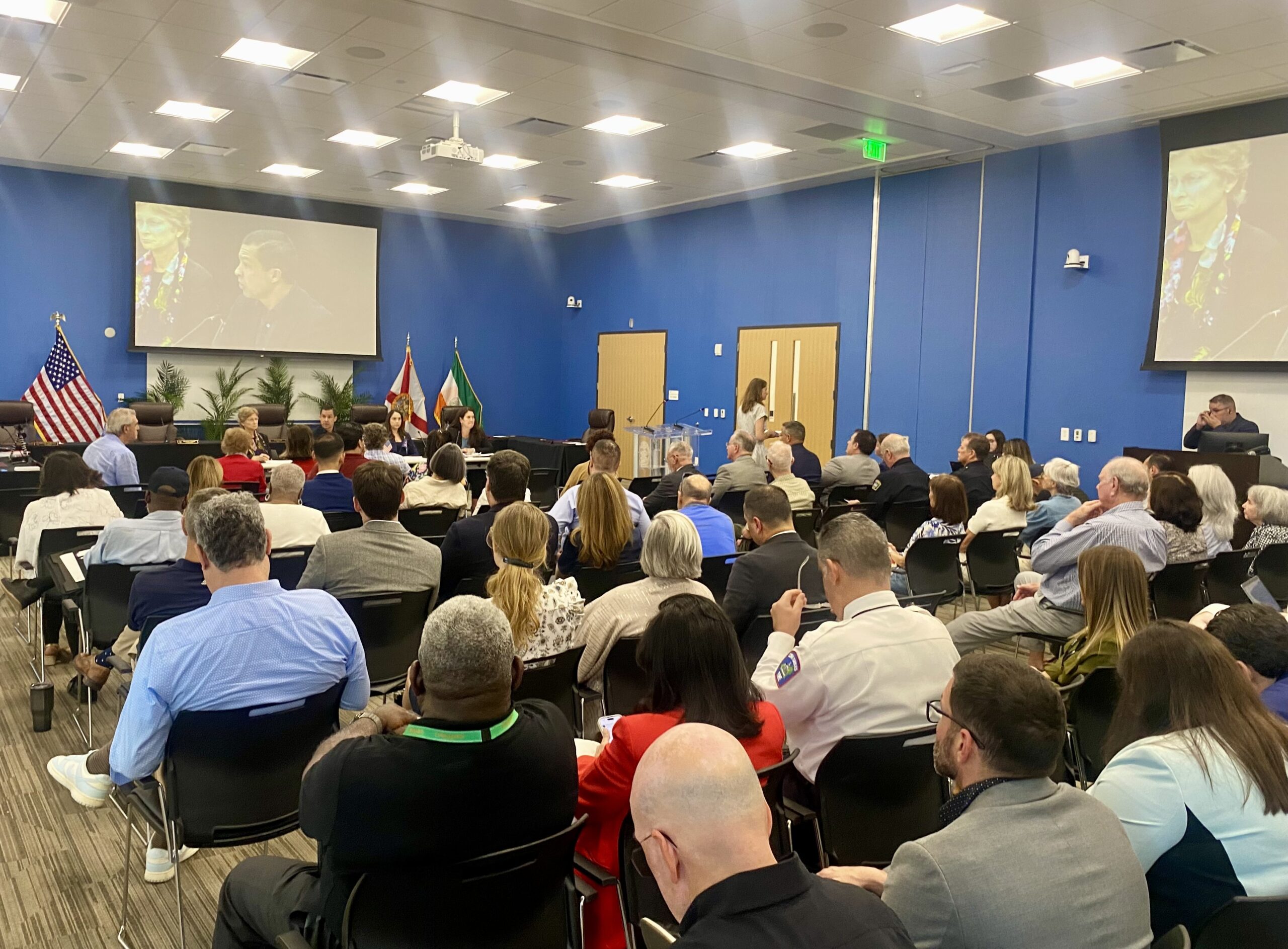
About 70 residents gathered at the Coral Gables Public Safety Building for a town hall on March 9 intended to explain the eight ballot questions that will appear on the city’s referendum next month. The timing made the purpose clear. Ballots will soon be mailed to every registered voter in the city for the first all-mail municipal election in Coral Gables history. The meeting offered a chance for residents to hear directly from city officials about what the proposed charter changes would do and why they appear on the ballot.
That is exactly the role a town hall should play in civic life.
The meeting provided some of that clarity. City Attorney Cristina Suarez walked through each proposal methodically. Several residents asked substantive questions and received substantive answers. Mayor Vince Lago noted, with evident pride: “We’ve been doing town halls for 13 years. You may not always agree with us, but you’re going to have a seat at the table.” That commitment is genuine and the Gazette does not dismiss it.
But the meeting also illustrated something worth examining. Miami-Dade Supervisor of Elections Alina Garcia, scheduled to attend in person to explain the mechanics of an unfamiliar mail ballot process, was absent. Two videos were played in her place. And about 45 minutes in, the discussion drifted from ballot questions into familiar territory: accusations against local media, political grievances and an accounting of the administration’s record. Residents who came to understand a ballot left having witnessed something closer to a commission meeting.
Local democracy depends on more than elections alone. It depends on opportunities for residents to ask questions, hear explanations and understand the consequences of public decisions before they cast a vote. Town halls serve as one of the most accessible forums for that exchange. They bring elected officials and residents into the same room, allowing citizens to hear arguments, challenge assumptions and clarify how proposals may affect their community.
In a moment like the current referendum campaign, that function becomes particularly important. The eight ballot questions before Coral Gables voters involve significant elements of the city’s governing structure — proposals related to election timing, runoff procedures, financial reserve requirements and the potential creation of an inspector general. Each carries real implications for how the city operates and how residents participate in its political life. Explaining those choices clearly should remain the central objective of any public forum convened ahead of the vote.
Town halls work best when they stay focused on that task. A question from a resident can surface assumptions that might otherwise go unexamined. A skeptical comment can prompt officials to explain the evidence behind a policy decision. A differing perspective can broaden the conversation beyond the framing offered by city leaders. That type of exchange strengthens democratic participation. It encourages voters to approach a ballot as a set of decisions with real consequences for their city.
That goal becomes harder to achieve when civic forums drift away from the issues voters must decide. Local politics carries long-running disagreements, familiar accusations and strongly held views. Those dynamics are part of democratic life and will inevitably surface when residents and elected officials gather in the same room. But a town hall called to explain a ballot should keep its center of gravity on the ballot itself.
The traits that make elected officials effective — confidence, combativeness, command of a narrative — can also make them poor moderators of the civic forums they convene. A town hall run by its subject is always at risk of becoming a platform for its subject.
The absence of the Supervisor of Elections made that risk more visible on Monday. This is Coral Gables’ first all-mail ballot election. Many residents have never navigated a vote-by-mail process. The official best positioned to explain it clearly — from a position of independent expertise — was not in the room. That gap matters, and it matters most for residents who came specifically to understand how to make their vote count.
Town halls exist for a specific civic purpose. Their value is functional. They work when they produce informed, prepared, confident participants in democratic life. The measure of success is straightforward: residents should leave knowing more about the decisions before them than when they walked in.
On the referendum’s substance, Monday’s meeting moved the needle. On the mechanics of mail voting — the most procedurally unfamiliar element of this particular election — the absence of the county’s chief elections official left a gap that videos cannot fully fill.
There is still time to close that gap. Ballots will not be mailed until the end of the month. A well-produced explainer distributed through the city’s newsletter and website — dedicated to the mechanics of the mail ballot process would serve residents directly. It would also demonstrate that the town hall format is a tool for civic clarity rather than a standing venue for familiar arguments.
In the meantime, residents can find information about the mail ballot process and the eight referendum questions at coralgables.com. The voter registration deadline is Monday, March 23. Completed ballots must be received — not merely postmarked — by 7 p.m. on April 21.
Thirteen years of town halls is a genuine civic commitment. But commitment to the form is not the same as fidelity to the purpose. Coral Gables voters face eight structural decisions in April. They deserve forums built around those decisions — not around the political dynamics that surround them.
A town hall serves the public well when residents walk out knowing more about the decisions before them than when they walked in. That is the standard worth holding, regardless of who is at the front of the room.












I will feel disenfranchised with the option being only voting by mail. I have always voted in person making sure my vote counts and not in the hands of a mail person, or lost mail, etc. These are important matters we as Coral Gables residents are voting on and we should have the opportunity to vote in person.
In the past 6 months we’ve had 4 pieces of mail, sent from Coral Gables post offices, not reach their intended destinations. Yesterday I was told by a business owner that they’ve had awful service with USPS and their mail-in payments.
And yet, this will be the only way for Coral Gables voters to be able to cast their ballots in the city.
Lago and Anderson talk about avoiding voter suppression being a reason to change city elections from April to November (which is a ludicrous charge, by the way) but restricting an election to only mail-in ballots seems to be even more restrictive and fraught with possible fraud.